
I used to tell young women to pursue medicine. I was proud to be part of a field that promised purpose, stability, and the opportunity to help people. But after over a decade in the profession – and witnessing firsthand the cost it extracts from women – I can no longer, in good conscience, recommend this path. We may now have gender parity in medical school admissions, but the system itself remains embarrassingly unchanged. It is fundamentally incompatible with the realities of modern womanhood.
Women enter medicine with dreams and ambition – but often at the cost of their biological clock. Training delays childbearing into the mid 30s, if not later. The years of premed, medical school, residency, and sometimes fellowship take up the entire decade most conducive to reproduction. And by the time any of us feel "ready" we're already facing fertility struggles. One in four female physicians deals with infertility (compared to 11% in the general population). Fertility preservation is rarely discussed in training. It is very expensive and not covered by our hospital insurances. This is diametrically different from many other large corporations in America that boast about employee well-being (such as Amazon, Starbucks, etc.) which do offer fertility benefits. If you are fortunate to work in an academic institution or a progressive private group, you might have fertility benefits. And even then, taking time off for procedures is frowned upon or flat out denied.
The U.S. already lags embarrassingly behind the rest of the world and maternity leave policy – but somehow medicine manages to do even worse. In most institutions, it's not a protected right; it's a cobbled together mess of sick days, vacation time, and unpaid FMLA, if you're lucky. Even for attendings, there's pressure to return to work early, to not rock the boat, to prove you are still serious about your career. And when you do return, you're expected to operate at full speed immediately. Clinic and hospital schedules are not built with nursing mothers in mind.
The emotional toll does not end at work. Female physicians have higher divorce rates compared to male physicians. We are stretched thin – working demanding jobs, managing the household, and raising children. There is no space to fall apart and no space to breathe. The expectations are crushing, and the system offers no relief.
Despite how far we have come, medicine still does not treat men and women the same. Assertive women are labeled aggressive. A woman who questions decisions is "challenging authority." We are constantly tone-policed. Our evaluations mention personality more than competence. We're told to be nicer and not to ruffle feathers. This is not a perception problem. It is a systemic one.
What is most frustrating is how little medicine has evolved, despite women now making up more than half of medical students. The structure of training, the hours, the hierarchy, and call schedules – all of it was built a century ago. But when women ask for change, we are met with silence, resistance, or retaliation.
I write this not to discourage, but to tell the truth. These are all things I wish I knew when I had started. Medicine can still be meaningful, and I've found deep meaning in a profession devoted to the greater good. I love having the privilege to help people at their most vulnerable moments. But right now, medicine is not built to support womanhood. We are told to be grateful for our seats at the table while still being served crumbs. Until this changes, my advice is this: Go into medicine only if you're prepared to fight, not just for your patients, but also for your own humanity. And don't do it expecting the system to take care of you. Unless you can figure out how to work for yourself, like doing private practice, locums or other independent 1099 work, right now, medicine is an uphill battle.
Dr. Santoshi Billakota is a board certified neurologist and epileptologist who lives and works in Brooklyn, NYC. She is currently a full time locums physician. You can follow her on social media at @drbillakotamd (IG, TikTok) and she also co-hosts the Be Empowered Podcast (@empowermedlife on IG) where she and her co-host, Dr. Moghbel, discuss pertinent issues in health care, specifically concerning women.
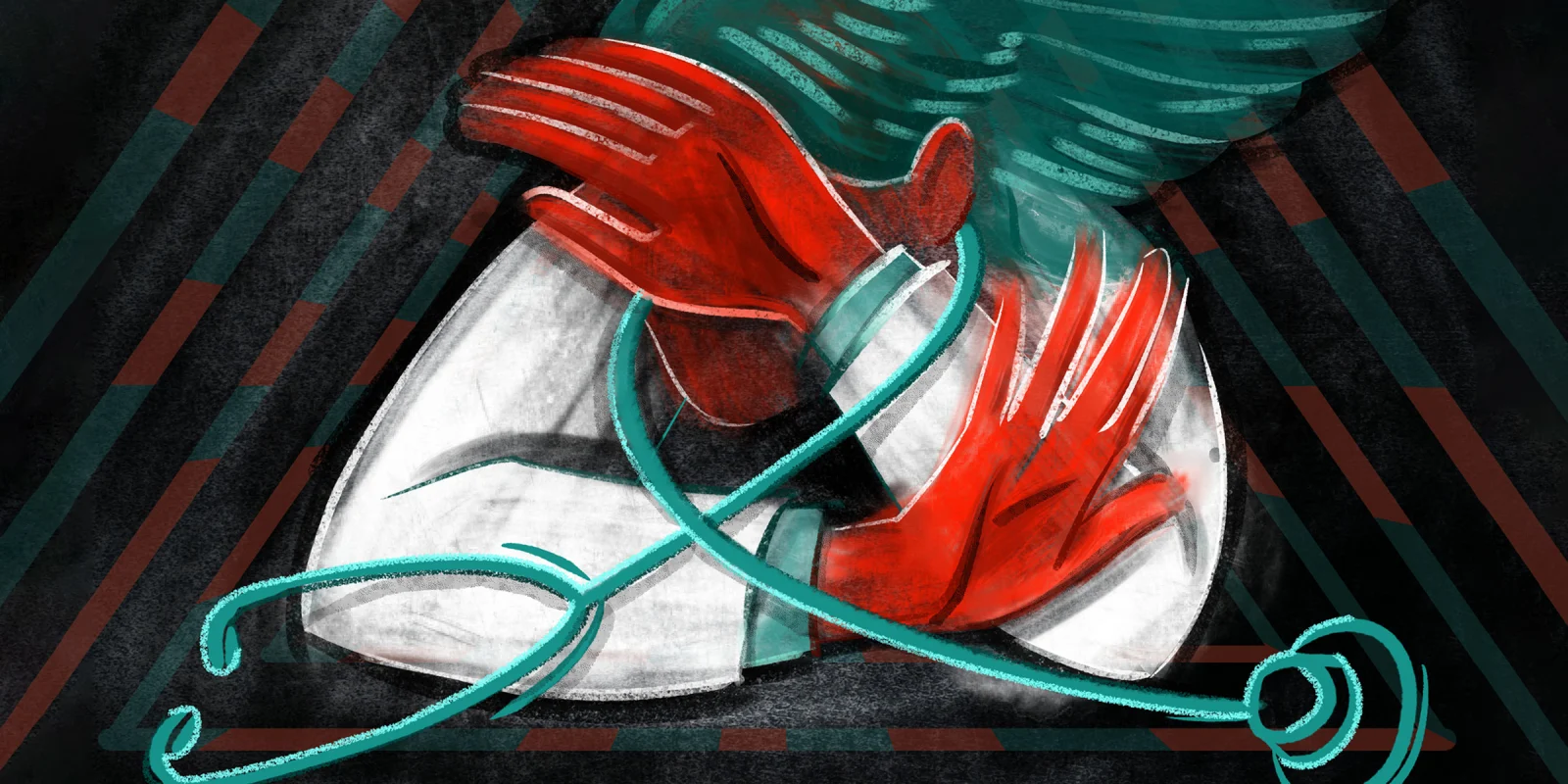
Illustration by April Brust