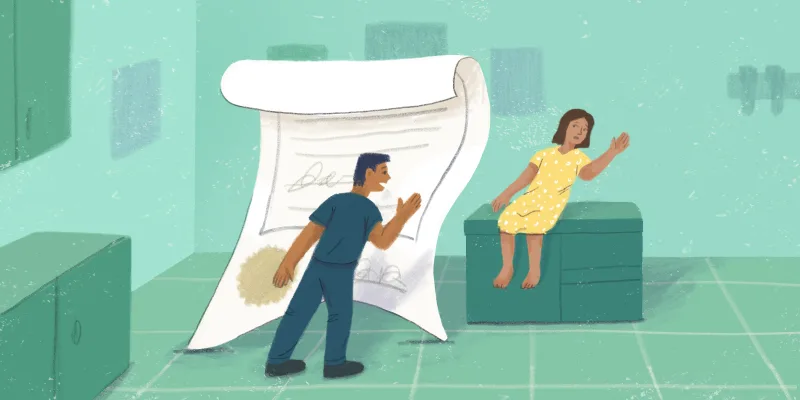

As a physician practicing in Florida, I care for a population that is uniquely vulnerable to the rising cost of prescription medications. Many of my patients are retirees living on fixed incomes. For them, even a small increase in out-of-pocket costs can determine whether they continue treatment or quietly stop taking a medication they need. I learned the precariousness of this balance when a longtime patient, let’s call her Mary, walked into my clinic holding a pharmacy bag and looking shaken.
Mary was a retired hotel housekeeper from our area, living on a fixed income. For years, she had managed her fibromyalgia with generic cyclobenzaprine, a medication whose refills had, up until now, cost her less than a fast-food lunch. It wasn’t a miracle drug, but it helped her sleep and function. But during one visit, the pharmacist handed her a new formulation priced at over $200. Her PCP had switched her to the new reformulated version of cyclobenzaprine with a new delivery system, one that happened to be FDA approved for fibromyalgia, unlike the generic she had been taking.
The new formulation cost 20 times more.
“I can’t afford that,” Mary told me quietly. To her, the choice was obvious: Find an extra $190 somewhere in her fixed monthly income budget, or stop taking the medication that allowed her to get out of bed each morning.
Her situation wasn’t a simple prescribing oversight. It was a window into a larger, deeply troubling pattern in the pharmaceutical marketplace. One that disproportionately harms older adults and low-income families in states like mine.
In my state, a common destination for retirees, about 22% of the population is on Medicare. These patients, aged 65 and over, are the demographic most likely to come into my clinic for pain management and physical rehabilitation. Most of these patients receive fixed retirement income, and 36% of Medicare patients nationwide live on $25,000 or less per year.
So, what happened to Mary? Why did her physician suddenly prescribe her a medication that cost 20 times more? Her situation demonstrates a textbook example of “product hopping,” a strategy in which pharmaceutical companies release slightly modified versions of existing drugs to extend patent exclusivity and delay generic competition.
In the U.S., drug companies typically have exclusivity over the manufacture of a new medication for only 12–15 years before generics enter the market. When patent exclusivity expires, the resulting increased competition from multiple suppliers often cuts the prices of generic medications to 20% or less of the name-brand version.
When companies launch a “new” formulation — such as a rapid- or extended-release version, or a drug combination under a different name — it can secure a fresh period of exclusivity. By aggressively promoting the new formulation and discouraging the use of older generics, pharmaceutical companies leverage product hopping to prolong high prices and limit patient access to affordable medications.
Research shows that, in many cases, new formulations are timed for product release around the time of generic market entry for the original version of the drug. If pharmaceutical companies can convince doctors, insurance companies, and pharmacists to favor the new version, they can make billions more from the original drug product, which now has expiring patent protection. Formulation or delivery changes do not need to be dramatic to gain additional patent protection. In some cases, Medicare and Medicaid could have saved billions by switching patients from extended-release brand products to therapeutically comparable immediate-release generics.
Even more worrying, health insurance companies can effectively force doctors and patients to use new, much more expensive medications through the practice of “nonmedical switching.” By changing their formularies, health insurance companies can change which medications they cover at any time. This has historically been used to force patients to switch to lower-priced medications, saving the insurers money, but in recent years, a worrying new trend has emerged.
Through pharmacy benefit managers (PBMs), insurers are sometimes now incentivized to prescribe more expensive medications rather than more affordable ones. Arrangements between insurers and PBMs allow insurers to receive “rebates” and “discounts” on their share of the cost of more expensive drugs. At the same time, patients are still charged their full share of the drug’s usual retail value. This allows drug companies to line their pockets by raising copays, without raising the price they charge the insurance company. Patients like Mary still pay copays based on the retail price, not the rebated price.
While it is probably still more affordable, on average, for Medicare Advantage plans to favor lower-cost medications for their patients, it’s clear that pharmaceutical companies are using multiple tactics to charge patients more for medical treatment. Loopholes are being exploited to push patients off affordable generic medications, while rebates and discounts are used to incentivize insurers to allow pharmaceutical companies to charge patients more. It is a perverse arrangement that rewards higher prices and punishes affordability.
This is especially dangerous because Medicare patients are far more likely than younger patients to be living on fixed incomes, without the possibility that their Social Security and pension payments will keep up with skyrocketing medication prices. People living on $25,000 per year are unlikely to be able to afford a $200 copay for a single medication.
Elderly patients are also, of course, the population for which medication noncompliance can be most medically devastating.
As physicians, we cannot control the pharmaceutical marketplace, but we can control how we navigate it on behalf of our patients. In a profit-driven system, we must become advocates not only for the right diagnosis and treatment but also for affordable options.
There are practical steps we can take.
Always verify if a generic exists and compare its cost. Often, new formulations provide little added benefit but cost significantly more. As prescribers, we must be mindful of these cost implications.
When considering what medications to prescribe to a patient:
Review whether a “new formulation” truly offers a clinical advantage.
Consider the cost-effectiveness of immediate-release and extended-release formulations.
Evaluate same-class generics for cost hierarchy.
Use real-time benefit tools when available.
Discuss costs openly, because patients may not raise them until they’re in crisis.
Mary’s story is not an outlier. It is a symptom of a system in which pharmaceutical innovation is sometimes less about improving patient care and more about extending profit margins. As a physician, I have watched too many patients ration medications, cut pills in half, or simply stop treatment because the cost became unsustainable.
In a healthcare system increasingly shaped by financial incentives, our responsibility is clear: Considering medication costs is essential to ensuring patients receive and adhere to the treatments they need, not just the ones the system pushes on them.
How can physicians better advocate for affordable prescribing? Share in the comments.