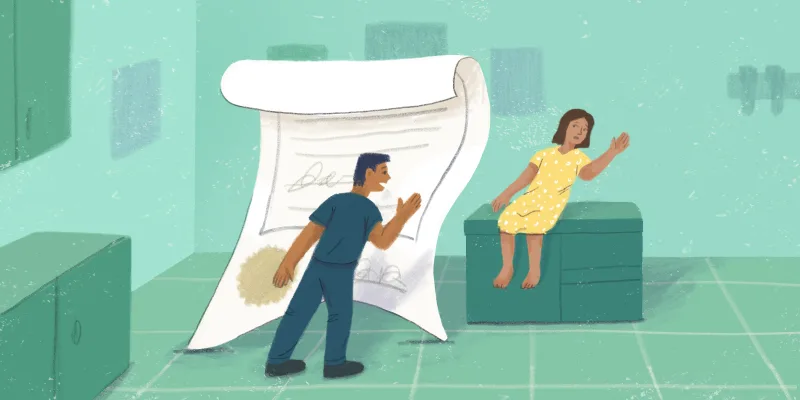

There is a particular kind of dread that sneaks up on you. It doesn’t announce itself. Itrolls in silently, like an early morning fog, until one day you look around and realize you can no longer see clearly. This is how the feeling of being overwhelmed strikes many physicians. There is an excitement in the first decade of medicine. You are filled with the pride of having finally made it. But eventually, the thrill of “firsts” wears off. Visit volume climbs. Time contracts. Lunch disappears. Charting and other administrative tasks balloon. What once felt like a connection begins to feel like a conveyor belt, patients cycling through at a pace that leaves no room for the thing that made the work meaningful in the first place. Your enthusiasm is fading. And the to-do list steadily grows, both at work and at home. Somewhere in the middle of a career you've spent decades building and genuinely love, you find yourself not burned out, but dimming.
How does one reclaim joy when they arrive here? By making small adjustments that have the greatest impact on your happiness. So what are the happiest doctors actually doing? Following the science offers answers to this question. A 2025 physician well-being report found the key factors associated with physician happiness were work-life balance, strong relationships, and consistent self-care. An overwhelming two-thirds of physicians said they would trade pay for more personal and family time, a significant rise from half in prior surveys. We are clearly recalibrating as a profession. How did the most joy-filled physicians get that way? More importantly, what slight shifts can you make to reclaim your own joy?
They protect their time fiercely
The happiest physicians have made deliberate choices about their schedules, even when those choices come at a cost. Work-life balance = high job satisfaction. This doesn’t have to mean going part-time. It can mean spacing visits, setting firm boundaries on after-hours work, or protecting a single hour of the day that belongs entirely to you. Control over your time is a form of autonomy, and, as science confirms, autonomy is a cornerstone of well-being.
They Invest in Relationships
The longest-running scientific study of human happiness, now spanning over 90 years, has reached a conclusion that is both simple and, for high-achieving physicians, challenging. Across decades of data and thousands of lives followed, the researchers found that the quality of our relationships is the single most important predictor of how happy and healthy we will be. Not income or status. The study found that people who were most satisfied in their relationships at age 50 were also the healthiest at age 80. Roughly 50% of our happiness is shaped by our baseline temperament and 10% by life circumstances (income, health, etc.), leaving 40% influenced by our intentional habits and mindset choices. Nearly half of our happiness is within our reach.
AAFP & CompHealth took a deep dive into physician contentment and found that interpersonal relationships, more than any other single factor, contributed the most to physician happiness. Social connection is not a luxury item. It is the most basic form of self-care. It is easy to let meaningful relationships erode under the weight of a demanding career and home life. For physicians who want to improve their happiness, pouring into relationships is an urgent task. How do you fit this into an already busy schedule? Try planning a standing monthly lunch with family, combining routine tasks like working out with a friend, making a quick call on the drive home, or sending a voice note to stay connected.
They Move Their Bodies
The evidence linking physical activity to improved mood, reduced burnout, and greater psychological resilience is extensive. Among physicians specifically, those who prioritized physical health were more likely to report high satisfaction at both work and home. While 30 minutes of moderate aerobic activity, such as brisk walking, was beneficial, so too were yoga and breaking exercise into smaller 5- to 10-minute segments throughout the day. Physical activity increases positive emotions. In turn, positive emotions increase motivation to stay physically active. It is one of the few genuinely beneficial cycles available to us. Schedule your movement, any kind of movement, no matter how short or seemingly insignificant.
They Pursue Something Outside of Medicine
When asked, “Who are you?” does your answer begin and end with your white coat? For many of us, it does. When Medscape asked physicians how they maintained their happiness and mental health, 71% cited enjoyable activities such as reading, cooking, and other creative or recreational pursuits. Fifty-eight percent said hobbies were “very important” to their well-being. For me, that outlet became writing. For others, it can be music, gardening, travel, or coaching youth sports. It doesn’t matter what it is. What matters is that it gives you an identity outside of your medical practice. I firmly believe we were created with many gifts. Take time to explore them.
They Let Go of What Doesn't Serve Them
This one sounds so simple. Yet, for me, it is still the hardest. Here is your prescription: Ask for help. Outsourcing tasks that consume time and energy without feeding purpose is not laziness. It is self-preservation. It is a longevity strategy. Every hour you reclaim from a task you dread is an hour you can give to something that sustains you. The happiest physicians I know have given themselves permission to stop trying to do everything. They allow themselves rest. You should too.
Most physicians entered medicine to be compassionate, caring healers who help people through some of the most difficult moments of their lives. This mission has not changed. Yet the system we practice in, with its relentless administrative burden, shrinking visit times, and metric-driven culture, was not designed with physician flourishing in mind. We cannot fix all of this today. Perhaps it won't even be fixed in our careers. What we can do is make choices: deliberate, minute, sometimes countercultural choices about how we show up for our own lives.
I am still a pediatrician who loves medicine. But I am also a writer, someone who exercises before the world wakes up, and someone who no longer scrubs her own floors. As a result, I am a happier and, I believe, an even better doctor than I was when I was doing everything. That is not a coincidence. It is the result of realignment, and I’d argue it is not my opinion; it’s the science.