I used to think burnout was about being unhappy at work.
I experienced burnout. I published my story and vowed that I would not let it happen again.
Yet, here I am, on the brink of burnout when all seems like it is great on the outside. My burnout looks different now. I am happy at work. But I am overwhelmed with the rest of my day.
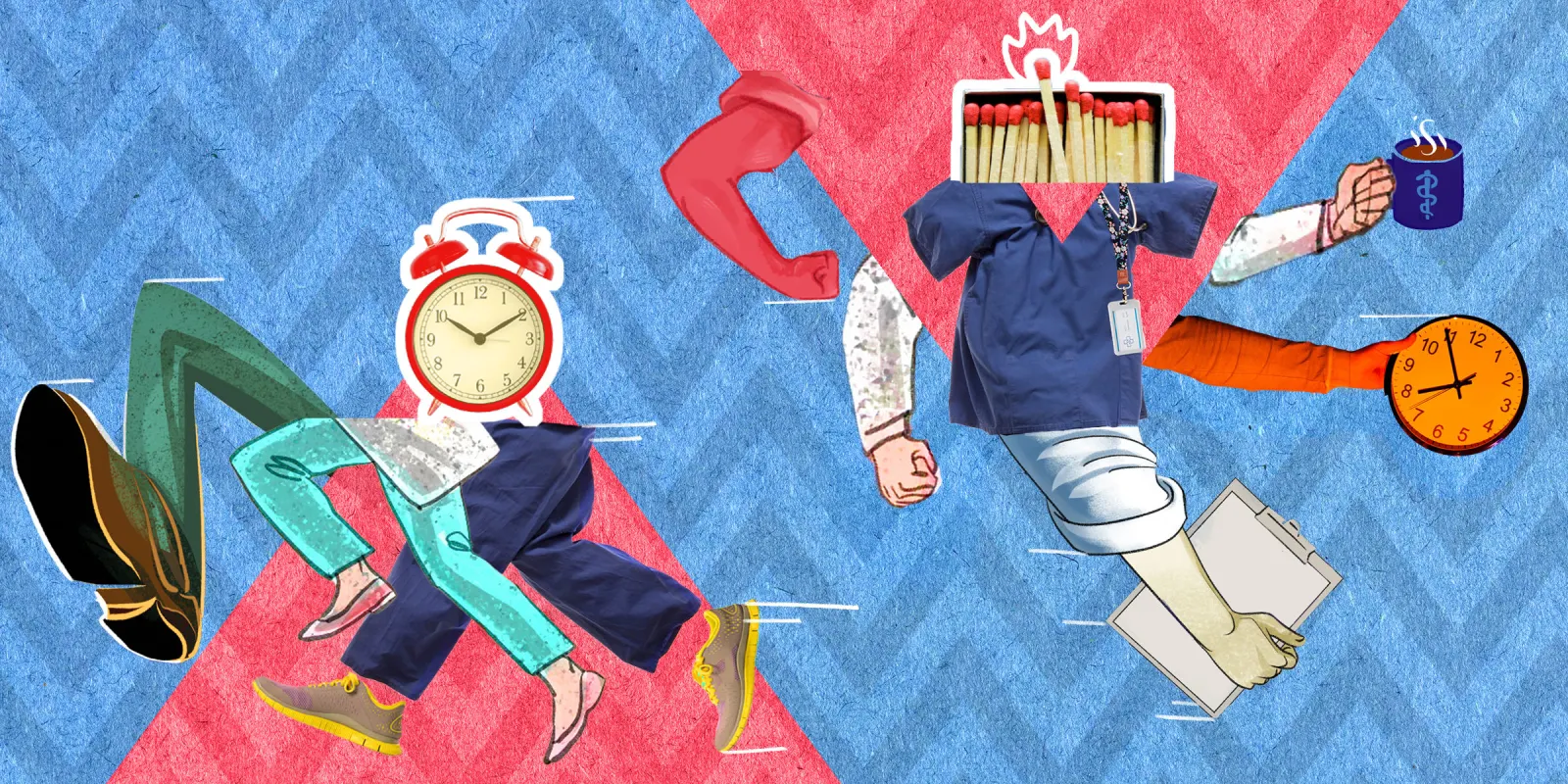
I used to think that if I worked less clinic hours, kept up with my inbox and the charting burden, and mastered my EMR hacks, the problem would resolve. But after years in medicine — and especially after the pandemic — I’ve realized burnout isn’t confined to the hospital or clinic. It has followed me home.
I now feel other pressure: keeping up with the pace of life, raising children with more complex needs, trying to maintain friendships, maintaining a creative side gig (because this is my relief from my first period of burnout), and being the organizer of my family’s home life. I have help and outsource and delegate. But I coordinate all those things still, and the list of items to check and schedules to coordinate only got longer and more complex when we involved other people outside our nuclear family.
Burnout lives in the roles we carry, the expectations we absorb, and the constant pressure to be everything for everyone. Can we ever escape the pressure to carry the heavy load? Are physicians trained to just absorb the punches until there is literally nothing left to take the blow? Even with tools to set boundaries, burnout has a way of creeping through the cracks if you don’t catch it quick enough. Like a slow leak, it seeps in until the damage is done and you have to repair yourself once again.
During the pandemic, we were called essential. We showed up despite fear, uncertainty, and exhaustion. We absorbed risk not just to our own health, but to our families. We adapted overnight, worked longer, carried emotional trauma, and pushed through because that’s what physicians do.
But what’s rarely acknowledged is that for many of us, that stress never lifted.
The public emergency declaration ended, but the sense of instability did not. Many physicians now practice in environments marked by job insecurity, constant organizational change, and the quiet fear that no role is truly safe. Mergers, productivity pressures, shifting contracts, and metrics that feel disconnected from patient care create an undercurrent of unease that never fully quiets.
At the same time, patient care has become more demanding — not because patients are the problem, but because they are caught in the same broken system. We are asked to manage increasing complexity, rising expectations, and worsening access issues, all while navigating insurance barriers, prior authorizations, and administrative tasks that erode the time and energy required for meaningful care. And let’s not forget the constant myth busting that we have to do to combat the social media influencers who have no medical background yet play medical experts on TikTok.
As colleagues retire early or leave clinical medicine altogether, those who remain inherit fuller schedules, heavier panels, and less margin. Yet the system rarely recalibrates expectations. Patient loads increase. Support does not. That’s if support shows up to work at all, as many of us are left to do our own administrative tasks as clinical support staff quietly quits.
And somewhere along the way, many of us begin to feel something that scares us: not a lack of compassion, but a quiet resistance to participating in care that feels increasingly constrained, rushed, and compromised by forces outside our control.
That feeling is often mislabeled as burnout from medicine.
In reality, it’s grief for the medicine we were trained to practice.
Outside of work, the load continues.
As a woman physician, I’ve felt the constant mental juggling of family life — coordinating schedules, meals, school needs, household logistics, and the emotional labor that keeps a family functioning. This work is invisible, yet relentless. It requires the same executive functioning I use in clinic, but without pauses, handoffs, or acknowledgment.
Many of my male colleagues describe a different, but equally heavy burden — the pressure to be the provider, to ensure financial stability and happiness for their families. That pressure often translates into longer hours, more shifts, and less permission to rest. Time with friends disappears. Even at home, charting and unfinished work linger. Some describe feeling undervalued, not because they aren’t contributing, but because their contribution is assumed. They “should” be working more. They “should” be earning more.
What we rarely talk about is how physicians are trained to sacrifice early — and then expected to somehow catch up later.
We delay life while training. We miss milestones our nonphysician peers experience. And when we finally reach the stage where we’re supposed to enjoy what we’ve built, we overwork to replicate what others already have. We push harder to travel more, earn more, do more — while carrying more responsibility, fewer supports, and far less margin.
The result is not just workplace dissatisfaction.
It’s burnout from being a high performer in every role.
From being the one others rely on at work and at home.
From constantly trying to do it all, with less time, less rest, and fewer safety nets.
When burnout is framed solely as a workplace problem, the solutions remain shallow. No amount of wellness breaks or resilience modules will fix burnout rooted in chronic overextension and systemic disregard for the realities of modern physician life. My days at home are often more difficult than my days at work. So there is not true rest unless you sacrifice organization, vacation, kids activities, or social time.
Burnout didn’t end when the pandemic did.
For many physicians, it simply changed shape — becoming quieter, heavier, and more woven into daily life. And until we acknowledge that burnout lives not just in medicine, but in the impossible expectations placed on physicians across every domain, we will continue to lose good doctors — not because they don’t care, but because caring has become unsustainable in the current system. We cannot be everything to everyone for long without sacrificing our true selves.
How do you avoid constant overextension? Share in the comments.
Dr. Brittany Panico is a rheumatologist in Phoenix, AZ. She is a wife and mother of three awesome boys and enjoys hiking, being outdoors, traveling, and reading. She posts on @AZRheumDoc on Instagram and Brittany Panico, DO, on LinkedIn. Dr. Panico was a 2023–2024 and 2024–2025 Doximity Op-Med Fellow and continues as a 2025–2026 Doximity Op-Med Fellow.
Illustration by April Brust