
Donning my white coat and with my reflex hammer in hand, I enter the room. It’s been a year since I’ve seen her.
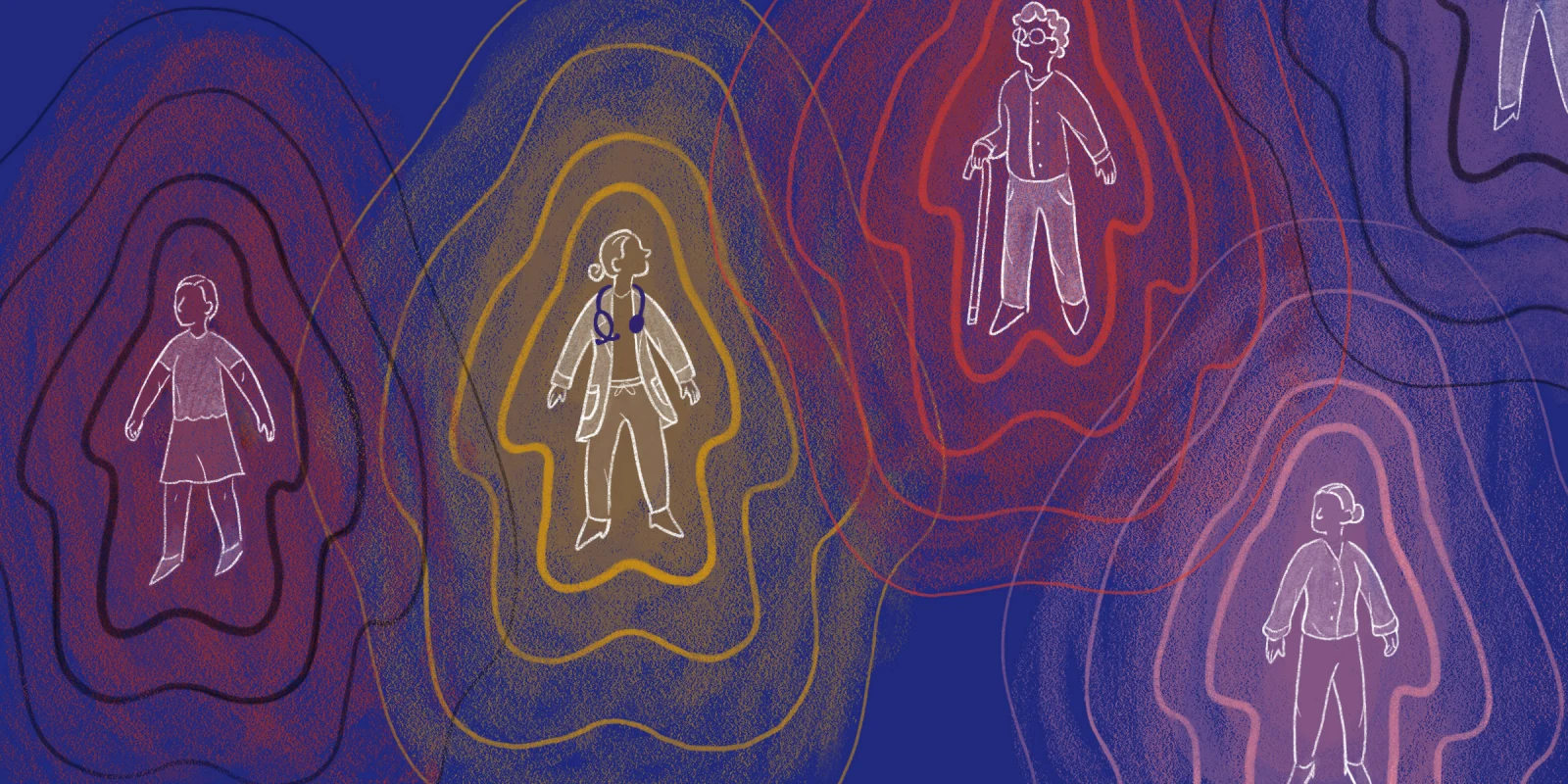
She greets me with a tight smile. Her once-brown hair is now completely gray, fuller somehow. She sits in a wheelchair, an air of quiet calmness around her. The crinkles around her eyes and the warm, brown gaze — they’re familiar. She’s aged, yet ageless all at once. And somehow, she brightens when she sees me.
I’m an autoimmune neurologist and have followed her for years, helping manage her multiple sclerosis (MS). It has been a brutal diagnosis — one that has slowly chipped away at her independence, often leaving her tearful, withdrawn, and exhausted. She has always felt trapped in a body she could no longer command.
The last time I saw her, I had just returned from my second maternity leave. She was in agonizing pain — her left arm had become a relentless source of suffering. During my leave, the leading hypothesis was this was part of her underlying MS. Neuropathic. Expected. She would have to manage it and move on.
But something didn’t sit right. The location, the intensity, the quality — it didn’t sound like MS. Together, we decided on an MRI of her left brachial plexus and cervical spine.
When the results came back, I sat in stunned silence. Cancer? A tumorous mass in her lung and one invading her cervical spine with local extension and encroachment upon nerve roots. Definitely not the Parsonage-Turner diagnosis I had contemplated — not by a long shot.
Over the phone, her voice was hushed. Stunned, but not surprised. And underneath the shock was gratitude. We finally had a clue. We both knew this wasn’t her MS, and she finally felt seen.
And then she disappeared.
A year passed and I didn’t hear from her. I assumed she was with oncology, but silently, I wondered about her.
Then one day, unexpectedly, she came back — not for care or medications, but simply to say thank you and, it seemed, goodbye.
“You were the only one who listened,” she said. “The only one who didn’t write it off.”
She then remembered the shared pieces of my life I had told her between clinic visits — toddler milestones tucked between MRIs and progress notes. Smiling, she asked about my young boys. I pulled out my phone and showed her pictures — one boy with unruly curls and another with sunglasses and a mischievous grin. She smiled and marveled at how I juggled it all.
And then, her gaze steady and unafraid, she told me, “I’m not doing any more treatments. I know this is going to get me. And I’m OK with that.”
There was nothing left to say. She had made her peace.
We sat together in that quiet space between doctor and patient, between knowing and accepting. There was grief there but also grace. She had come not for prescriptions or referrals, but for closure, connection, and one last moment of being understood.
We sat there — just two people occupying the gravity of what we both knew: Time was slipping, and hers was running out.
Still, before she left, I scheduled a one-year follow-up.
Maybe it was a way of pretending there was still time — a way of honoring her by not making it feel final.
In truth, there’s no billing code for goodbye.
That day, I realized that the most meaningful medicine we practice isn’t always in what we prescribe. It’s in the silent spaces we share with our patients — the quiet act of listening, of helping to shoulder an unspoken weight. More simply, perhaps, it’s the simple act of showing someone: I see you.
She taught me that, and I’ll never forget her.
What silent moments with a patient have stayed with you long after the visit ended? Share in the comments.
Dr. Saima Chaudhry is an assistant professor of neurology at The Warren Alpert Medical School of Brown University and Rhode Island Hospital, where she subspecializes in multiple sclerosis and autoimmune neurology and serves as vice chair of student education. She is a mother of two young boys and the current podcast editor and host of the Journal of Neurology, Neurosurgery & Psychiatry (JNNP) podcast. Follow her on Twitter @SaimaTCMD.
Illustration by Diana Connolly