As I skimmed over the resolutions to be voted on at the upcoming California Medical Association (CMA) House of Delegates (HOD) meeting in October 2025, where many resolutions deal with health policy and issues affecting patients and the practice of medicine, I was intrigued by one resolution entitled "Consolidation of the Butte-Glenn Medical Society (BGMS) and the Lassen-Modoc-Plumas-Sierra Medical Society" aka Resolution No. 304-25.
This was a purely organizational resolution. The details discussed how declining membership in both multi-county medical societies (that themselves had consolidated over the years) made it difficult to sustain services for their members. The boards of both societies approved a consolidation. The resolution called for the CMA to recognize this consolidation. Over the years, more and more rural county medical societies across the country have had to consolidate to continue their services, a trend seen in other areas in the U.S.
This means that decades ago, there were more robust county medical societies with enough members to support at least one administrative staff person. This made me wonder: Wasn't the absolute number of physicians in the U.S. previously much lower than today? If so, why were there more physicians in rural practice (and members of rural county medical societies) in the 1970s than there are today?
I did some digging and found that in 1970, there were about 334,000 physicians in the U.S. By 1980 this rose by 40% to about 467,700. Fast forward to 2022 (the most recent verifiable data I could get), and we are at 989,320 physicians. If we look at the physician-to-population ratio in 1970 (163 physicians per 100,000) and compare this to the ratio in 2022 (297 physicians per 100,000), we see that the growth in the number of physicians has outpaced population growth over the past 50 years, nearly double the physician density.
In the face of these numbers, every media outlet is screaming about physician shortages. Rural and inner city communities either have no physician, or just a few who are struggling to keep up. As mentioned above, county medical societies in rural areas are having to consolidate due to declining membership. Why the paradox? Two main reasons: 1) many physicians in rural areas are being served by solo or small group physicians nearing retirement; and 2) graduating residents (at least for my specialty of radiation oncology) are choosing to work in more metropolitan areas, rather than rural practices.
The declining membership in rural county medical societies can be explained in part by the declining number of rural practice physicians. But we are also seeing a decline in overall membership in medical organizations — in both rural and metropolitan locations. In the 1950s, 75% of physicians were members of the American Medical Association (AMA). Today, only about 15% to 20% are AMA members. AMA membership typically went hand in hand with membership with your state medical association (like CMA), and your county medical society. So what happened?
In the past, despite there being fewer physicians, there was a sense of strong professional unity. Most physicians were in independent practice, so county medical societies provided a forum for networking and cultivating a referral base. In fact, the center of a physician's social life was the county medical society. Becoming president of your county medical society was a crowning professional (and social) achievement. Primary care physicians last outnumbered specialists in the 1960s, so the CME offered by the county medical society was relevant to most practicing physicians.
Today, despite having a greater number of physicians, we have a more fragmented identity with our various specialties and practice settings. Organizations specific to specialists have proliferated, taking financial and mental bandwidth away from county medical societies. For example, a small specialty like radiation oncology has historically been represented by the American College of Radiology (ACR) since 1923. A therapeutic radiologist (what radiation oncologists were called back then) was a member of the ACR and in 1958 could become a member of the American Club of Therapeutic Radiologists, which ultimately became the American Society for Radiation Oncology (ASTRO), separating itself from the ACR in 1998. Since the 1970s, more radiation oncology related organizations have been founded — the American Brachytherapy Society, the American College of Radiation Oncology, and the Radiosurgery Society. And many of us may be members of more general oncology societies like the American Society of Clinical Oncology, American Association for Cancer Research, Association of Cancer Care Centers, and the Community Oncology Alliance. Is it any surprise that membership in a county medical society would take lower priority for a radiation oncologist?
As of 2024, more than 77% of physicians are employed by hospitals, health systems, or other corporate entities, trending away from independent practice. These physicians may not see value in county society membership when their employer is providing in-house CME and other employment related benefits. Employed physicians expect their employers to pay for membership in medical organizations and limited discretionary funds from their employers results in these physicians opting to pay for specialty society membership rather than membership in a general medical society. Money may be spent to attend an educational conference in lieu of membership in an organization that sends emails that end up in the spam folder or journals that never get read.
So what does the future hold? Should local medical societies be allowed to die a slow painful death as more get consolidated into larger multi-county societies — ultimately with just a few large regions answering to a state medical association, or just everyone being members of a state organization?
It is common knowledge that only 15% to 20% of physicians in the U.S. are dues-paying members of the AMA. The reasons for this low percentage are well beyond the scope of this article, but interestingly, despite state and local medical societies experiencing declining membership, individual county and state societies tend to have higher membership rates than the AMA has nationally. Many physicians who have left the AMA continue to be members of their state and county medical societies. And those practicing in rural isolated communities, or who are in independent practice as a practice owner or independent contractor, tend to look to their county medical societies for networking, advocacy, and regulatory assistance.
On the local agency front, my county medical society has been a platform for me to meet and interface with the mayor, county supervisor, county representatives, state assemblymember, state senator, and our U.S. House Representative. Our executive board has met with university administrators and faculty to set up and sustain programs for students interested in pursuing medicine, with an eye to getting them to return to our community to practice. Through the medical society, we have been invited to speak to students at our high schools on careers in medicine, also with the hope of getting them to come back here to work. Integrated health systems and national organizations may not have this bandwidth.
When a mid-career physician wanted to start an occupational medicine practice in Eureka, California, the local medical society helped him get all the licensing, permits, and registrations necessary for regulatory compliance. When a group of physicians disagreed with our local hospital's closure of a service line, they used the medical society's print media as a platform to express their objections. During COVID, when vocal opponents of masking and vaccinations harassed our county public health officer, the medical society got behind them, drafting a statement in solidarity with public health recommendations, and working with the county in releasing public service announcements. When a rural hospital unfairly dismissed a majority of its medical staff without cause in another district, a local medical society was able to engage CMA to provide legal support in filing a lawsuit against hospital leadership, ultimately prevailing against the hospital. When I was dealing with denials from an insurance company, my local medical society put me in touch with a team at CMA who were able to help my office staff appeal the denial at the state level and get it overturned. In fact, for 45 years, our executive director, Penny Figas, could be called on to help with any problem faced by a physician member. She would either take care of it herself, or refer them to someone who knew how to. The local knowledge of a seasoned director along with long-time members of the local medical society can be valuable to a new physician moving into a new location trying to get to know the area.
So from my personal experience, the county medical society, despite the declining number of members in rural areas, provides a very necessary service for both physicians and the community. Granted, consolidation of county medical societies will increase the geographic spread of service and make it more challenging for members from outlying areas of the service area to travel to the local office or attend in-person events. For now, I am fortunate that the Humboldt Del-Norte County Medical Society is a short mile away from my office. Events held by the society are easy to get to. And as I get ready to pay my annual membership dues for 2026, I am mindful of how my local medical society advocates for me and my physician colleagues. With our new executive director, Amanda Lankila (a Humboldt County native with lots of local connections), I look forward to continuing my support of and benefiting from the services of my local county medical society.
Dr. Join Y. Luh is a radiation oncologist practicing in the Pacific Northwest town of Eureka, CA. He enjoys mountain biking, surfing (on a paddle board), playing in a cover band (StereotactiX), reading his daughter’s essays, and cheering his sons at basketball. Dr. Luh is a 2025-2026 Doximity Op-Med Fellow.
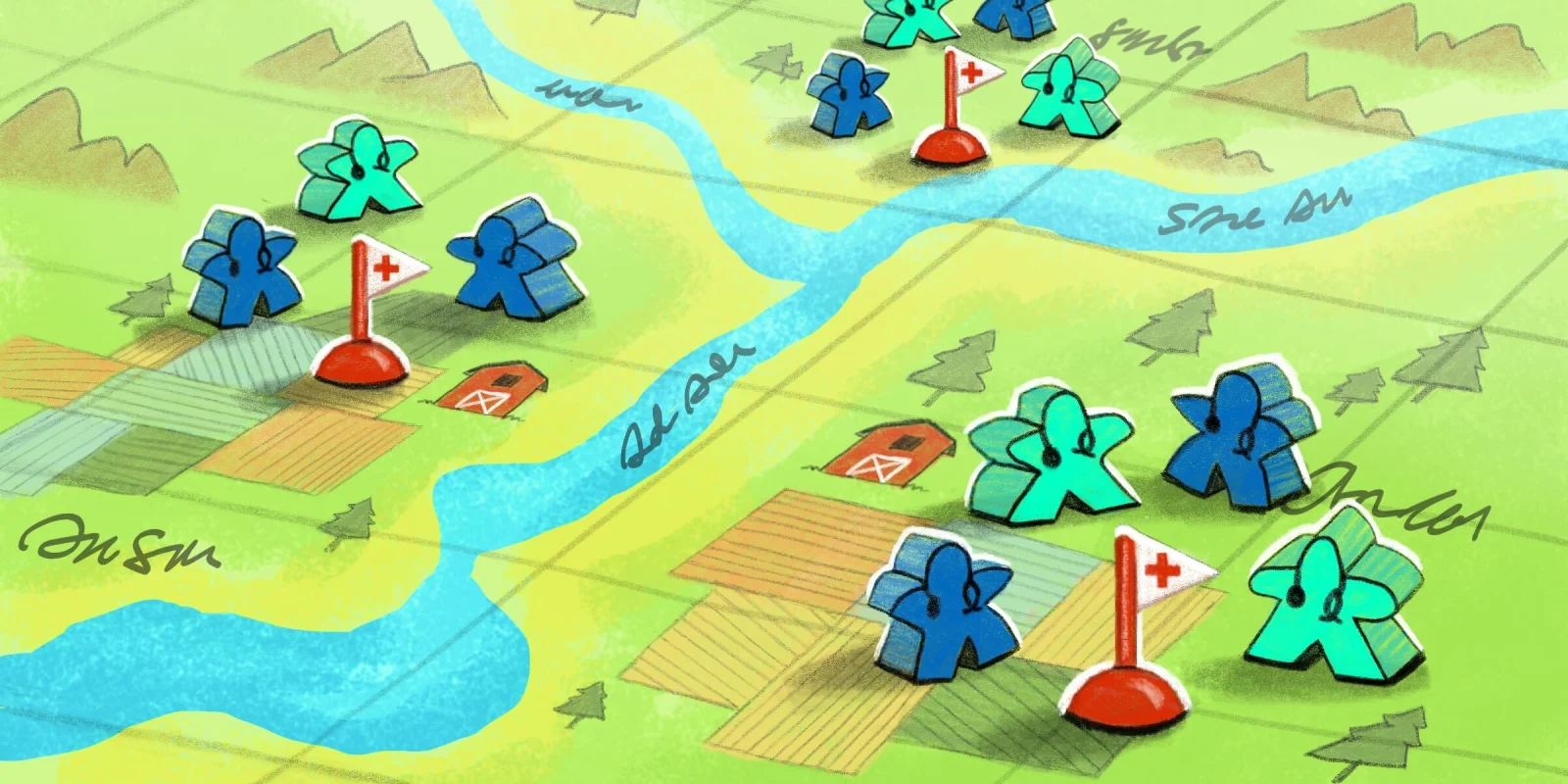
Illustration by Diana Connolly