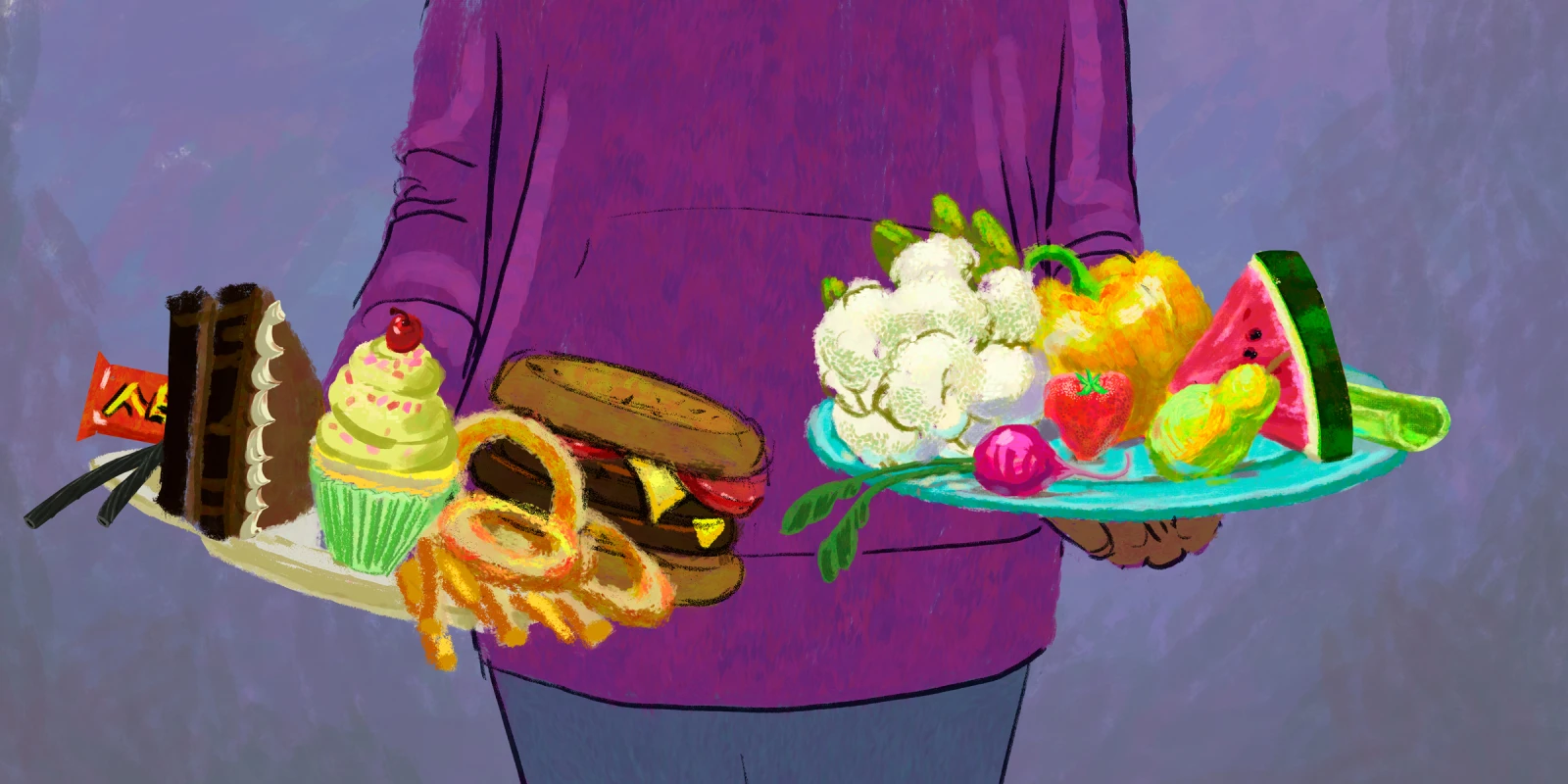

With the release of the 2025-2030 USDA Dietary Guidelines and its emphasis on real foods, the idea of prioritizing naturally occurring foods and minimizing our intake of processed and ultraprocessed foods has once again entered the national conversation. No one would argue that we should be eating more processed foods. Both scientifically and intuitively, prioritizing real whole foods is the healthier and better choice. But if we all know this, why do these recommendations bear repeating — and why is it still so hard to stick to what is true?
I was once told, “If your great-great-grandmother wouldn’t recognize it, you shouldn’t eat it.” What they were really saying was: eat less processed foods. My great-great-grandmother wouldn’t recognize Pop-Tarts or Cheetos for a snack — they didn’t exist back then. But she would recognize fresh fruit, nuts, and cheeses as something to quell that mid-day or late-night craving.
When we think about it outside of the moment, this choice seems obvious. But knowledge isn’t the only component in our dietary choices. Convenience, time, cost, cravings, and access all play roles in the dietary decisions we make every day. In my experience, convenience is the most frequent culprit of our poor decisions. It is much easier to grab a Snickers bar or bust open a bag of chips than to wash and slice fresh fruit. Similarly, a processed “just add water” side of macaroni and cheese is much easier to whip up than a head of broccoli, which requires washing, chopping, seasoning, and finally baking. Not only are our poorer food decisions usually more convenient, they also consume less of our time — our most precious resource as individuals.
In health care, we have system-level designs and processes to minimize mistakes and encourage the appropriate actions, ultimately making the right thing to do often the easiest thing to do. Take hand sanitizer stations for instance. They are ubiquitous in hospitals; available at every turn. Why? Because study after study has shown that accessibility increases compliance. What if we applied that same principle to our own diet and lives? As a family medicine resident, I often find myself talking to patients about nutrition and lifestyle modifications. Here’s what I tell them, and what I try to live by myself.
Limit Home Availability
The first and most important step in ensuring we’re eating more real foods and fewer processed foods is to not let the enemy in. If I have Oreos in my home, for example, the entire package will be gone within three days. The temptation to eat them is just too great — ultraprocessed foods can be considered addictive, so it’s not just a matter of personal discipline. If these processed foods aren’t readily available in our pantries, we won’t fall prey to the temptation of eating them when we know we should have something else.
Remember the accessibility and use of hand sanitizer? The same principle applies here. Home availability of different foods, either healthy or unhealthy, has been shown to be associated with increased consumption at all age groups. In a cross-sectional study of children in rural areas of the U.S., the higher the home availability, regardless of it being healthy or not, the higher the child’s consumption. In adults, availability of snacks and sweets was shown to be associated with an increased amount of energy derived from fat.
Be Intentional When Shopping
The second step is to shop smart. We should perform our grocery shopping on a full stomach so our purchases aren’t driven by cravings. And we should buy healthy, whole foods: fresh fruits and veggies, whole grains, lean proteins, etc.
Further, we should be cognizant of the ingredients in the foods we buy. When advising my patients about their grocery purchases, I remind them to read the ingredients list and ask themselves if they recognize (or can even pronounce) the ingredients in whatever they’ve picked up. It’s important to minimize additives and limit added sugars when making choices in the grocery aisle.
Plan Out Meals
The third step is to take time each week to plan out our meals and snacks. I tell my patients that no plan at all is a plan to fail. If we haven’t thought about the foods we will eat for the week, we will inevitably make poorer decisions when we get off work later than expected and the hunger is hitting hard. Without a plan, we will be much more likely to give in to the physiological desire for quick calories by ordering fast food or throwing a frozen pizza in the oven. If we have a plan set in advance to make a nutrient-dense meal with whole foods and we know we have all the ingredients waiting for us at home, we will be much more likely to stick with the plan we set when we weren’t distracted by how hungry we are at the moment.
This is not just intuition; it’s research-backed: In a 2017 cross-sectional study in France, there was a positive association between meal-planning and greater adherence to nutritional guidelines, as well as increased variety of food intake. Moreover, meal-planning was also associated with lower rates of obesity in both men and women. While we know association doesn’t equal causation, it is safe to say that the act of planning our meals in advance will at a minimum set us up for success that may otherwise be harder to achieve.
The new USDA Dietary Guidelines reinforce the truth we already know by heart: we should minimize our intake of processed foods and eat more real food. And yet, it’s easier said than done. Just as we do with hand sanitizer in the health care setting, we have to make the right choice the easiest and most accessible thing to do. With adequate preparation we can take practical, actionable steps to improve our dietary choices every single day — and our own bodies, as well as our patients’, will thank us.
How do you talk to patients about healthy eating? Share in the comments!
Dr. Del Carter is a family medicine resident physician in Tallahassee, FL. He enjoys traveling, watching Florida Gators sports, working on cars and motorcycles, and spending time with friends and family. He can be found on Instagram and X at @DelCarterMD. Dr. Carter was a 2024–2025 Doximity Op-Med Fellow, and continues as a 2025–2026 Doximity Op-Med Fellow.
Illustration by Jennifer Bogartz