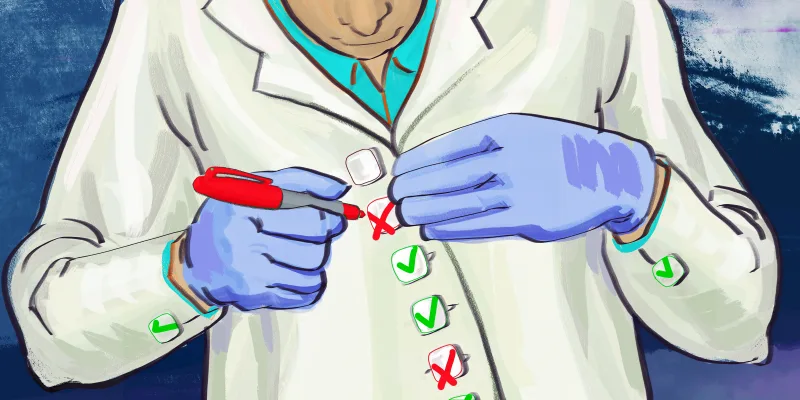

I still remember a patient who came into the pharmacy frustrated and confused.
He had recently been discharged from the hospital with multiple new prescriptions. His blood pressure remained uncontrolled, his blood sugars were fluctuating, and he wasn’t sure which medications to take, or when. He had seen multiple clinicians, yet something fundamental was missing: clarity.
We sat down and reviewed each medication, one by one. Within 15 minutes, we identified duplication in therapy, incorrect timing, and gaps in understanding that were directly impacting his outcomes. This interaction is not unique. It happens every day in community pharmacies across the country. And yet, pharmacists are often the most underutilized members of the healthcare team.
As physicians and APPs navigate increasing patient loads, administrative burdens, and time constraints, gaps in care are inevitable. Medication-related issues — whether it’s adherence, drug interactions, or inappropriate therapy — are among the most common and preventable causes of poor outcomes.
According to data frequently cited in healthcare literature, medication nonadherence alone contributes significantly to hospitalizations and healthcare costs. Organizations such as the CDC have highlighted the impact of adherence on chronic disease outcomes, particularly in conditions like hypertension and diabetes.
This is where pharmacists can — and should — play a larger role.
Community pharmacists are uniquely positioned within the healthcare system. Unlike most clinicians, we do not require appointments. Patients interact with us more frequently than with any other healthcare professional. In many cases, we are the first to identify issues that might otherwise go unnoticed. But despite this accessibility, pharmacists are often excluded from formal care coordination. Why?
Part of the answer lies in how the system has historically defined our role. Pharmacists have long been viewed primarily as dispensers of medications rather than as clinicians. However, this perspective is increasingly outdated. In practice, pharmacists are already providing clinical care, just without consistent recognition or reimbursement.
In underserved and rural communities, this gap becomes even more pronounced. When access to primary care is limited, patients often turn to their local pharmacy as their first point of contact. We answer questions, triage concerns, provide education, and, in many cases, help patients navigate a complex healthcare system.
Studies published in journals such as the Journal of the American Pharmacists Association have demonstrated that pharmacist-led interventions can significantly improve medication adherence and chronic disease outcomes. Yet, these contributions are rarely integrated into broader care models.
From a physician’s perspective, the value of pharmacists lies not in replacing care, but in extending it. Imagine a system where pharmacists are fully integrated into care teams. Medication regimens would be reviewed regularly for appropriateness, patients would receive reinforcement on treatment plans between visits, and drug-related problems could be identified early, before they escalate. This is not a theoretical model. It is already happening in pockets of the healthcare system through collaborative practice agreements and integrated care models. The results are promising.
But for this model to scale, we need a shift in mindset. Pharmacists should not be viewed as peripheral to patient care. We are part of the care continuum. And more importantly, we are often the most accessible member of the team.
There is also a practical benefit for clinicians. In an environment where physician burnout is a growing concern, leveraging pharmacists can help distribute the workload more effectively. Medication management, patient counseling, and adherence monitoring are areas where pharmacists can add immediate value. This is not about adding complexity, it is about improving efficiency.
Of course, challenges remain. Reimbursement structures have not kept pace with the evolving role of pharmacists. Integration into EHRs is inconsistent. Communication between clinicians and pharmacies is often fragmented. But these are system-level barriers, not limitations of capability.
The patient I mentioned earlier left the pharmacy that day with a clear understanding of his medications and a plan he felt confident following.
Two weeks later, he returned, not with confusion, but with improvement. His blood pressure was better controlled. His adherence had improved. And most importantly, he felt empowered.
As healthcare continues to evolve, we must ask ourselves a simple question: Are we fully utilizing the resources already available to us?
Pharmacists are not a new addition to the healthcare system. We have always been here, working alongside physicians, supporting patients, and filling gaps in care. The difference now is that the need for integration has never been greater.
The pharmacist you may be overlooking is not outside the system. We are already in it, ready and waiting to do more.
Vimal Patel, RPh, is a community pharmacy manager based in Gastonia, North Carolina, with more than 19 years of experience in patient care and pharmacy operations. He is a published contributor to Drug Topics and Pharmacy Times and focuses on improving access to care in underserved communities.
Image by GoodStudio / Shutterstock