
One reason I love teaching is that one can strengthen one's own knowledge and one’s students' at the same time. It’s almost paternalistic, to be entrusted with offering knowledge that your teaching physicians loaned you. The treasured endeavor to pass knowledge also allows some part of you to live on with your students long after you are gone.
Some doctors enjoy it and others hate it. It’s like anything, really; some are good at it and some are not. There is an old saying: “Those who can’t practice medicine, teach it.” I find that somewhat condescending and don’t adhere to that saying, as I see the teaching of medicine as a part of its art. Hippocrates was a forefather of medicine and modern medicine was born from that, and the only way to sustain this knowledge is to relinquish it unto the future students. Even the Latin word for doctor, "docēre," means “to teach” and it should be an integral part of us as physicians, since we teach our students and our patients. They all need knowledge that only we possess and can provide.
In the decades I’ve been teaching, I have found it fulfilling and challenging at the same time. As stated above, nothing keeps you on your toes with the changes in medicine more than having to teach it. I, however, have noted changes over that time period: some good, some maybe not-so-good.
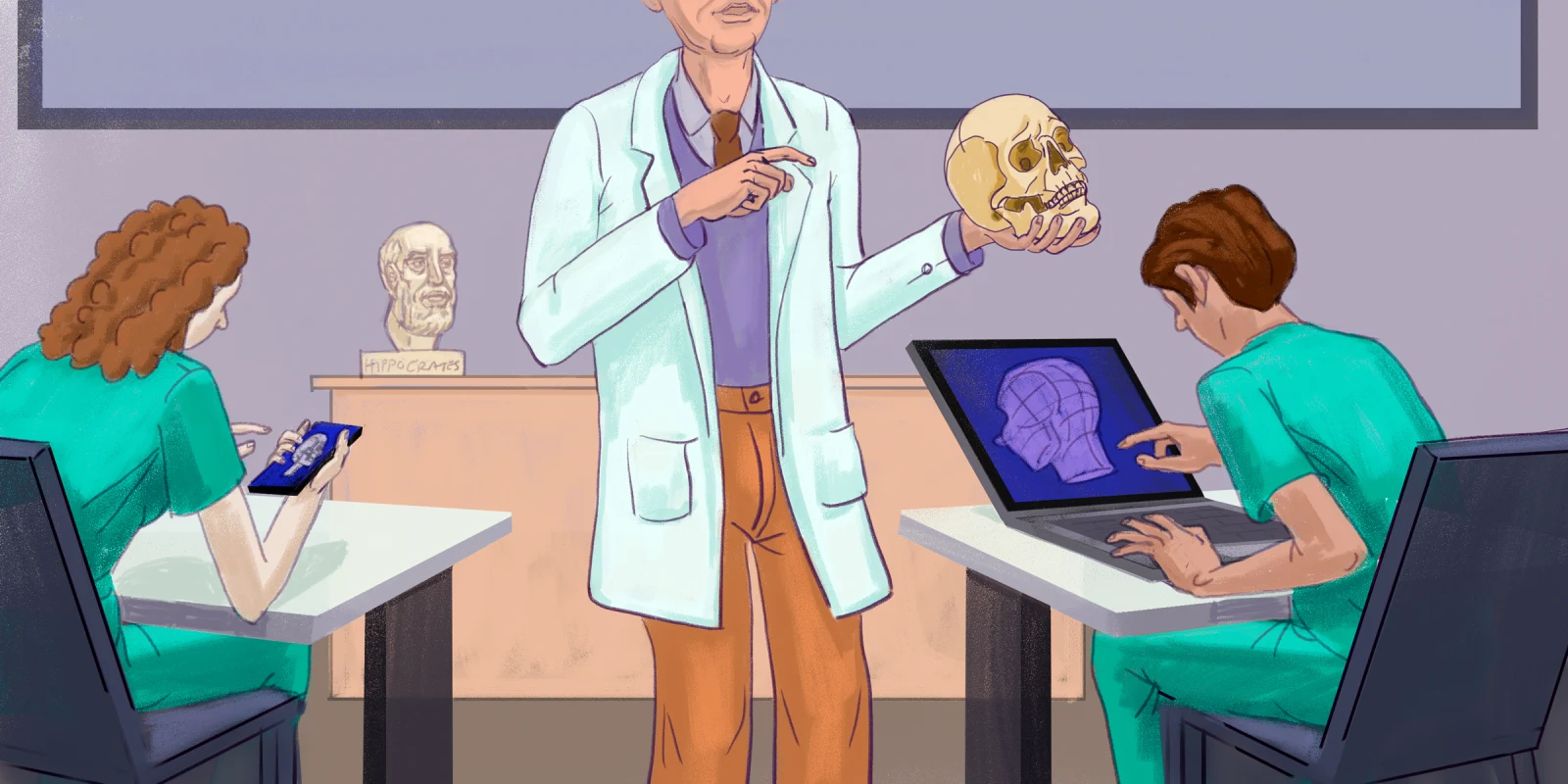
I’ll start with the not-so-good: The standard for medical knowledge has seemed to decrease — from the basic science components like anatomy and physiology to even clinical medicine. Some of these changes include programs that no longer use cadavers at all for Gross Anatomy, instead learning Anatomy (and other classes) virtually. I have noticed that the consequences of this are that the students seem to be unsure of themselves and do not feel confident in answering clinical questions at the bedside without verifying on a phone or computer. It’s as though they are dependent on these devices and that without them, their knowledge spigot is turned off. I always tell them that they have the best and most capable computer at their disposal at all times and it only needs one to “think.” They usually get a kick out of that but they still seem to fall back to the phone or the laptop. Truthfully, the students are not any less capable than their predecessors, as it is the times and their access to knowledge that have really changed. Still, I bristle that they are just so much more dependent on other tools like apps on their phones, UpToDate, and now AI. It’s a different way to practice and if they learn to use these items as tools only, I think it would make them even stronger doctors. The key will be how to implement these tools without diminishing their own inherent intellect and knowledge.
But one good change I have noticed is they are very much more aware of their health and work-life balance. When I was a student and resident, some rotations meant I was in the hospital 90-100 hours per week. For all the really old doctors out there who were really house staff since they actually lived and worked in the hospital 24/7, I applaud you and thank you for your dedication! But times have changed and now house staff cannot work over 80 hours; they must have eight hours off between duty periods and various other work-life balancing. Even in my day, I remember being on 36 hours without sleep and being in the OR holding retractors and dozing off and being struck with the back of a scalpel by the attending surgeon to wake me up. These things are less frequent now and I believe rightfully so. I also think these young physicians having a work-life balance can aid in preventing burnout and hopefully allow them more time to see and spend with their families to strengthen that bond. It’s one of the few things in training and residency I regret to this day: not being able to be there for my wife and young kids as much as I should have been.
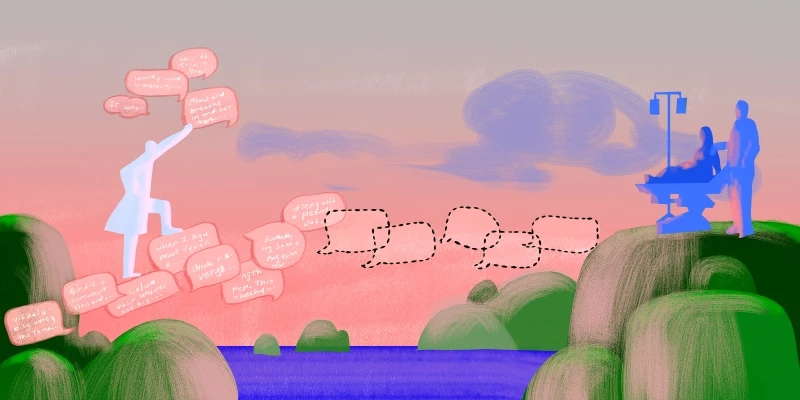
I believe that medical education must adapt to the student and not vice versa. The students of today and tomorrow are truly different from the students of the past. We have to learn to train them to use their access to technology and AI as a tool that must be verified. We have to engage the students with the history of their profession and the ones who came before so they understand that much of that legacy rests on them for our profession. We have to let them know that they should be the stewards and collectors of their knowledge, and only their desire to be better and know more will make them better doctors. We have to engage ourselves with technology and AI and make sure that we are not falling behind with the exponential growth and change in medicine. I honestly foresee a future where AI will be directly teaching medical students in basic sciences and clinical medicine and will be diagnosing and offering up-to-date treatment protocols to the students and attending physicians. These changes are going to be eye-opening and will cause a paradigm shift in teaching that is going to warrant our own adaptation and evolution. We won’t know exactly what changes to expect until we are within the full medical AI era. Ultimately, each of us will likely have our own AI that will work as a colleague, providing care to our patients and giving us the most up-to-date information to make us even better and more capable physicians. Tomorrow seems to be here today and only we who adapt can continue to offer a path to the future.
Do you agree that education should adapt to the student, not vice versa? Share why or why not in the comments.