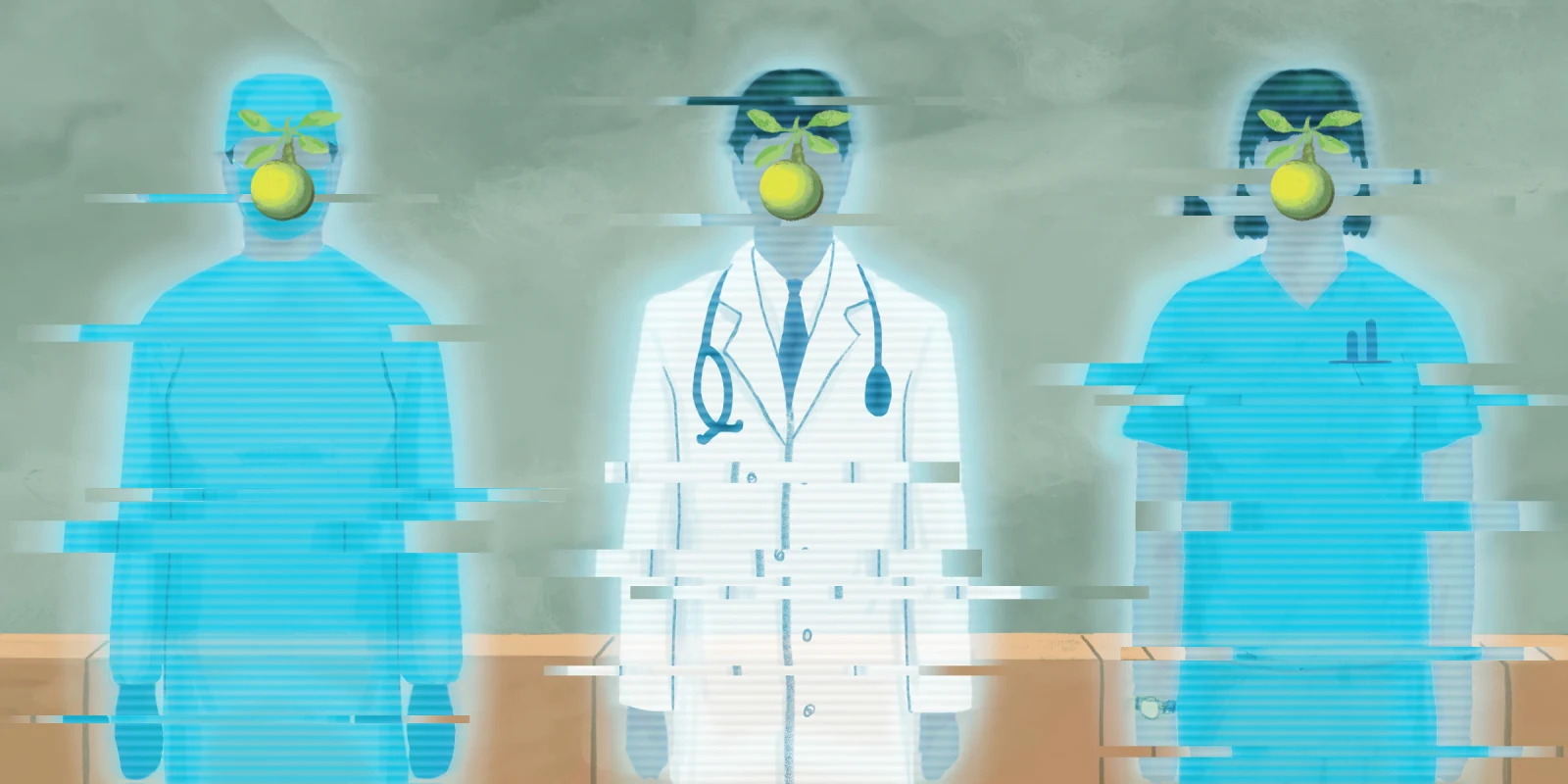

On July 22, 2026, a lawsuit was filed against OpenAI and its CEO Sam Altman by a former Florida pastor named Scott Winters. The suit alleges the "unauthorized practice of medicine" via ChatGPT.
I wish Mr. Winters a speedy recovery, and I feel for anyone who has suffered as much as he has, particularly while holding on to the feeling that he had been misled. The "intelligence" that speaks to us across our screens is eerily human, self-assured, and very knowing, almost like an experienced doctor.
I admit, I use LLMs every day, both for work and personal means. I would bet I am not the only person who almost says "goodnight" or "we will pick up here tomorrow" at the end of a work session with AI. I have to remind myself: I am not talking to something that knows or cares. But the illusion of personhood is impressive, and I have certainly been in its sway. So I feel for Mr. Winters. He was betrayed by a friend.
This legal case is active. We do not know how it will end, but we do know the conversation that must be buzzing through the AI industry right now. What are the liabilities here? It is a reasonable concern. Artificial intelligence may have given out millions of tidbits of all sorts of advice, medical included. Maybe the number is billions. If each is an individually litigable event, "trouble" is not the word.
So why is this important for us as physicians? Maybe we should feel relief: finally someone else is in the hot seat, not us. And yet, I do not think this is the right approach. It is my belief, perhaps counterintuitively, that now is the time for physicians to vocally support and shape the role of AI in medicine.
How will the AI industry choose to react? Let us take the most draconian possibility first. Health information is censored for everyone. It becomes inaccessible. Your AI leaves you with an apology and a blinking cursor when you ask what that clicking noise in your shoulder is, or when you paste a patient's medication list into your AI and ask whether the drop you are about to add is going to interact with any other medication. Though unlikely, think how devastating it would be to have this carpet pulled out from under us. Many physicians and patients are using AI appropriately and with great success as a tracking tool, a research tool, and a summary tool. If we assume even for a moment that it is helpful, then its absence, especially if abrupt, has within itself the potential for harm.
Let us take a different tack on behalf of the AI companies, and limit health information to doctors. Yes, us. We will exercise appropriate judgment, and take the framing and suggestions of AI as the tools they were meant to be.
This protocol arrives with its own set of problems. If you thought it was cumbersome having friends call you at night to prescribe eyedrops for their child's pink eye, wait until they need you to look up something for them on "medical AI." And it is more than that. It has always been the right of every citizen to go to the library, pick up a copy of Merck or Harrison's, and convince themselves that they have (or don't have) any and all ailments listed therein. Where are we actually heading when we close off what really is just a more effective method of knowledge gathering?
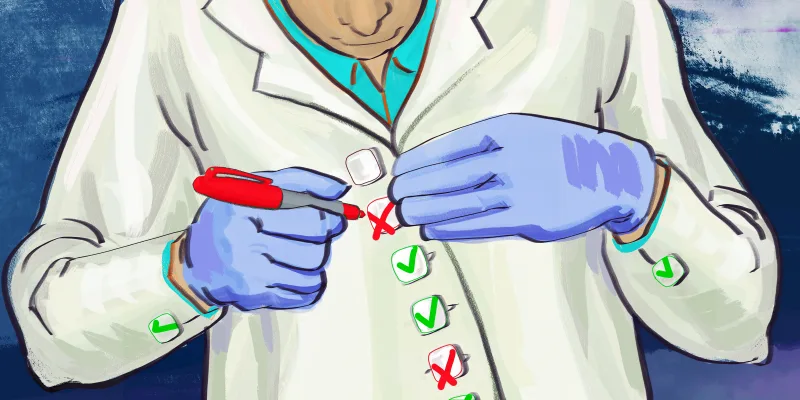
Certainly, you may think, there will be a happy medium: alerts. Alerts! Every bit of medical advice will come with its own specialized warning. "This is not medical advice" (even though it very clearly is medical advice). "Consult your healthcare provider immediately" (even though, let us be honest, if the patient is using AI they chose not to do that).
If you are a physician, you already know the problem. Our EMRs have taught us.
Alert. MIPS ... "Yes, I should do that, but maybe later."
Alert. See chart ... "Sure, OK, but why?"
Alert. VIP patient, family member … "I’ll just click this off."
Alert. Fatal allergy ...
We are all aware. The continuous alert is no alert at all. The RaDonda Vaught case still hangs over this conversation. A Vanderbilt nurse was criminally convicted of homicide after a fatal medication error where she overrode a pop-up warning. The medical safety community's takeaway was not that the nurse was uniquely negligent. It was that we had built a system where warnings had become so ambient that overriding them was the workflow. The AI equivalent is on the horizon.
Imagine an AI set to maximally alert at all times, valiantly attempting to warn you of your heart attack, but having no ability to administer a more or less stern phrase than for your ingrown toenail.
Now consider the flip side. What if patients actually listened, the way we ask them to? What if for one moment, even a fraction of the population took such alerts seriously? Imagine the run on the ED, the unnecessary procedures, the nosocomial infections.
This is the problem with medicine. There is not ever "one" safe thing you can do and say to be correct all of the time. It just does not work that way. Medicine is about careful judgment applied to a very individual situation, grounded in medical knowledge. I think it is fair to continue to grant patients the same autonomy they already have via a Google search, to peruse the compendium of human knowledge in this new form.
AI is not going away. As certain as that is, it may be just as certain that it will get better and less error-prone as time passes. I have my own misgivings about it, but it is here to stay. In my estimation, it is one of the more likely tools humanity will use to move ahead into the future, and I want medicine moving forward right along with everyone else.
When AI advice harms someone, it is certainly a tragedy that must be investigated, and it is also a media sensation. When AI advice helps someone recognize a stroke pattern in time and get to a hospital, or asks a patient about the medication they forgot they were on, or catches a drug interaction, that story does not exist anywhere. AI makes mistakes. So does every instrument in your office, your surgery center, and your hospital, and we call those malfunctions. Your hands make mistakes too, and so does your mind, and we may call these errors exhaustion, or tell ourselves we did the best anyone could have done.
The NOHARM study, out of Stanford and Harvard, is one of the more thoughtful attempts to benchmark clinical AI safety. It is a dense evaluation of how leading models actually perform on medical prompts. It is interesting to note that the greatest deficit found in AI models that failed to pass muster was the lack of mention of certain diagnoses or treatment options. The chatbots did not chat enough. That is a problem with real directionality that should be amenable to a variety of solutions.
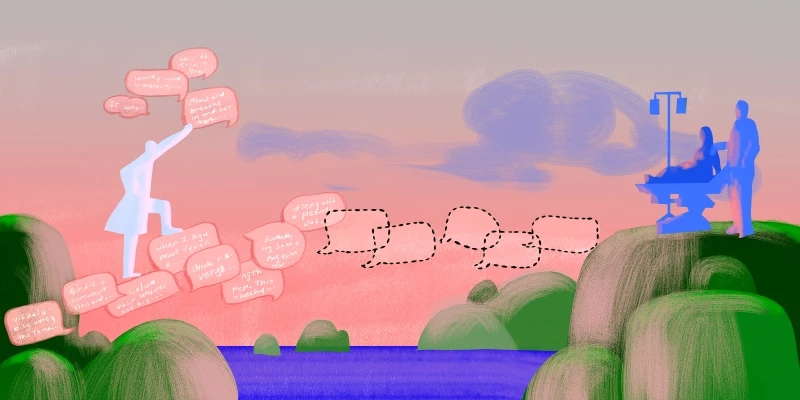
Related work is already pointing the way. Purpose-built clinical models, those trained on medical literature and grounded in clinical reasoning rather than repurposed general chatbots, are beginning to show better safety profiles on the same benchmarks. But models do not build themselves. This is the direct answer to why physicians should engage rather than retreat. When we step back, AI in medicine gets shaped by product managers, engineers, and lawyers. When we step in, it gets shaped by us as well. The safety improvements we want in the next decade will not appear on their own. They will come from clinicians willing to sit at the table and say: this is what we saw, this is what we needed, this is where the model failed or succeeded for me and my patient.
I think we are at a crossroads, and if we walk the wrong way, it will be an error that colors the next decade for better or worse in medicine. But it is not two paths, forking in the wood, right and left. It is one.
Forward or back.