
Pediatric medicine begins with a different set of assumptions than much of adult care. Children are still developing, and their physiology changes rapidly across childhood and adolescence. Illness unfolds differently at each stage of that process. The decisions clinicians make can shape decades of future health. Because of this, pediatric care places unusual emphasis on growth, prevention, and the family context in which children live. Children’s hospitals reflect that orientation. Teams often plan care with long time horizons in mind. Conversations with families frequently extend beyond survival to development, school participation, and the life a child may lead years later. The structure of pediatric medicine rests on the idea that early care influences lifelong health.
That model now faces several pressures. The most immediate involves financing. Pediatric care in the U.S. depends heavily on Medicaid, which insures a large share of children and an even larger proportion of those with complex conditions. Current federal budget negotiations have included proposals that could significantly reduce Medicaid spending over time. Because children’s hospitals care for disproportionate numbers of patients with complex illnesses, extended hospitalizations, and intensive resource needs, Medicaid policy changes directly affect their operating stability. These institutions already function with narrow margins. When reimbursement tightens, services contract quietly. Families usually become aware only when specialized programs disappear or when care that once existed nearby moves several hours away.
Workforce trends add another layer of strain. Fewer trainees now choose pediatrics, and pediatric subspecialties attract an even smaller fraction of graduates. The reasons are not mysterious. Pediatric training pathways are long, educational debt remains high, and compensation in many pediatric fields trails adult specialties despite similar clinical demands. Commitment to caring for children continues to motivate many trainees, but purpose alone does not correct structural incentives that make the field difficult to enter and sustain. When financial pressure and workforce shortages converge, a recurring proposal tends to surface. Some observers suggest that adult-trained physicians could extend their scope downward to care for adolescents or older children. The idea often appears practical. In reality, it reflects a misunderstanding of pediatric expertise. Caring for children involves more than adjusting medication doses or equipment size. Pediatric physiology evolves quickly across age groups. Disease often presents through developmental or behavioral cues that require experience to interpret. Decision-making frequently involves families and must consider long-term development as well as immediate illness. These elements of care emerge through focused training and sustained clinical exposure.
If pediatric expertise becomes harder to sustain under existing models, the appropriate response is redesign rather than substitution. The field may need to reconsider how pediatric knowledge is trained, organized, and distributed across health systems. Training pathways, for one, deserve careful examination. Many pediatric subspecialty programs were created in an earlier era with different workforce dynamics. Competency-based progression and earlier entry into subspecialty training could shorten the path to independent practice in some fields while maintaining the depth of expertise children require. Care delivery models will also need to evolve. Pediatric practice has always relied on multidisciplinary teams. Greater integration of NPs, PAs, pharmacists, and other professionals can extend pediatric expertise more effectively. In these environments, pediatric subspecialists function not only as direct physicians but also as sources of guidance for broader care teams working across hospitals and communities.
Another opportunity lies in reconsidering how pediatric systems define the patients they serve. The current boundary between pediatric and adult medicine is largely administrative. Age 18 is treated as a dividing line, yet development does not change abruptly at that point. Many young adults continue to live with conditions that originate in childhood, including congenital heart disease, cystic fibrosis, sickle cell disease, and the long-term effects of childhood cancer. Even those without chronic illness often share features that pediatric systems handle well. They typically have low comorbidity burdens and are still navigating neurologic, social, and behavioral development. For these patients, pediatric environments can provide continuity and expertise that adult-oriented systems are not always structured to deliver. Instead of pushing pediatric care downward into younger age groups managed by adult clinicians, the field may find greater value in extending its developmental approach upward into early adulthood.
Pediatrics has long been guided by the belief that early care shapes lifelong health. Preserving that vision will require adaptation. If pediatric expertise becomes scarcer in the years ahead, the task will not simply be to protect it. The greater challenge will be to deploy it thoughtfully so that children, and young adults whose health remains closely tied to childhood conditions, continue to benefit from a system designed around the possibility of healthy futures.
Should pediatric care be redesigned? Share in the comments.
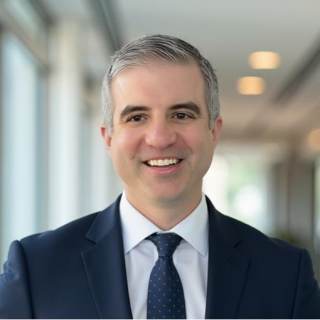
Dr. Chris Horvat is a pediatric intensivist, clinical informatician, and learning health systems researcher in Pittsburgh, PA. His path to medicine began as a contractor in the high-purity quartz mines of western North Carolina, likely making him the only informatician who once helped extract the raw materials powering today’s digital workflows in health care. Dr. Horvat is a 2025–2026 Doximity Op-Med Fellow.
Image by Alphavector / Shutterstock