
The call came late in the afternoon: coverage had fallen through at a cancer clinic.
Infusions were scheduled. Chemotherapy had already been prepared. Patients had arranged rides, time off work, and childcare. In oncology, treatment does not pause because staffing fails.
I was already credentialed and could step in. So I did. That evening, I told my son I would be gone for two weeks. He looked up and asked, “Can’t someone else do it?” In theory, yes. In practice, not easily.
In many community oncology settings, a single physician absence can disrupt an entire infusion schedule. The margin for delay is thin. When a physician drops out, someone else has to step in quickly.
The system depends on that flexibility. What it assumes, quietly, is that the physician stepping in has a life that can be rearranged just as quickly.
We talk about physician shortages in terms of access, delays, and burnout. All of that is real. But there is another cost we rarely name. It is measured in missed birthdays. Late dinners that become routine. School events attended by one parent instead of two. Spouses who learn to absorb unpredictability without complaint. Children who stop asking if you will be home on time. Hospitals can find coverage. Families find ways to adjust.
I left the next morning. The work itself was not unusual. Patients needed care. Decisions needed to be made. The clinic moved forward. From the outside, everything functioned exactly as intended.
Two weeks later, when I returned home, everything was where I had left it. At the dinner table, my chair was still there. On it was a piece of paper. My son had drawn a picture and placed it carefully on the seat. A stick figure, clearly labeled: “Dad.” He had made sure I still had a place.
We often describe medicine as a calling. A commitment. A responsibility to show up when needed. Less often do we acknowledge who makes that possible. Because when physicians show up, someone else is covering for them. At home, that role is rarely scheduled, rarely compensated, and rarely recognized. Physician families become experts in flexibility. They celebrate birthdays on different days, attend school events alone. They learn not to rely on certainty and build lives around a profession that does not always allow for presence.
Our healthcare system works, in part, because these sacrifices are made quietly and consistently. But that does not make them small. There is a tendency to treat physician coverage as frictionless, as though one qualified person can seamlessly replace another without consequence. Clinically, that is often true. But every time a gap is filled in one place, a gap opens somewhere else. It opens at home.
If there is one thing worth naming more clearly in medicine, it is this: Behind every physician who shows up when needed, there is a family that makes that possible. Not occasionally. But over and over again. And I have never been more grateful for it.
Sriman Swarup, MD, MBA, is a board-certified hematologist and medical oncologist practicing in Arizona. He cares for over 3,000 patients annually and is also the founder of OncoNexus, a health technology initiative focused on improving cancer care workflows.
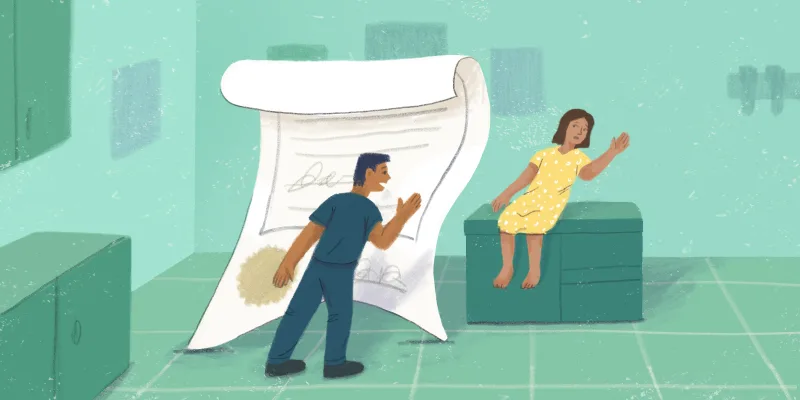
Illustration by Jennifer Bogartz