
There is a lesson I should have learned much earlier than I did. Somewhere between anatomy labs, morning rounds, and the long nights of surgical residency, it was buried under the weight of technical mastery: Skill heals the body, but character heals the person.
As surgeons, we are trained to make hard decisions quickly and without hesitation. When a limb must be amputated to save a life, decisiveness is not optional. Technical competence is not a luxury; it is a moral obligation. But that training can narrow our vision. Patients become problems to solve. Complications become puzzles to fix. Efficiency becomes virtue. And something essential gets lost.
During residency, my colleagues and I used to debate a familiar question: Would you rather have a technically brilliant surgeon who was a jerk, or a technically average one with a wonderful bedside manner? At the time, I sided with skill. After all, that was what we were sacrificing sleep and sanity to perfect.
Over the years, I have seen both archetypes.
One technically gifted surgeon I knew had complication rates no worse than anyone else’s. But when problems arose — as they inevitably do in medicine — he handled them with detachment and impatience. Patients felt dismissed. Families felt unheard. Lawsuits followed, not always because of the complication itself, but because of the coldness surrounding it.
I also knew a beloved general practitioner who would sit at the bedside, hold a patient’s hand, and listen without glancing at the clock. His patients adored him. Yet his medical decisions were often outdated or overly optimistic, and outcomes sometimes suffered for it. Even so, they defended him fiercely.
Back then, I thought the lesson was about public relations. It wasn’t. It was about relationships.
Patients rarely remember their lab values or the technical details of a procedure. They remember whether they felt seen. They remember whether someone listened without interrupting. They remember how we behaved when things went wrong. Competence earns trust. Character sustains it.
Years into practice, I made a decision that harmed someone. In medicine, we work with incomplete information and finite judgment. At the time, my reasoning was sound. I could explain it step by step. But the explanation does not erase the outcome. An elderly woman was injured because of me.
I met with her family. I listened while they spoke through anger and grief. I did not defend myself. I did not hide behind technicalities. I accepted responsibility and apologized, plainly and without qualification.
They did not sue.
When my skill failed me, character was all I had left to offer. That was the day I understood the debate had always been flawed. Skill and character are not competitors. They are partners. And when one falters, the other carries the weight.
The question was never skill or bedside manner. Patients want both. They deserve both. They want someone capable of repairing what is broken, and someone willing to sit beside them in uncertainty. Someone who can interpret the CT scan and the fear in their voice.
Without competence, empathy is dangerous. Without empathy, competence is brittle. Technical excellence without humanity breeds quiet adversaries. Physicians find themselves arguing with patients about rehab, medications, or nursing home placement, not because the plan is wrong, but because trust has eroded.
The same dynamic exists beyond medicine. A CEO who humiliates colleagues eventually loses loyalty. A brilliant engineer who ignores human behavior builds elegant failures. Skill may produce results, but character determines whether those results endure.
For years, I dismissed empathy as sentimentality. In surgical culture, detachment can masquerade as strength. Caring too much felt like a liability. I was wrong. Empathy is not softness. It is courage. It takes courage to remain open when you are exhausted. To listen when you would rather move on. To admit error when pride urges silence. To stay present when outcomes are uncertain.
Without that courage, technical skill becomes hollow. It may sustain a career, but it will not sustain a person. It is how capable physicians burn out: how they become efficient, respected, and disconnected.
Medical training taught me one craft well: how to repair what is broken. The second craft, character, I learned elsewhere. I learned it in the patience required to comfort a frightened child. In listening to my wife after a long day, when I would rather retreat into silence. In books that widened my view of lives unlike my own.
We are finite people practicing in an imperfect world. Medicine rewards productivity, precision, and measurable outcomes. But what allows us to endure, what allows us to connect, is not perfection. It is presence.
When perfection fails, presence remains. That is what patients remember, what families remember, what colleagues remember.
Skill heals the body, but character heals the person. And in the end, it is character that makes the healing whole.
When has your character carried the weight that your technical skill could not? Share your experience in the comments.
Charles Black, MD, is a general surgeon and former Op- Med Fellow who writes on the philosophical dimensions of a life, often drawing on lessons learned from three decades in medicine. His work can be found on Medium.
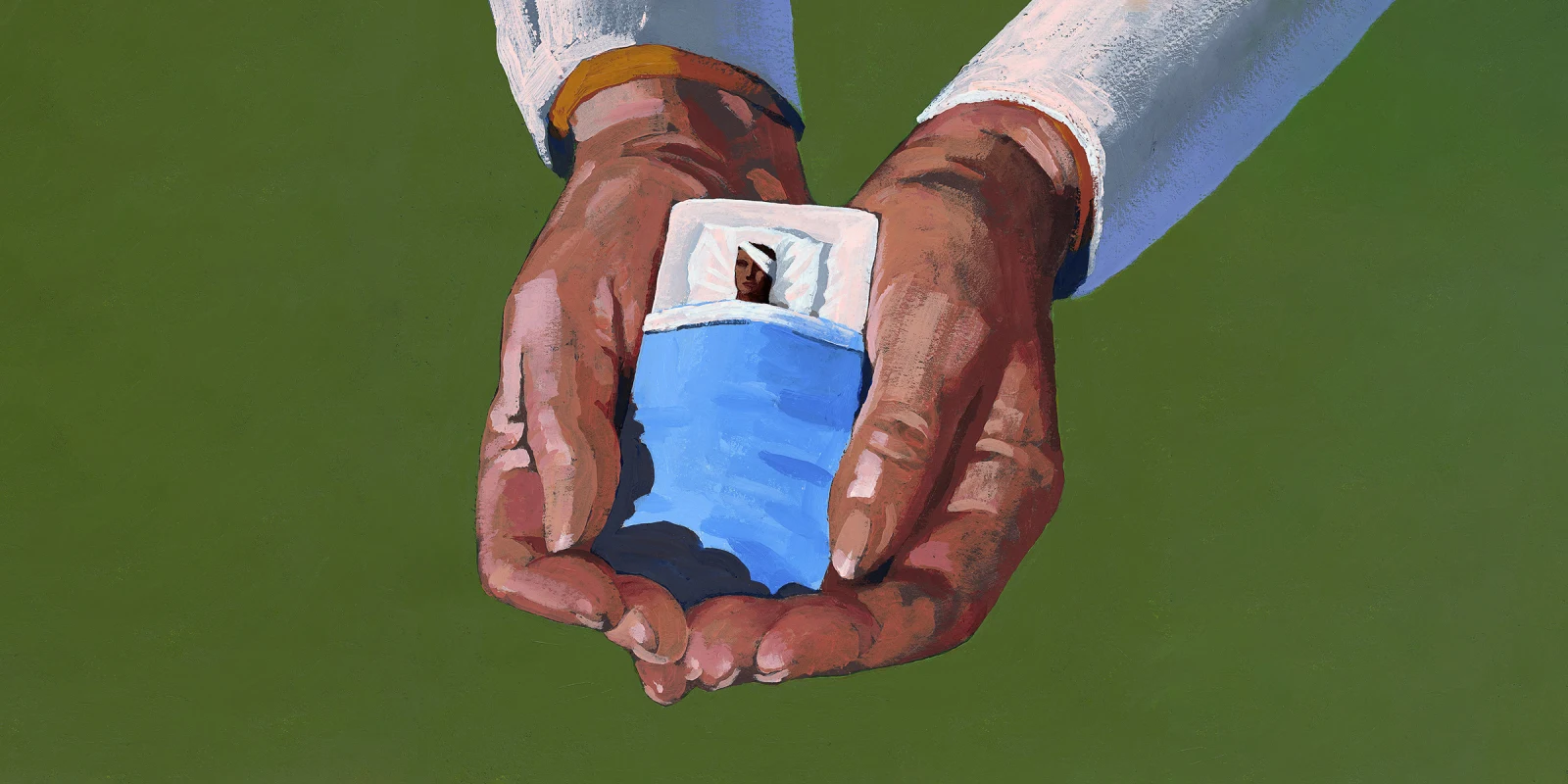
Image by Jonathan Evans / Getty