
Early on a Friday morning, in my second year as an attending, I was at work changing into scrubs when I suddenly collapsed. A nurse found me lying on the locker room floor, and when I opened my eyes, her face and voice seemed fuzzy and distant, as if we were both underwater. I was placed on a stretcher by the OR team and wheeled down to the ER. I was the patient now, no longer the surgeon.
After some basic bloodwork and a FAST (Focused Assessment with Sonography in Trauma) exam, the ER doctor diagnosed me with a ruptured ectopic pregnancy. I hadn’t even taken a home pregnancy test yet: I was only a few days late. My blood pressure and hemoglobin were both dangerously low. I was dying in my own hospital. The gynecologist on call booked me for an emergency salpingectomy, and I thanked every single person in the room before drifting off to sleep.
I awoke in the recovery area, marveling at the fact that it felt like only a single minute had passed, even though I knew that my surgery had taken much longer. I spent two days in the hospital, my husband and mother taking care of my 3-year-old son at home. It was nice to walk the halls of the hospital without having to make rounds. During my stay, my doctor came to see me. She told me she had been shaking while operating on me; she was terrified that I wasn’t going to make it. I had needed five units of blood and a packet of platelets. She sat on the side of my bed as we held hands and both silently wept.
I took four weeks of medical leave. In that time, I put together a photo album, longing for my carefree teenage years and compiling a thumb drive of digital photos for printing. When the pictures were ready, I shuffled through them, gently running my fingertips over the glossy images of my son’s smiling face.
On sunny days, I sat on the patio and watched the ducks seamlessly swim in the pond, imagining their feet steadily pedaling under the water’s surface. I called my oldest friends and shared my story with them, our voices breaking with tears. Visitors came with cookies and flowers. I read books. I mourned. I mourned for my lost baby. I mourned for my fleeting fertility. I mourned for the thousands of women who die each year from ectopic pregnancies.
I returned to work and resumed patient care. But things felt different, the seismic event of my illness shifting the framework of my life and leaving a permanent tilt in the former sturdiness. Before my illness, I had been pushing myself to work harder, run longer clinics, do more cases. Now I understood and valued the importance of respecting myself and protecting my peace. I learned that the body that had allowed me to carry out my responsibilities as a surgeon — the exhausting call nights, the marathon operations, the hours of rounding, the life-threatening emergencies, the seemingly endless clinic days — that same body could easily fail me, just as I had witnessed in others in my years as a doctor. I had shepherded countless patients through similar betrayals, and now their illnesses refracted through a sharper, clearer lens.
They say that doctors make the worst patients. But I think that experiencing an illness can open our eyes to aspects of medicine that we might not otherwise see. I learned that healing is a long process. I learned the value of naps and rest. I learned the importance of grieving and reflection. I learned the pleasures of just sitting on the patio, watching the ducks swim in the pond. I learned to slow down. I learned to value my family and my time. But perhaps most importantly, I learned how to encourage my patients to do the same: to take time after a traumatic event, to recover and reflect on what happened. I learned the importance of vocalizing my support when bad things happen. I learned to sit quietly with my patients when tears come and they need a moment. I learned the value of giving grace to myself and to others.
My illness, the gift and the curse, taught me how to see my broken self in my patients, and how to help make them whole again.
Fara Bellows is a general urologist in White Plains, New York. She can be found on TikTok @FaraBellowsMD.
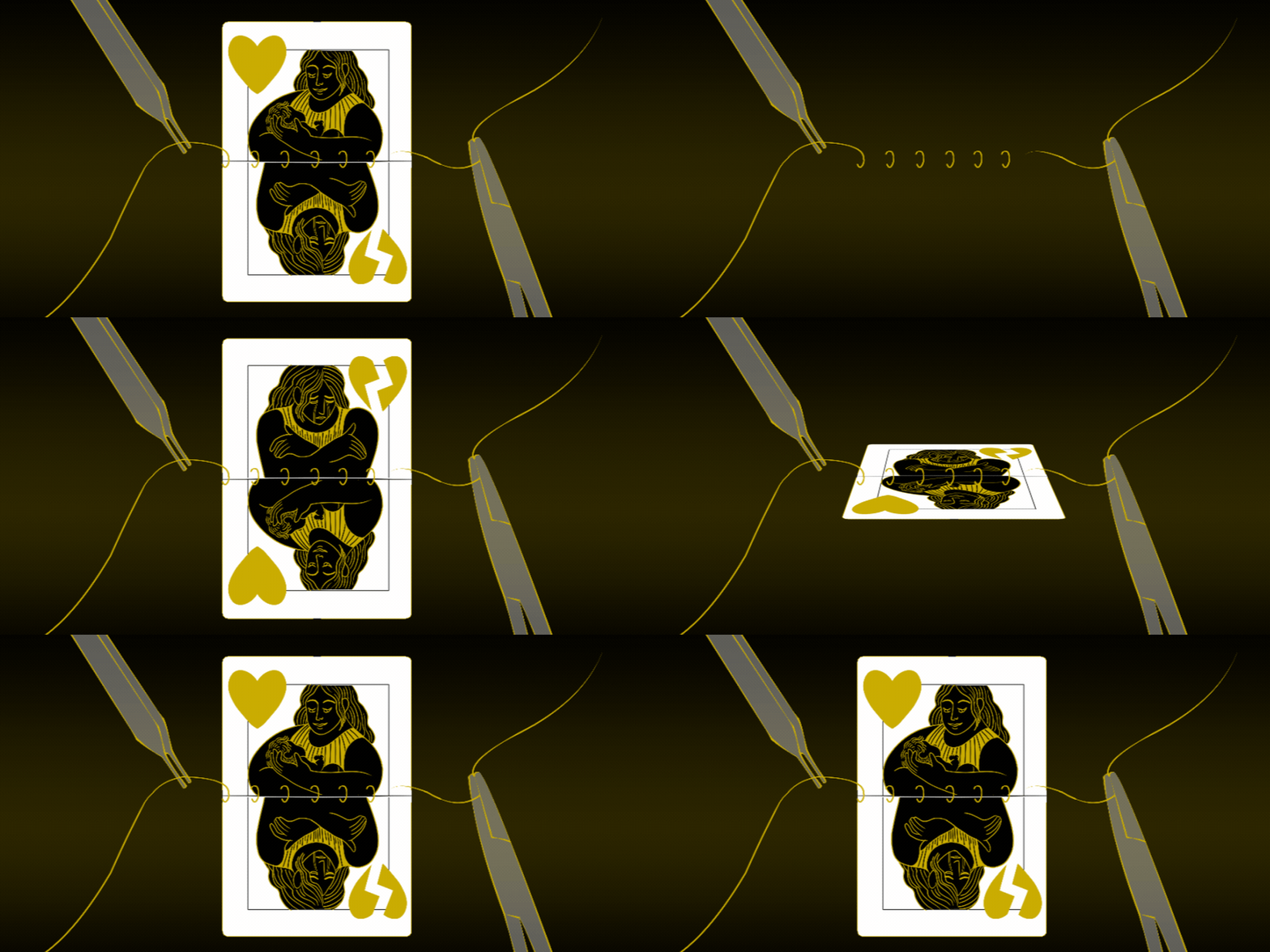
Animation by April Brust