
The word “burnout” was not standard in the 1980s vernacular of an American physician, yet I understood what my mother meant when she woke me one morning and said, “We’ve made the decision to move. Your dad is burned out.”
By age 10, the high-pitched tones of my dad’s pager frayed my nerves. In rural Western Nebraska, our small family of four drove two cars on outings, knowing we’d be interrupted. While my dad searched for a phone, we’d wonder: would he finish his time with us, or immediately jet?
My mother’s morning announcement had followed on the heels of the epic grocery store meltdown. My brother, then 12, chucked boxes of instant rice in the aisle as he shouted repeatedly, “I hate him!” after another canceled family vacation. No one but my dad could treat the severe car crash injuries suffered by a young family.
Life could be worse, we were told.
I swore I’d never be a doctor.
The summer before my senior year in college, imagine my dad’s surprise when I called him suggesting the contrary. I’d interned at the neuroscience lab, and had returned to my apartment, embarrassed I’d botched prepping the Nissl Stain but too afraid to confess (sorry, Dr. Fikes!). Disillusioned that my fascination with psychology might render me a lifetime of research and destroying cresyl violet stains, it happened — psychiatry snatched me from the lab. Maybe it was a collusion of V.S. Ramachandran’s “Phantoms in the Brain” with Bruce Willis from “The Sixth Sense.” Or maybe it was a desperation to solve the puzzle of my sometimes depressed and overthinking brain.
“I want to be a psychiatrist,” I said to my dad over the phone.
“You’d have to go to medical school.”
“Challenge accepted.”
The climb toward physicianhood is rarely straightforward. But once the decision is made and the commitment is sealed, the summit awaits. Many perhaps imagine the view from the top: fulfillment, security, prestige, pride, respect, a wish come true. As a child, I’d experienced the summit: irritable, sleep-deprived outbursts that left me in tears, marital spats and fears of divorce, empty seats at recitals. Armed with this reality, I vowed not to repeat the same fate.
My dad prepped me for the parts of the journey that were unavoidable. I'd preround at 5 a.m. before the residents arrived, call him, and run the caseload. That decadelong climb contained plenty of anxious doubts, but I plowed through, and persevered toward each marker on the way to the top. One more class, one more exam, one more rotation, one last move. After graduating fellowship, I’d negotiated a part-time schedule for my first attending job. I slept great, volunteered as a kindergarten room parent, and exhausted my time off benefits with the pager disconnected during vacations.
I’d succeeded where my dad had failed.
So why, years later, when my teenage daughter declared she wanted to be a physician, did my face contort in mild horror? An expression she immediately mistook for doubt in her intelligence, thrusting me on a frantic backtrack to explain (very badly) that my face reflected an abrupt flash forward vision of her life: half a million dollars in debt, corporatized medicine, diminishing reimbursement rates, big pharma, “med checks,” productivity pressures, midnight charting, and increasingly violent patients.
I’d believed burnout was physical, not psychological.
Alison Levine, a famous mountaineer, led the first all-women’s expedition team up Mount Everest. She had this to say when they failed: “Reaching the summit isn't the goal: it's getting there and back. It’s not ‘go big or home.’ It’s go big and go home. Most deaths on the mountain happen on the way down because people use every ounce of strength in them to get to the top and then they don't have the reserves they need to get back.”
Staying, even dying, on that summit may seem the only option for some physicians. Maybe we’ve come to believe the end of the journey is the pinnacle and we are trapped in this harsh environment. After spending all our reserves, what choice do we have but to stay, grit our teeth, and suck it up? Because — life could be worse. The title and the identity of “doctor” may be worth suffering for after that arduous journey. More so than an investment of our time, finances, and emotional resources, it’s a moral investment, a calling, who we are.
I would argue it’s not.
The trite is often true. It’s the climb to becoming a physician, not the summit that makes us who we are: problem solvers, critical thinkers, creators, innovators, challengers.
Right before my 11th birthday, my dad quit his lucrative medical practice and we prepared to move to Minneapolis. It shocked our community. Splashed on the front page of our local newspaper was a picture of well-meaning protestors surrounding his clinic, imploring him to stay. I implored him to stay, too. As unhappy as we were, this drastic change, this leaving behind of friends and the familiar, felt much worse.
Today, “burnout” is nearly synonymous with “physician.” Mindfulness and clinician wellness initiatives are vital insofar as they restore physicians here and now to do the difficult work required to traverse and navigate the new and harsh reality of medicine. If we spend our reserves reaching the top, we need to replenish them to complete the full journey. This allows us to move from reactiveness to responsiveness. From impulsiveness to thoughtfulness. From asking, “Can this be changed?” to “How do I change this?”
What defines completing the journey? Retirement at 65? 45? Perhaps it’s organizing collective action, pivoting to entrepreneurship, cutting back on hours and finances, starting a private practice, taking a sabbatical, inventing new strategies, new startups, or new technology. For myself it was accepting the prodding of my colleagues to apply for a leadership position, to practice using my timid voice that contained bold ideas.
For my dad, it was a six-figure pay cut, acceptance into a fellowship program, and a prayer that his tween daughter and son would someday forgive him for uprooting their comfortable life, and understand it was because he cherished the title of “Dad” more than that of “Doctor.”
Physicians belong to a unique group, with a unique skillset and experiences. All because we climbed that mountain.
I never wanted to be a doctor.
I wanted to be courageous, someone with the tenacity to start over if necessary, question the status quo, galvanize, advocate. To challenge. But above all, I wanted to be someone who followed in my dad’s footsteps, who followed Alison’s Levine’s sage wisdom for those daring enough to climb the mountain. Go big and go home.
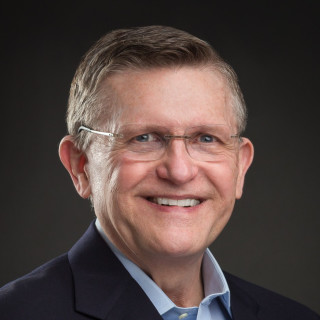
Rebecca Krill, MD is a Minneapolis-based pediatric psychiatrist and department chair for HealthPartners and Park Nicollet outpatient mental health department. She tames her busy days and mind through writing, unplugged nature runs, and Britney Spears on repeat. Dr. Krill is a 2025-2026 Doximity Op-Med Fellow.
Image by wan wei / Shutterstock