
During my first rotation of third year, I remember being in awe of single bed rooms. They seemed like a patient’s dream: spacious, spotless, and a pocket of calm tucked away from the frenzy of the hospital. To be spared the groans, moans, and beeping IV of a neighbor you hardly know seemed like the ideal patient experience. So, I wasn’t surprised to later learn that many health care systems in the U.S. shared this sentiment, investing billions of dollars into constructing predominantly single bed units.
A few months later, I wasn’t so sure.
It was the second week of my psychiatry rotation when we got a consult for Mr. Smith. The primary team suspected delirium and thought he lacked capacity to leave against medical advice. As we headed to the room, I started mentally rehearsing the usual script: gauge orientation, assess capacity, and maybe perform a mental status exam. Should be straightforward, I thought.
We entered a quiet, two-bed room – only one of which was occupied. Mr. Smith was curled up in his bed, staring at the wall. We introduced ourselves. He didn’t respond. We asked a few questions to assess orientation; he said he didn’t want to talk to us. We explained why we were there, but it made no difference. We turned to his nurse, who told us he was refusing to speak to anyone the whole day, so we decided to try again later.
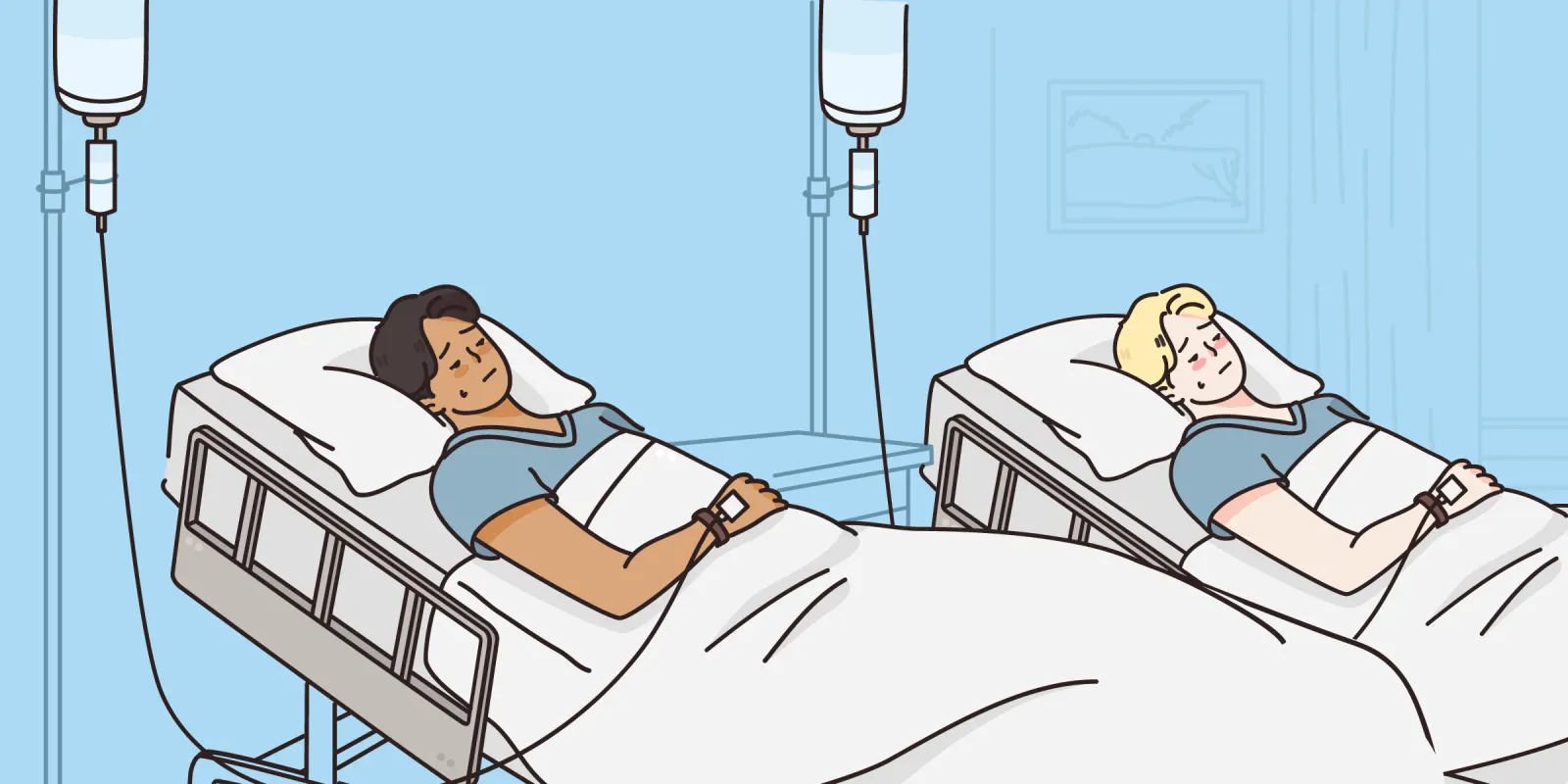
The next day, walking toward Mr. Smith’s room, I expected another round of silence and wondered if I should ask the resident if it was worth calling any family members. But as we entered, Mr. Smith greeted us with a warm smile. And as if the previous day never happened, he answered all our questions and more. When we asked why he wanted to leave, he explained that he was his mother’s home health aide, something not documented in his chart. We asked him what changed since yesterday. He shrugged and said, “I’m just in a good mood.” His nurse, fixing his IV, added “He’s been talking to his roommate all day long.” She was right: the second bed in the room was now occupied by another patient. We worked through Mr. Smith’s situation with him and when we were about to leave, his roommate chimed in gently: “He was really anxious last night. Anything you can do for that?”
It was an encounter that lingered with me, not because of its clinical significance in capacity and delirium assessment, but as a stark reminder that healing does not happen in isolation – and perhaps, it shouldn’t be designed to.
In medical school, we are rightly taught that patient privacy is paramount. The issue was that, somewhere along the way, I extended that into believing that the process of healing was also a solitary journey, occasionally interrupted by blood draws, imaging, and procedures. But the healing process has never been a purely individual endeavor; it is – and always has been – a fundamentally communal process. And the presence or absence of other people in a patient’s physical environment strongly influences this element of recovery.
Of course, shared rooms have their own drawbacks: conflicting sleep schedules, noise tolerance levels, and personalities. We’ve all seen that pairings are not always ideal. But even so, given that most clinicians spend only minutes every day with a patient, the roommate – for better or worse – becomes their most persistent companion. They hear the same noises from the hallway, stare at the same ceiling in the night, eat the same food, and watch the same shows. That shared experience, even in silence, creates an unspoken solidarity. The simple act of sharing a space becomes a powerful buffer against the sensory deprivation, loneliness, and emotional emptiness of a hospital stay.
Any two roommates, despite how dissimilar they may be, possess a shared, unspoken vulnerability of being guests in the hospital. This similarity can induce a sense of protectiveness toward one another and transform a roommate’s role as a passive companion to a champion. I believe it is this act of being sick in an unfamiliar place that creates a situational empathy between roommates that can evolve into conversations about life in and out of the hospital. And through this, a transient companionship based on a shared humanity within an unfamiliar place plays out.
More so, roommates sometimes act as informal guardians of each other. If something is amiss – like a patient falling while going to the bathroom, groaning unusually loudly, or trying to leave the room unattended, the roommate may be the first and perhaps the only one to notice. That is, although they may not be trained in medicine, roommates may be, by default, the most fluent in a patient’s presence during the hospital course.
I’ve realized that in medicine, the most effective interventions are not always the ones that can be billed, but processes and experiences simply embedded in the hospital experience. And so, while the push for single bed patient rooms is understandable, especially given concerns about infection control and privacy, I can’t help but wonder if this push means something fundamentally human – the companionship of a stranger during vulnerable times – is being lost.
Piyush Pillarisetti is a third-year medical student interested in internal medicine. He is interested in patient advocacy, medical humanities, and patient-centered storytelling. His interest lies in how patient narratives can be used to best identify unmet needs in the healthcare system.
All names and identifying information have been modified to protect patient privacy.
Image by Aleksei Morozov / Getty Images