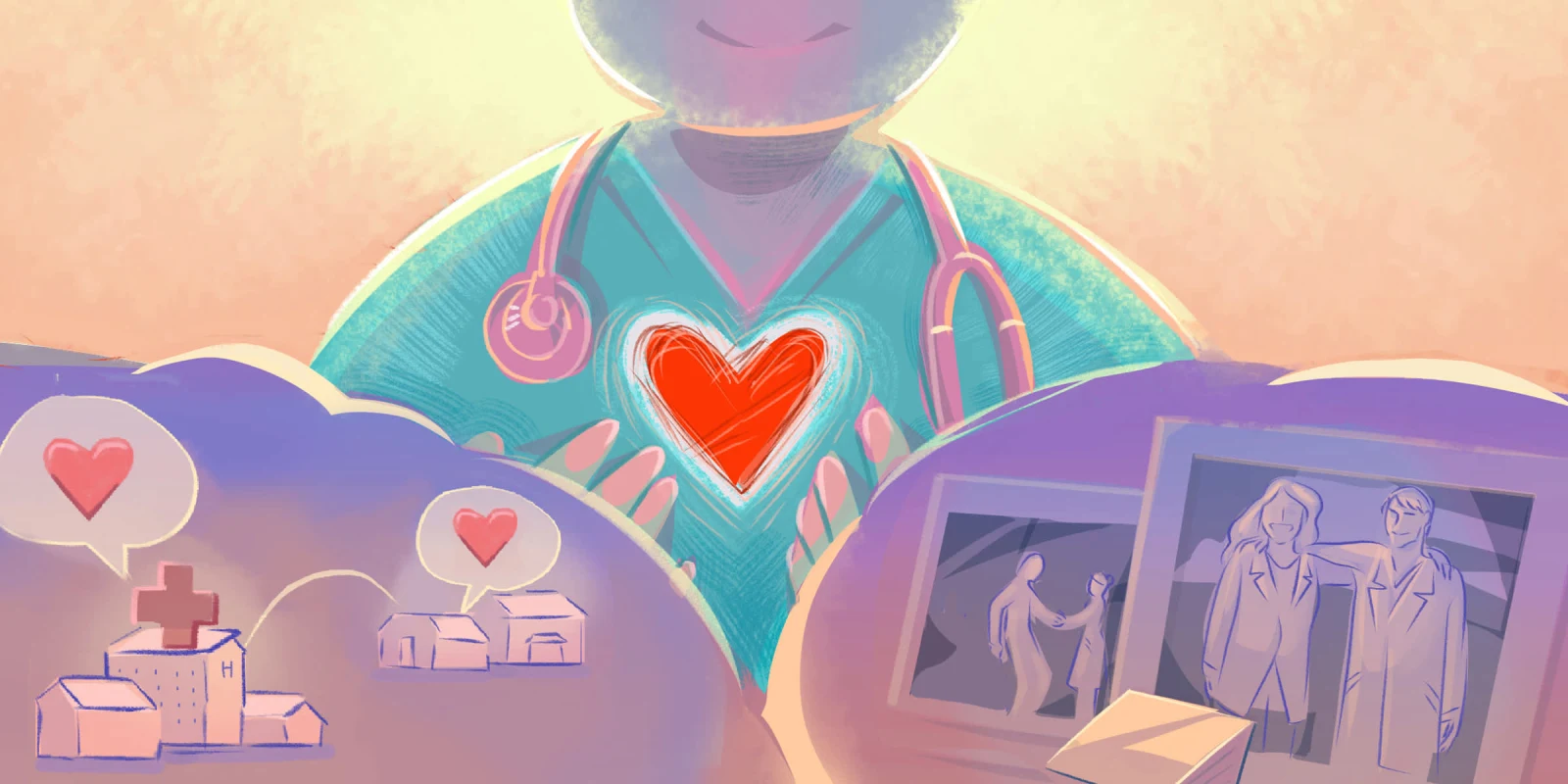

No one talks enough about the role that partners play in your success throughout medical training.
Medicine is often framed as a solitary pursuit: the long hours, the personal sacrifice, the grind that only those inside the profession can truly understand. We talk openly about burnout, resilience, grit, and discipline. We celebrate perseverance. But rarely do we acknowledge the quiet, behind-the-scenes contributors who make it possible for many of us to show up each day ready to do the work.
I was reminded of this recently after finishing a particularly demanding stretch of training. I was working in the hospital 10 hours a day, six days a week, while also taking after-hours clinic call. At the same time, I was preparing for Step 3, a 16-hour board examination spread across two days. The only testing dates I could secure happened to fall on the final two days of that rotation block.
Funny how things work out.
Like many medical trainees, I consider myself fairly organized. I plan ahead. I structure my study time. I try to put myself in the best possible position to succeed through preparation and discipline. These habits matter, and they carry us far in medicine.
But even with all of that, it still takes help.
During that stretch, my wife quietly took on more than her share of the day-to-day household tasks. When I came home late from the hospital, she had my lunch prepped for the next day. If I was running low on scrubs for the week, she started a new load for me. Most importantly, she created a calm at-home environment that allowed me to rest and recover.
She never framed it as a sacrifice, but it was. Her steadiness gave me the mental space to focus, recover, and walk into each workday prepared rather than depleted.
What often goes unspoken are the sacrifices made by the people who love us while we train. The partners who shoulder more responsibility at home. The ones who make dinner when we stumble through the door exhausted. The ones who absorb our stress, regulate the emotional temperature of the household, and quietly create an environment that allows us to recover just enough to do it all again the next day.
That support is not incidental. It is foundational.
When training stretches you thin, your margin for error shrinks. Your patience, energy, and emotional reserves are limited. Having a partner who helps preserve those reserves can make the difference between surviving a difficult season and being consumed by it. Their steadiness allows us to show up as the best version of ourselves when it matters most.
Of course, “best” is relative. Some days, I am operating at a 10 out of 10. Other days, I am not. But even on those harder days, if I can show up as a six, it is a strong six. And often, that strength comes from knowing that someone at home understands the season I am in and is willing to carry more weight temporarily so that I can keep going.
The truth is simple but uncomfortable: the people we partner with can make or break our experience in medicine. A supportive relationship can help you grow in ways you never anticipated. A misaligned one can drain your energy, distract your focus, and make an already demanding path exponentially harder.
This is not about blame. Medicine is hard on relationships. The hours are long. The stress is real. The imbalance of time and attention is often unavoidable. But it is precisely because of these realities that the choice of partner matters so deeply.
To those walking this journey with a significant other: choose someone who adds to your life rather than subtracts from it. Someone who understands that certain seasons will be lopsided, but temporary. Someone who sees the long arc of what you are building, not just the inconvenience of the moment.
At the same time, medical trainees carry responsibility too. Support is not a one-way transaction. This cannot be a relationship where sacrifice flows in only one direction. There will be seasons when your partner gives more, and seasons when you must intentionally give back. The form that giving takes may change, but the effort should remain.
Sometimes, it is as simple as doing the small things. Expressing gratitude. Being present when you are able. Acknowledging the sacrifices being made on your behalf. Protecting moments of connection when the schedule allows. These gestures matter more than we often realize.
Medicine demands a great deal from those who pursue it. But it also demands awareness of the people who help carry us through it. Recognizing that contribution does not diminish our own hard work. It honors the reality that very few of us succeed alone.
Jeremiah J. Whittington, MD, is a family medicine resident at the MedStar Health/Georgetown University Family Medicine Residency Program in Washington, DC. He shares insights about mentorship, wellness, and career alignment for the next generation of physicians, and you can follow him on Instagram @Jeremiahjwhittington
Illustration by April Brust