
In America, we have a chronic disease epidemic. I knew this before medical school, but what shocked me was realizing we aren't curing our patients. Once diagnosed, we place them on medications; at follow-up visits, we rationalize any side effects, conduct routine tests, increase dosages, and advise them to "do better." Even if their numbers improve, we keep them on medications and label them as "well-controlled,” provide standard counseling, and move on.
I’ve long understood that diet and lifestyle are central to preventing chronic disease, yet throughout two years of clinical training, I’ve seen how rarely these topics are discussed. Lifestyle education in medical school is minimal. I received only about two hours of nutrition training. In my fourth year, I actively sought to fill this gap. I pursued an away rotation in integrative medicine, shadowed lifestyle medicine physicians, and attended a plant-based health workshop to deepen my understanding.
While I was initially excited to attend the workshop — looking forward to gaining knowledge and building momentum — my enthusiasm shifted to concern as the speaker revealed a strong criticism of the medical system. As a medical student, I found myself grappling with the tension between wanting to address misinformation and recognizing the limits of my role in public spaces.
The speaker began by making certain compelling points that resonated — particularly regarding the limited accessibility of healthy foods, even in grocery stores, and the difficulty of discontinuing medications once prescribed. But his message soon took an unsettling turn. He claimed his protocol could “cure” people and eliminate the need for medications entirely. My mind immediately rebelled. As a medical student, I had witnessed firsthand the dangers of patients discontinuing their medications unsupervised. He went on to explain that the body can reconfigure itself and strive for homeostasis. That makes sense, I thought — had the few cases I’d witnessed of complications from stopping conventional treatments made me overestimate these risks? The thought lingered for a moment, but deep down, I knew I couldn’t ignore my unease. His advice felt reckless, and I couldn’t shake the sinking feeling that this was more harm than healing.
Several times, he suggested that physicians are corrupt, claiming that physicians prescribe medications purely for profit, accept lavish gifts from drug representatives, and alter medical recommendations based on a patient’s ability to pay. He even went so far as to attempt to undermine the credibility of the Hippocratic Oath. This part stung. I could only hope the audience knew better than to believe such claims — that we, as physicians, take our Hippocratic Oath very seriously and make decisions with the patient’s best interests at heart.
Workshops and organizations like this arise as a response to the shortcomings of our health care system — born from the frustration, disappointment, and sense of abandonment many patients feel. His agenda, I realized, was likely shaped by his own experiences of being failed by the system. So I asked myself: How can we, as physicians, address these frustrations while upholding the integrity of our profession? To what extent does this deep-seated distrust isolate patients and entire communities? And if these patients do come to our clinics, how can we provide care and build rapport when they are already reluctant to trust us?
Despite my strong belief in plant-based nutrition and lifestyle medicine, I could not support his approach of discrediting modern medicine. I questioned whether it was my place to speak up. What is the role of a medical student or physician when misinformation is being spread, and the integrity of our profession is under attack?
During a break, I turned to a fellow audience member — a practicing physician — and asked, “Doesn’t it feel like he’s disregarding our entire profession and spreading misinformation?”
She nodded. “Yes, but as a physician, you should show humility. Just hear him out — no need to make a big deal.”
Her words made me reflect: Was I failing to show humility? Was my frustration justified, or should I have remained patient despite hearing my profession being discredited? All I could think about was the quintessential principle of ethics: do no harm, as I thought about the serious intended and unintended ramifications of his words.
One thing became clear: the speaker had built a strong cultural connection with his audience. He understood their background, their food, their struggles. He made jokes that resonated with them, creating a sense of trust and relatability.
Now, as a first-year resident, I reflect on that workshop with a different lens. What once provoked frustration now evokes empathy. I think about the middle-aged South Asian men and women that sat in that room: engaged, hopeful, eager to take control of their health. When a patient in my clinic tells me they don’t want to be on medications, I take it seriously. When they express hesitation about vaccines, I listen more closely. I’ve come to recognize that the workshop I attended offered something meaningful, especially to those who feel unheard in a system that has too often overlooked them. Yet I still wrestle with the same dilemma I faced as a medical student confronting misinformation, now in more personal, clinical moments: Is the best care grounded in empathy alone, or does it require directly challenging patients’ beliefs? I continue to search for a way to acknowledge the shortcomings of our health care system, counter misinformation, and preserve trust — all while practicing with humility.
I think back to that workshop often — less about the speaker, and more about the patients who attended. Patients who were dismissed, unheard, or given care that didn’t reflect their complexity. In their stories, I see both the reason I entered medicine and the challenge I now face: to practice in a way that truly heals, even when the system makes it hard to do so.
Sakshi Dureja is a first-year internal medicine resident at Emory University School of Medicine interested in integrative medicine and medical education.
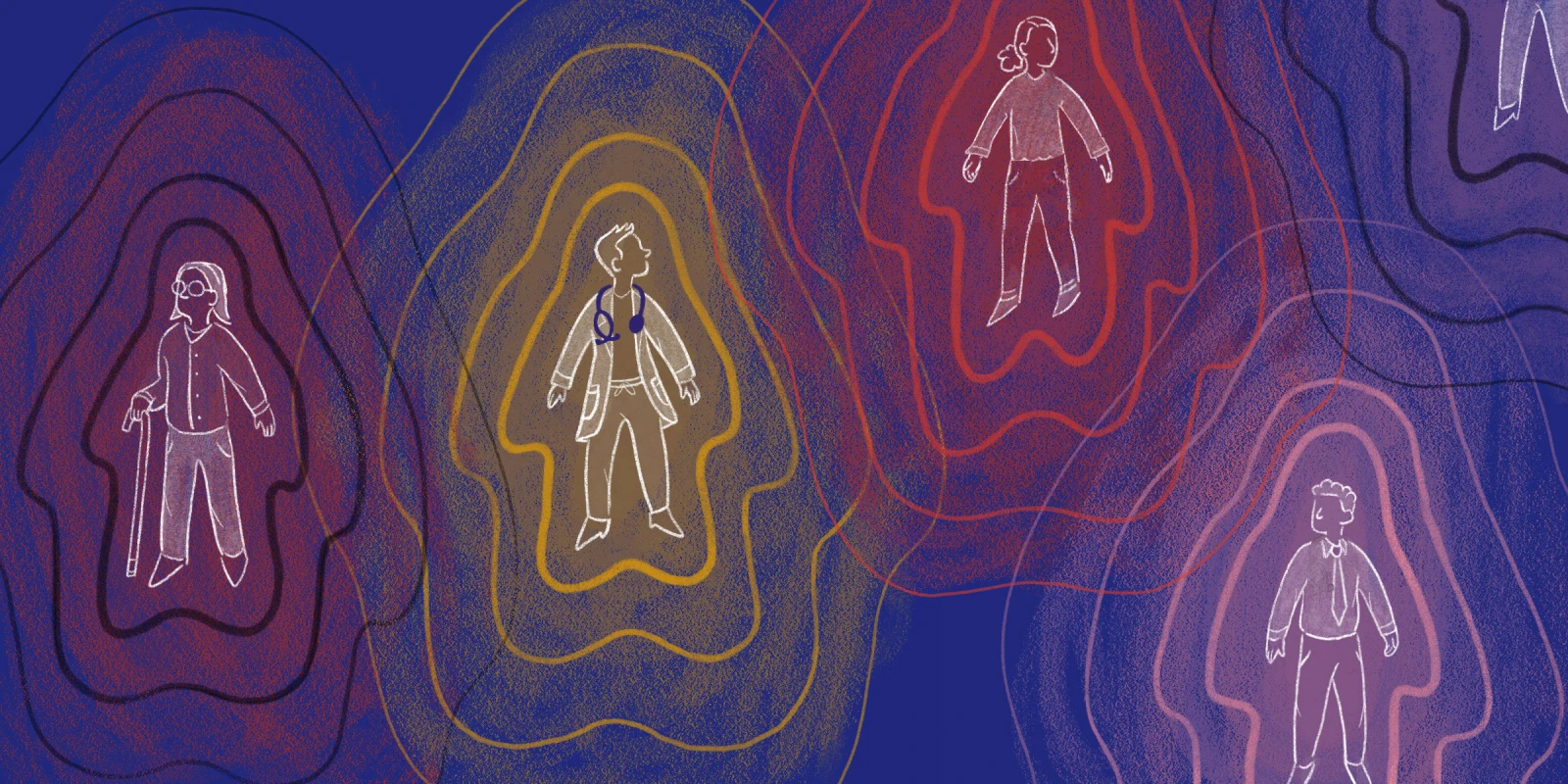
Illustration by Diana Connolly