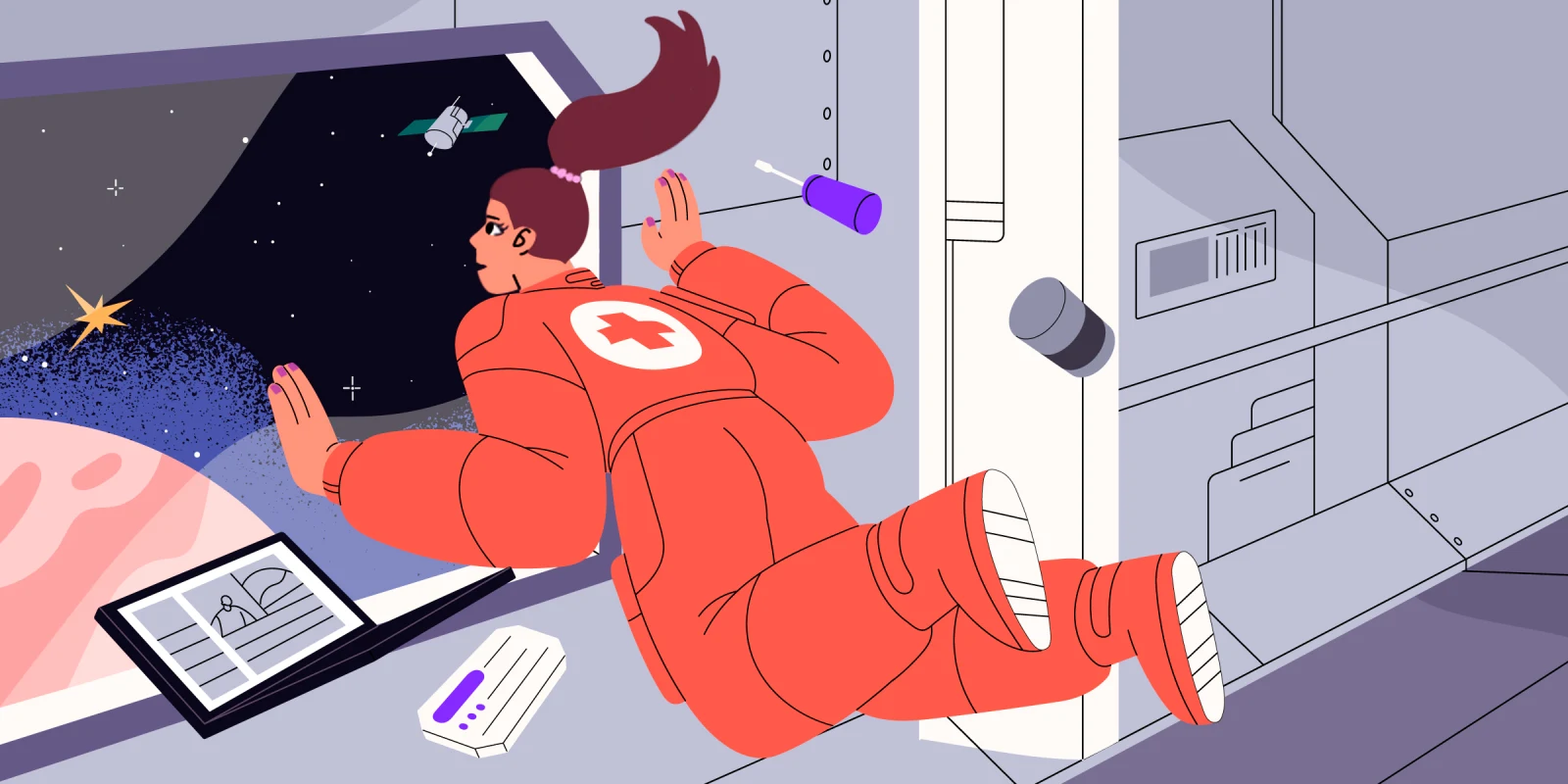

When the New Shepard rocket separated from the First Step capsule and I soared to an apogee of 343,937 feet, above the Kármán line that designates where space begins, I knew I had reached not just space, but the culmination of a lifetime of effort. Looking out at the curve of Earth, I experienced what I can only describe as complete validation. Every step of my journey — two decades as a radiologist, teaching physicians to build expert witness practices, mentoring as a Space Camp crew trainer, serving on nonprofit boards for STEM, history, and now space, raising children while building new businesses — all of it mattered. It all added up to this perfect moment.
Medicine was my first dream, from the time I was two years old. I pursued that calling at Brown, Yale, and Harvard, ultimately specializing in radiology, a male-dominated, highly technical field. Starting in high school, I studied the founding of the American Medical Women’s Association, recognizing how critical networks of support have been for women in our profession. Along the way, I also earned a master’s degree in the history of medicine, writing my thesis on twilight sleep in obstetrical anesthesia and its role in establishing women physicians as clinical specialists. I went on to serve on the Women Physicians Congress board of the American Medical Association, always mindful of the shoulders I stood upon.
Despite this progress, women in medicine continue to face steep challenges. We remain underpaid compared to our male peers. We often see more patients, serve on more committees, and push ourselves to overachieve in order to earn our place. That dynamic — working harder, performing better, and leading differently — has shaped me profoundly. My life’s work as a breast imager and expert witness, as an educator and entrepreneur, and later as an astronaut, has been rooted in the lessons of persistence and purpose I first learned as a woman in medicine.
I carried those lessons with me into space. In May 2025, I became the first woman physician commercial astronaut and one of just over 100 women in history to fly to space. The rarity of that statistic still astonishes me. Radiology may be a male-dominated field, but the world of spaceflight is exponentially narrower. That is why the moment of weightlessness was not just joy, but validation. I had achieved both of my childhood dreams — first becoming a physician, and then an astronaut.
Preparedness is second nature to physicians, and I carried that into my flight. On a pre-launch zero gravity training flight, I had only just experienced weightlessness for the first time when a fellow passenger was injured. Instinctively, I went into physician mode, rendering aid even as my own body was still adjusting to microgravity. In medicine, we learn that unforeseen circumstances are part of the job, and that performing under pressure — often in unfamiliar conditions — is simply what is required. As I prepared for my mission, I was proud to know that if a medical emergency arose in space, I was ready. Physicians hold the highest responsibility: to lead, to protect, to remain calm under crisis – on Earth and beyond.
My path to space was anything but linear. I spent over two decades interpreting mammograms, counseling patients, and supporting colleagues. I became a nationally recognized medicolegal expert witness, reviewing more than 200 cases and testifying across the country. From that work, I built a company to help other physicians learn how to diversify their income and strengthen their clinical practice by becoming expert witnesses. Teaching has always been a constant in my life: whether at the reading room, the witness stand, or in front of a classroom, my purpose has been to help others step into new roles with confidence.
I also carried with me my lifelong connection to Space Camp, where I first attended in 1986 — the year of the Challenger launch — and later returned as a Crew Trainer and as Chair of the Space Camp Alumni Association. At camp, I learned to lead before I felt ready. That lesson prepared me for every leadership role I later undertook, including serving on the U.S. Space & Rocket Center Education Foundation board. Leadership as a woman in medicine often looks different: it requires resilience, flexibility, and the ability to command respect in spaces where we are underrepresented. Those qualities became critical as I stepped into the rarest of roles: physician and astronaut.
In space, everything crystallized. Floating alongside my crewmates, I realized that though we had each arrived from very different paths — teachers, diplomats, entrepreneurs — we had all reached the same defining destination. For me, the key personal transformation was recognizing that nothing had been wasted. Every clinic, every committee, every courtroom, every expedition: all of it prepared me for this moment.
I returned to Earth with new clarity. Being a woman in medicine has taught me discipline, empathy, and leadership under pressure. Space validated that those qualities were not only sufficient, but essential, to exploration itself. I now carry forward a responsibility: to show other women in medicine that their skills and dreams matter, no matter how unconventional the path may seem.
Today, I continue to teach and mentor, helping physicians launch expert witness practices and encouraging colleagues to pursue their highest purpose. I remind them that medicine is not just a job; it is a foundation for leadership across every frontier.
The moment of weightlessness was perfection. But the deeper transformation was realizing that medicine and space were never separate dreams, they were one journey. I am proud to be both physician and astronaut. And I am even prouder to stand as proof that women in medicine, no matter how steep the path, can reach their highest goals.
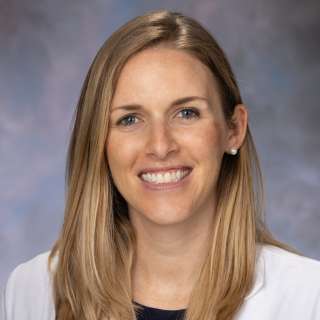
Dr. Gretchen Green is a radiologist specializing in women’s imaging and a nationally recognized expert witness who became the first woman physician commercial astronaut, flying aboard Blue Origin’s NS-32 mission in 2025. She is passionate about mentoring physicians, advancing women in medicine, and inspiring others to pursue their highest purpose.
Image by Paper Trident / Shutterstock