
Medical school taught me many things. I learned how to interpret an arterial blood gas at 3 a.m., how to function on very little sleep, and how to deliver difficult news with care. I learned how to diagnose, decide, and act under pressure.
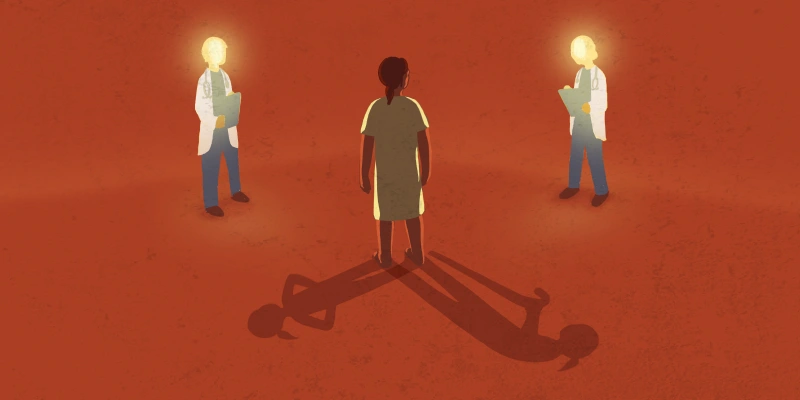
What medical school did not teach me was accounting, organizational behavior, strategy, how to lead people who don’t think, work, or prioritize the way physicians do. And yet, medicine routinely places physicians in charge of hospitals, health systems, technology platforms, and organizations far beyond the bedside.
As our careers progress, many of us realize that we are no longer focused solely on individual patient care. We are asked to manage budgets, navigate power dynamics, oversee technology adoption, and articulate strategic visions. We’re expected to make decisions that shape organizations, often with little formal preparation for that kind of work.
Our best hospitals are run by doctors. The problem is that only about 5% of hospitals are physician-led. When physicians do lead, quality scores are roughly 25% higher than hospitals led by nonclinical administrators. The conclusion is hard to ignore: when doctors lead, patients win. And yet, leadership training in medicine remains largely informal.
That recognition is why I’m becoming a student again.
Later this year, I’ll attend the Physicians Executive Program (PEP) at Stanford Graduate School of Business, a selective executive education program focused on strengthening physician leadership at the highest levels of health care. This decision isn’t about stepping away from medicine — it’s about acknowledging that modern health care demands skills most of us were never taught.
PEP focuses on areas medicine often leaves implicit: business acumen, quantitative thinking, strategic leadership, communication, collaboration, and execution. It emphasizes applied learning and self-awareness, and the understanding that how we lead matters as much as what we know. Many leadership failures in health care aren’t clinical; they’re human.
Just as importantly, the program brings together a national cohort of physicians who all share the same ambition: to lead health care better. Learning alongside peers who are grappling with similar challenges — and who bring diverse perspectives from across the country — is itself a powerful form of education. Leadership can be isolating; it shouldn’t be. Building relationships with other physician leaders who are equally committed to change is part of what makes this experience so compelling.
Returning to the classroom, particularly one outside medicine, is humbling by design. Business school frameworks don’t defer to clinical authority. They surface blind spots and challenge assumptions that experience alone can quietly entrench. That discomfort isn’t a detour from medicine; it’s preparation for the leadership roles physicians are increasingly asked to fill.
The Doximity Foundation is funding this new program, making it a completely free, six-month experience for some of the nation’s most promising physician leaders. If we believe physician leadership improves care — and the evidence suggests it does — then investing in that training matters.
Medical school prepared me to care for patients one at a time. Programs like PEP prepare physicians to care for systems, and the people within them, at scale.
If you know a physician who’s ready to lead or if you see that potential in yourself, I hope you’ll consider nominating them for the Physicians Executive Program. Nominations are open through February 15, 2026.
Medical school didn’t teach me everything.
That’s why I’m going back to learn the rest.
Dr. Azlan Tariq is a physiatrist based in Chicago, Illinois with practices in Illinois, Indiana, and Michigan.
Illustration by Diana Connolly