
The patient had tense ascites, and the ultrasound probe traced the fluid pocket easily along the abdominal wall. A tray was opened, the sterile drapes placed, and the lidocaine drawn up. I had reviewed the steps of paracentesis many times and had assisted before. But as the procedure began, I was asked to step back.
“It’s nothing personal,” the physician said, almost apologetically. “It’s just easier this way.”
A few weeks later, in a gynecologic surgery, I had a similar experience. After the final sutures were placed, I asked to close. The surgeon hesitated, then shook their head. “We should finish quickly,” they said. “Too many people involved already.”
Neither moment was dramatic. No one was dismissive or unkind. In both cases, the physicians were attentive and focused on the patient’s well-being. Yet the experiences lingered. They reflected a quiet shift in medical training: In many settings, learning by doing is gradually giving way to learning by watching.
Across procedural and surgical specialties, evidence increasingly suggests that trainee autonomy has declined even as procedural volume has remained stable. National analyses of ACGME case logs show that while the average number of operations performed by general surgery residents has remained relatively constant over decades, the diversity of operative exposure has narrowed and opportunities for independent participation have decreased.
At Veterans Affairs teaching hospitals, cases in which residents served as the primary surgeon without the attending scrubbed declined from roughly 15% in 2004 to about 5% by 2019. More recent analyses of Entrustable Professional Activity case data demonstrate a 61% reduction in resident-performed cases between 2004 and 2020, accompanied by a 50% increase in attending-performed cases during the same period. Some training levels experienced reductions in operative autonomy exceeding 70%.
These changes do not reflect fewer surgical opportunities overall. Residents today still complete similar operative volumes to those of previous generations. What has changed is who is leading the case. Procedures that residents once performed as primary operators are increasingly performed by attending physicians or closely supervised.
One driver is the rapid expansion of subspecialization. Fellowship training has become the norm in many surgical disciplines. In general surgery, approximately 80% of residents now pursue fellowship training after residency. As procedures are concentrated within specialized services, residents may encounter complex cases but participate primarily as assistants rather than as primary operators. Earlier reviews examining the impact of surgical fellowships on resident education have found mixed or negative effects on operative experience in many programs.
Modern surgical training also places strong emphasis on supervision and patient safety. Qualitative studies show that supervising surgeons actively regulate resident autonomy through structured strategies, including guiding decisions, intervening in technical steps, or taking over portions of procedures when perceived risk increases. While appropriate oversight is essential, these approaches may also reduce opportunities for trainees to gradually assume responsibility.
Liability concerns and defensive medicine likely contribute as well. Surveys suggest defensive practices are widespread in training environments. In one study, 92% of medical students and 96% of residents reported observing assurance practices such as tests or interventions performed primarily to reduce legal risk, and more than half reported explicit discussions of malpractice concerns influencing clinical decisions. Other analyses show an increasing number of trainees seeking medicolegal advice regarding patient safety events and complex care decisions.
In this environment, allowing trainees to perform procedures, even under supervision, can feel like an additional risk. Efficiency pressures and quality metrics further reinforce incentives for attending physicians to complete procedures themselves rather than entrust them to learners.
Yet evidence suggests that greater trainee autonomy does not necessarily compromise patient outcomes. Large surgical database studies involving hundreds of thousands of operations have found no significant difference in mortality between resident-primary and attending-primary cases when appropriate supervision is present. Some analyses have shown similar or lower complication rates in resident-primary cases compared with procedures jointly performed by residents and attendings. Even as residents operated on progressively older and more complex patients over time, outcomes in resident-led cases have continued to improve.
The shift toward observation begins even earlier in medical education. Surveys of graduating medical students demonstrate limited exposure to common bedside procedures. In a multi-institutional study of more than 600 fourth-year students, 71% had never placed an arterial line, 81% had never inserted a central venous catheter, and nearly 90% had never placed a chest tube. Procedural experience strongly correlated with confidence, yet nearly nine out of 10 students reported wishing they had more opportunities to perform procedures during training.
Even within clerkships, procedural participation varies widely. Surgery clerkships provide the highest levels of supervised procedural entrustment, while other specialties offer fewer hands-on opportunities. For many trainees, procedural medicine increasingly becomes something observed rather than practiced.
None of this suggests that modern trainees are less capable or less dedicated than those who trained before them. In many ways, the current training environment is more structured, technologically advanced, and safety-focused than ever before. But medical education has always depended on a gradual transition from observation to independence. Physicians are not simply taught knowledge; they are trained to act. When opportunities for hands-on learning diminish, the transition from trainee to independent practitioner can become less certain.
The physicians who asked me to step back during those procedures were not wrong. Their decisions were thoughtful and grounded in concern for patient safety. Yet experiences like those raise an important question about the future of medical education: If trainees spend more time watching and less time doing, how will we ensure they are ready when the responsibility finally becomes theirs?
Medicine has become safer, more specialized, and more accountable. The challenge ahead is ensuring that, in the process, it does not become less hands-on for those learning to practice it.
What have you noticed with the evolution of "see one, do one, teach one"? Share in the comments.
Gurnoor Gill is a third-year medical student at the Charles E. Schmidt College of Medicine pursuing ophthalmology, with broader interests in clinical education, patient communication, and narrative medicine.
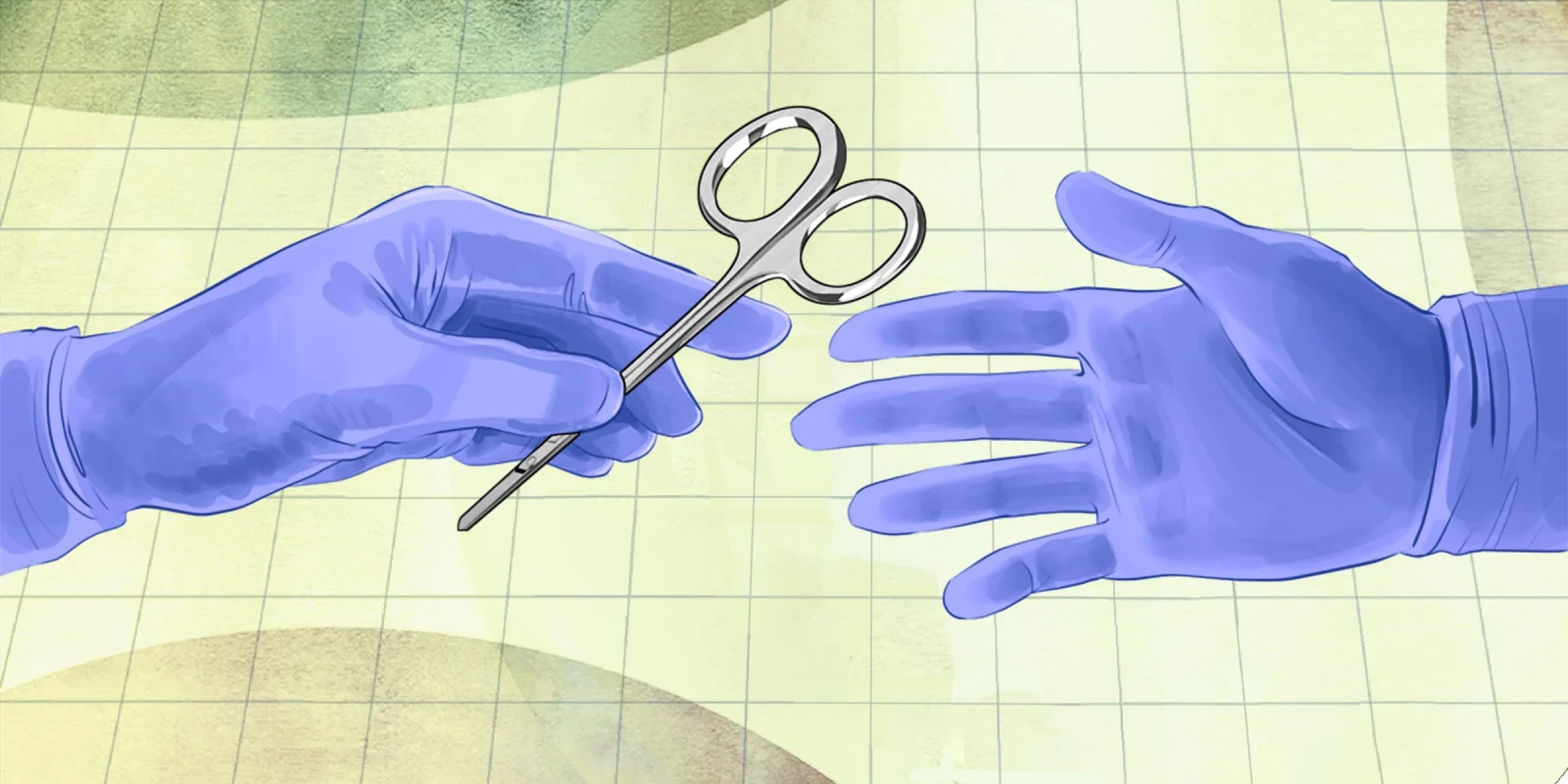
Illustration by April Brust and Jennifer Bogartz