
The patient was a 67-year-old man with chest pain. Atypical presentation. The ECG was nondiagnostic — even accounting for the OMI/NOMI paradigm shift most of our decision tools haven't actually incorporated yet. First troponin negative. The AI clinical decision support tool in our EHR called him low-risk and suggested discharge. I didn't send him home. Four-hour troponin came back elevated. 90% LAD occlusion. Cath lab that night.
After he was upstairs, I did something I've started doing after cases like this. I opened Doximity Ask — Doximity's AI tool, which I use specifically because it's HIPAA-compliant and cites its sources — and searched current evidence on high-sensitivity troponin protocols and AI-assisted ECG interpretation in atypical ACS. Fast, referenced, reliable. What it showed me was that the clinical literature had moved considerably past where our EHR's decision-support model was trained. The OMI framework is better supported than ever. The tool that flagged my patient low-risk was, in practical terms, running on outdated assumptions.
That's the problem worth talking about. Not whether AI will replace physicians — that debate has become almost useless — but whether the AI tools already embedded in your workflow are validated against your patient population and current evidence. Spoiler: most of them aren't.
I've tried several platforms. Doximity Ask has rapidly become my go-to for mid-shift literature checks precisely because it doesn't hallucinate references and it works inside the Doximity ecosystem I'm already in. Its AI Scribe system is slowly being incorporated into my workflow and has genuinely helped my documentation burden. Sepsis algorithms give me a useful signal. But here's what I've learned using all of them: the physicians getting into trouble aren't the ones who refuse AI. They're the ones who forget that a probability estimate is not a clinical decision.
There's a name for what happens when we forget that. Automation bias — the well-documented human tendency to over-rely on automated systems under cognitive load. Emergency medicine is the highest-volume, highest-fatigue, highest-stakes environment in the building. We are the specialty this was designed to affect most. We almost never discuss it.
The physicians who are in the middle — not resistant to AI and not overly trusting — will be the physicians who thrive. Those who know what Doximity Ask is useful for and what it isn't. Who understand that an alert is a signal, not a verdict. Those who use these tools to sharpen their thinking rather than act as a substitute for it. And those who stay current on the evidence themselves — because if you're relying solely on your EHR's embedded AI to keep you up to date, you're probably a training cycle behind. Using these platforms and applications increases our knowledge base, our success rates, and our clinical skill.
The practical steps are unglamorous but necessary. Ask your IT department what training data your department's tools were built on and what populations they were validated against. Find the documented failure modes. Read the growing literature on clinical AI validation. Use something like Doximity Ask to run your own literature checks on the cases that feel off — because they probably are, and now you have a fast way to find out why.
My LAD patient sent a card to the department five days later. The algorithm did exactly what it was designed to do: it processed available data and returned a probability estimate based on its training set. I did what I was trained to do: I treated the patient in front of me, not the population average. Then I used a better AI tool to understand why the first one got it wrong. Knowing the difference between all three of those things isn't a tech skill. It's a physician skill. And it's not optional anymore.
Chester “Chet” Shermer, MD is a professor of emergency medicine, HEMS Medical Director, and State Surgeon for the Army National Guard. He is the founder of Global MedOps Command.
Want more information about clinical care? Use Doximity Ask to quickly review literature, explore differential diagnoses, and access credible citations.
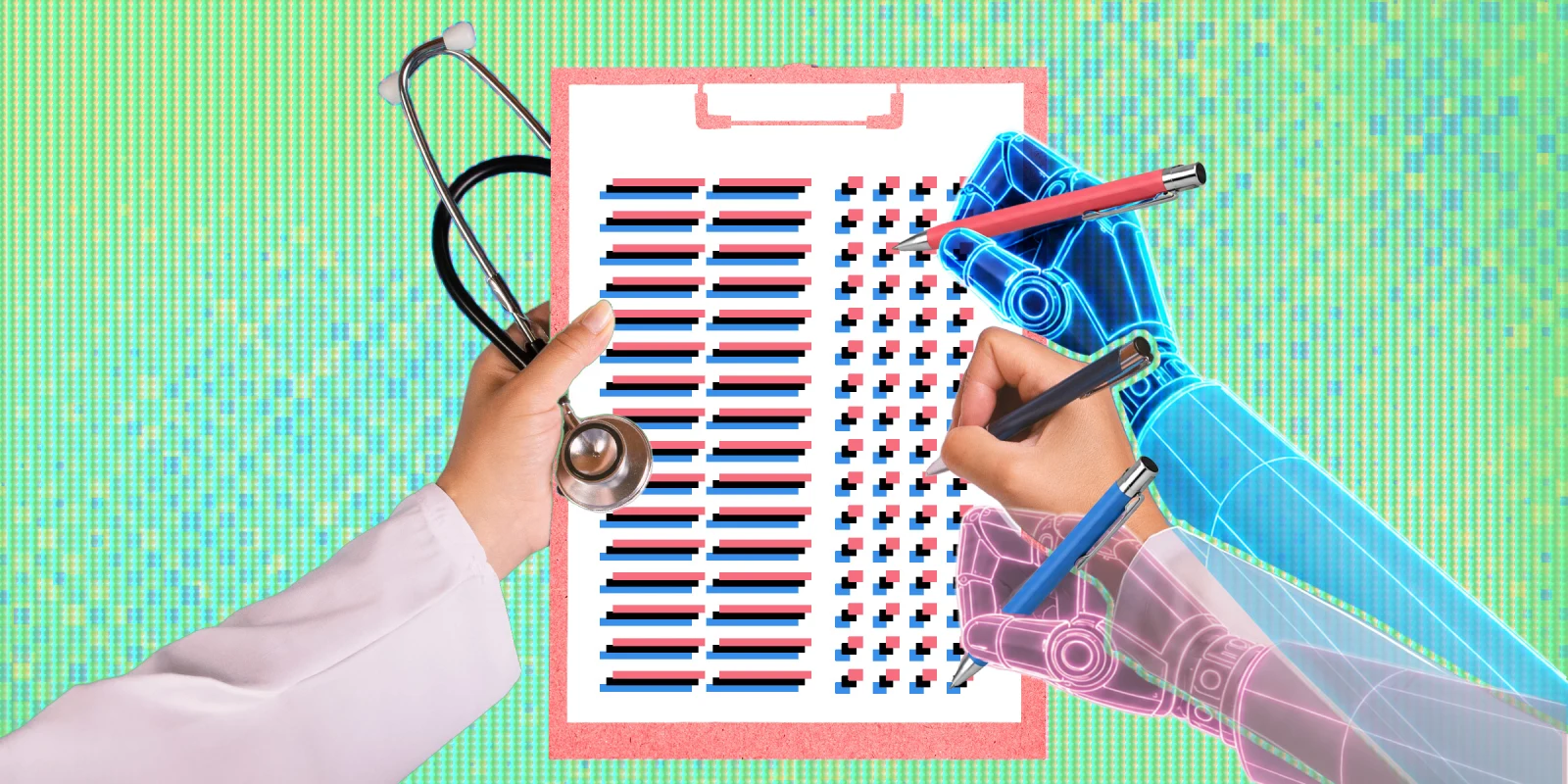
Collage by April Brust