As a certified boomer, my opinion of rural communities was shaped by "Green Acres", "The Andy Griffith Show", and "Petticoat Junction." In fact, there weren’t “rural communities” in the lexicon. It was all “Country Livin’” a condescending stereotype that was further emphasized by the absence of a kindly rural Dr. Kildare or Marcus Welby. Growing up in suburbia and then going to school in urban areas, rural life seemed as far away as foreign countries, as irrelevant to me as living at sea or on the moon. As a resident, fellow, and attending in urban academic settings, I only saw rural medicine in classrooms and books.
That is, until I was literally conscripted to serve in far-flung hospital pulmonary clinics, as the private practice group I joined was contracted to at least 10 rural hospitals in Kansas and Missouri. I had no choice but to bounce between extremes of urban and rural settings.
As such, I’ve spent the last 20 years practicing exclusively at rural hospitals, and my previous perceptions have taken a beating. The rare mix of medical sophistication, humanized by a sense of community and genuine care from the CEO down to the gas station attendant, kept me traveling 50–100 miles to these rural outposts without regret or complaint.
For clinicians who share my previous misconceptions, allow me to demonstrate how rural medical practice can offer a spectrum of sought-after practice models.
For the Physician Seeking to Further Clinical Education and Preserve an Academic Environment
In my time in rural medicine, I have treated as many complex pulmonary and sleep-related disorders as I did at both urban and academic centers. Common and rare entities were encountered, challenging my abilities and prompting intensive research and outreach similar to what I had undertaken in my academic position.
Patients ranged from government officials and well-heeled professionals to Medicaid-dependent farmers scraping by, reflecting a breadth of experience surprisingly similar to that of metropolitan practice. My dedication to continued learning was not only satisfied by such encounters but also furthered by seeing, in living color, rural and farming pulmonary disorders previously relegated only to abstract mention in textbooks.
For the Physician Yearning for Less-Restricted but Efficient Medical Practice
I governed my own practice routine, carving out 30-minute follow-up visits and longer allowances for new patients. I set my own start and stop times and never received interference from the administration, regardless of which small rural hospital I attended.
Last-minute add-on X-rays and ABGs, urgent CT angiograms, venous dopplers, STAT bloodwork, STAT EKGs, all required only a request. With rare exceptions, there were no redundant front-office sign-ins, layers of departmental pass-throughs, or prolonged trips down endless corridors after waiting for a transportation orderly.
My patients were quickly escorted, warmly welcomed to the relevant department, and tested without undue delay. Voila. Obtaining testing, whether urgent or scheduled, was an exercise in efficiency not seen at larger urban and suburban hospitals and clinics. On rare occasions where auxiliary healthcare was urgently required, such as cases of suspected domestic abuse or financial difficulty, a social worker was available before the patient left the premises.
When it took a village, the village stepped in. Those “villagers,” be they radiology technicians, social workers, respiratory therapists, even billing managers, demonstrated a personal approach that allowed more efficient medical care without sacrificing compassion and patient dignity.
For the Physician Seeking a Gentle, Connected Medical Practice
At most of these hospitals, I might walk into the pulmonary office and interrupt a conversation between my respiratory therapist and a patient more suited for neighbors and friends. Because hospital staff and patients were neighbors and friends.
Eventually, colleagues and patients addressed me by name, and I, them. It was a comforting familiarity I’d missed at my metropolitan institutions.
As I developed relationships with repeat patients, I was at times gifted with freshly picked mushrooms, tomatoes, corn, and even honey from beekeeping hives. Not bartered for medical care but simply offered as tokens of appreciation. It wasn’t quite the human equivalent of a bucolic James Herriot practice, but it came close.
For the Physician Seeking to Preserve Expertise in Higher-Intensity Medicine
During my younger, aggressive heyday, I performed bronchoscopy and thoracentesis procedures at all rural hospitals I attended. Later, hospitals at which I worked managed seriously ill patients during the COVID-19 pandemic, devoting entire corridors to quarantined victims. The latest in antiviral medications were always available; non-invasive ventilation, high-dose oxygen delivery, and other acute care interventions were performed within the confines of these hospitals.
Hemodynamically unstable patients or those requiring invasive life support were transferred to larger hospitals, but even that was carefully coordinated with ED care until transport was arranged. I remember inserting an emergency chest tube for a tension pneumothorax in one of the more distant hospitals, the drama and urgency handled with concerted staff support. I remained available to patients with neuromuscular respiratory failure requiring tracheostomies and ventilation, sparing painful excursions to far-off “big city” hospitals and traffic.
For the Physician, Conversely, Seeking to Avoid Burnout and Preserve Income
Having just assured you that high-intensity medicine is available in rural medical practice, such occasions remained frequent enough to maintain expertise but not so overwhelming as in my metropolitan practice. For 20 of the past 30 years, I provided strictly outpatient care at rural clinics without call responsibilities. Mental health and family time were once again prioritized. Even as a specialist, my independent contractor status generated a comfortable income, just without the stress.
For the Physician Prioritizing Social Responsibility
Rural hospitals, and consequently rural residents, exist on a knife-edge. Medicaid cuts have led to multiple small hospitals shutting down or curtailing services. Many others cannot find specialists willing to commute and must rely on cursory telehealth care or on distant referrals. In addition to fulfilling my professional and financial obligations, my on-site presence provided much-needed personal care to a large at-risk population suffering a shortage of specialist care: rural patients.
Of course, rural medical practice is not all Norman Rockwell. People of color, admittedly another at-risk population, comprised a small proportion of patients, unrelated to bias or prejudice. No-shows, due to weather, automobile problems (or absence), unavailability of nursing home transport, and farm responsibilities, were not uncommon.
There remained the inescapable Medicare, Medicaid, and private insurance restrictions common to all medical entities. Sophisticated or invasive testing required transport to larger tertiary hospitals. Long commutes were time-consuming and not reimbursable. Such travel remains a significant impediment to attracting specialists, although I find such trips far more relaxing than inpatient or ICU rounds.
It is my hope that such experiences and perspectives dispel misconceptions I, too, once held about rural medicine, which is at a fragile, threatened crossroads. This practice option, nonetheless, may not be a fit for some. But for the physician seeking to give back as well as to inherit a comforting professional lifestyle, "Green Acres" truly is the place to be.
What has surprised you about rural medicine? Share in the comments.
Scott Eveloff, MD, is a physician living in Overland Park, Kansas, having served the medical needs of far-flung towns in rural Missouri for more than 30 years while actively publishing his perspectives on ethics in medicine. He has published extensively in the medical literature, earning him appearances on ABC’s "20/20 Medical Mysteries," ABC News "Nightline," and the "Dr. Oz Show." Dr. Eveloff has remained a passionate advocate for the disabled, publishing the nonfiction book "Both Sides of The White Coat" and most recently a novel, "Do Not Resuscitate." He is a 2025–2026 Doximity Op-Med Fellow.
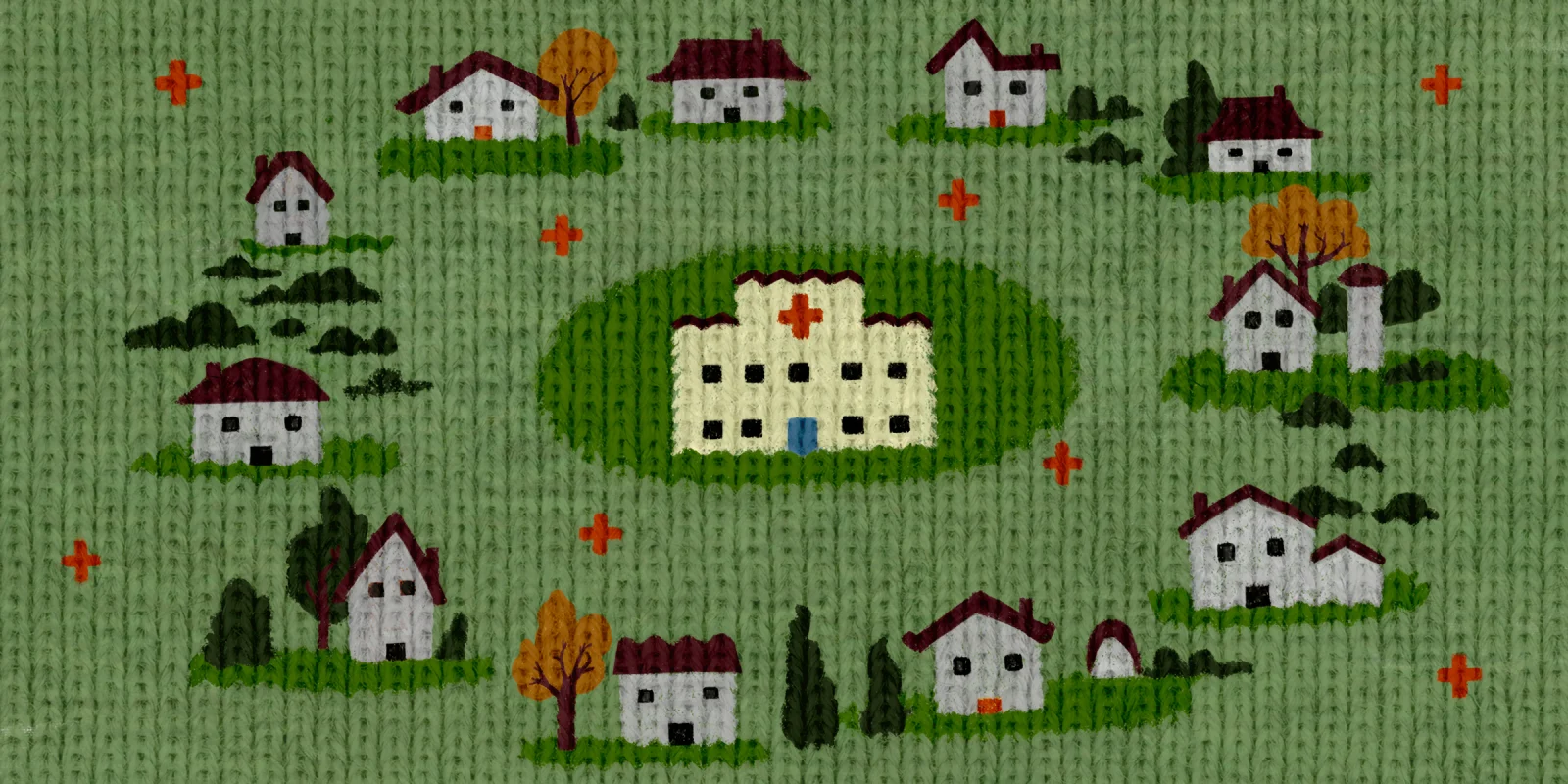
Illustration by Jennifer Bogartz