
I heard the sound before I fully registered the pain.
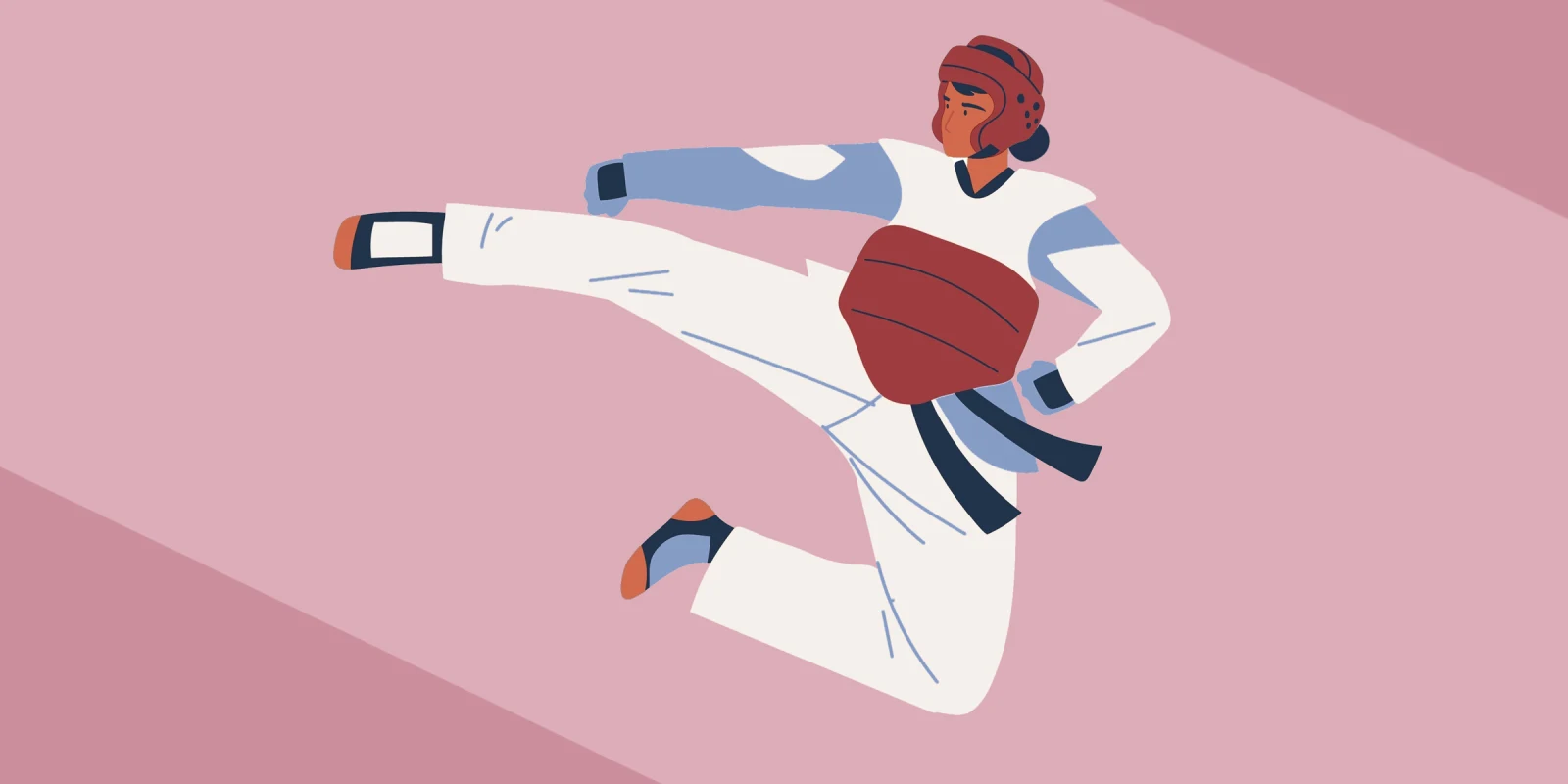
During the second week of fall taekwondo practice in college, I was reviewing my “poomsae” choreography with a peer on the foam practice mats. As I extended my left leg for a double side kick, I felt a tug, then heard a loud pop. Pain shot through my leg, and I knew something was wrong.
What I didn’t know then was that a hamstring injury would end my participation in that tournament season, but also introduce me to a meaningful lesson that I would carry with me into medicine. Years later, as a medical student, I still think about that afternoon whenever I meet patients recovering from injuries of their own.
I started practicing taekwondo when I was 11 years old. What began as an after-school activity gradually became a constant in my life. Over the years, I went on to earn my third-degree black belt, compete nationally, perform on a demonstration team, mentor younger students, become a certified tournament judge, and, most importantly, find a community that has stayed with me through every stage of life since.
Medical school has certainly changed what my relationship with taekwondo looks like, though. I no longer spend multiple evenings each week in the “dojang” studio, and my training schedule now competes with anatomy labs, clinical rotations, research internships, and exams. Even so, I keep coming back.
The older I get, the more I realize that taekwondo has never just been about earning another belt. Rather, it has shaped how I think about discipline, progress, recovery, and increasingly, how I care for patients.
Medicine and taekwondo have more in common than most people realize, and one of the parallels is that neither rewards shortcuts. In both, progress is incremental: a clean poomsae demonstration, a precise surgical knot, or a thoughtful patient interview all come from practicing the fundamentals until they feel like second nature. Most of the growth happens so gradually that you don’t even notice it until you look back months later. That perspective has helped me stay grounded throughout medical school, where it’s easy to compare yourself to classmates or become overwhelmed by everything that you don’t know yet. Taekwondo taught me that the most important things are to show up consistently, accept corrections, and be willing to improve a bit each day, even when you are tired.
My injury forced me to learn that lesson from a different angle. Missing the tournament season was disappointing, but stepping away from competing didn’t mean entirely stepping away from taekwondo. Since I couldn’t practice kicking, I asked teammates and coaches what else I could learn.
We focused on upper-body techniques, blocking drills, flexibility, and studying poomsae conceptually. As someone who prides herself on being independent and figuring out her own solutions, asking for help at first felt uncomfortable and like I was admitting failure. Instead, I found that recovery is rarely an individual process. My teammates shared stories of their own injuries. One showed me stretches that had helped her recover from a knee injury. My coach described how he adapted his own training after a similar hamstring injury. Their advice was practical, but their willingness to share their experiences mattered even more in that moment. It helped me realize that the injury wasn't a dead end, but instead it was simply a detour.
Looking back now as a medical student, I think less about the injury and more about what recovering from it felt like. It’s one thing to understand healing from a physiological standpoint, and another to remember the frustration of watching everyone else move forward while you’re forced to slow down. Patience is the core of recovery, and patience is often harder than perseverance!
Furthermore, taekwondo has helped shape how I think about sports medicine and injury prevention for my patients. I’ve learned that even in combat sports, one can always find (and recommend) ways to lower the risk of harm. Having judged tournaments and spent years participating in and observing sparring competitions, I have watched referees stop matches after concerning kicks or strikes to the head. I’ve seen athletes removed from tournaments because they didn’t feel quite right after a match, as well as supportive coaches who never hesitated to prioritize students’ safety over medals.
Now, learning about concussion prevention and management, for example, feels much more personal, as I can picture the athletes behind the guidelines and understand the impact of proper protective equipment, why return-to-play decisions require careful thought and not simply a signature for physician approval, and how patients can struggle to accept medical recommendations that keep them away from the sports or activities that they love. My years in taekwondo have helped me to understand where many athletes are coming from in the process of trying to meet patients on their level in medical spaces.
Finally, I have found that the opportunities for leadership and personal growth within taekwondo are akin to those in medical school. When I served as a junior operations manager at regional tournaments, I coordinated competitor staging, communicated with officials, and helped ensure the overall experience ran smoothly. The responsibilities looked different from those within healthcare spaces, but they were based on many of the same organizational, communication, and situational awareness skills, as well as staying calm when there are multiple moving pieces that require attention at once. As I consider pursuing neurosurgery, I think about these experiences often, because surgery is deeply collaborative and requires refining these skills over time. Every successful operation depends on a team that communicates clearly, anticipates one another’s needs, and stays composed in high-pressure situations.
All in all, I no longer think of taekwondo as something separate from my medical education. Many of the lessons that have shaped how I approach patients were learned while barefoot on foam mats in the dojang — repeating the same movements hundreds of times, recovering from setbacks, learning to ask for help, and making meaningful progress in incremental steps. Both martial arts and medicine are lifelong disciplines, and I am glad to be a part of each world.
What have you learned from your participation in martial arts or other forms of physical activity? Share in the comments!