Every physician knows the feeling: walking into a hospital that relies on your expertise, your time, and your ability to perform at the highest level, only to find yourself struggling to locate a working coffee machine or a place to sit for five minutes between patients or cases. It becomes easy to shrug it off, to tell yourself that this lack of space for doctors is simply how medicine works now. But occasionally, something happens that throws the second-class treatment of doctors into sharp relief.
Not long ago, I spent time at the headquarters of a medical company that had developed a microsurgical robot for micro and supermicrosurgery. We had just gotten the robot at our hospital, and this quick trip was necessary so I could earn the certificate to get credentialed.
The trip was successful, fun, and informative. But one thing stuck with me. When I walked in with my host, before entering the lab portion of the office, he pointed down the hallway to a modern kitchenette stocked with refreshments. “Go ahead, help yourself,” he said.
After a few hours of training on the robot, I wandered over to the kitchenette. There were two refrigerators filled with soda, energy drinks, yogurt smoothies, and more. A full coffee station. Shelves packed with healthy snacks and protein bars.
I immediately contrasted this with the two main hospitals where I operate. One used to have a surgeon lounge with food, but it disappeared a few months ago due to cost. At the other, a five-year fight to get snacks in the lounge finally yielded Chex Mix and Milano cookies.
And that is the difference between being a regular professional and being a doctor. The difference between a private company and a hospital of any type. It feels like a fitting metaphor for how physicians are treated in practice.
The real question is why we accept it and how we can change it?
I told this story on my personal finance blog, and after sending it out, my inbox filled up with stories about and reactions to perceived second-class treatment of doctors. The stories and insights painted a vivid picture of a profession that has undergone massive cultural and structural changes. While the comments came from physicians in different specialties, regions, and practice types, the themes were remarkably consistent. Below, I synthesize their comments about what’s become of doctor treatment in my own words.
1) Loss of Leverage
There’s one central issue at play in why we’re treated like second-class citizens: leverage. Hospitals used to court independent physicians because those physicians could bring or take their cases anywhere. That autonomy created natural negotiating power. But as employment models replaced independent practice, physicians became less mobile, less competitive as a workforce, and ultimately less influential.
Leverage drives treatment. When doctors became employees, hospitals no longer needed to “entice” them. With fewer places to go, and with large systems dominating markets, hospitals no longer felt pressure to maintain amenities or conveniences.
2) Location and Size
Another reason doctors may not be treated well could be the location and size of their hospital. Large academic centers, especially in urban markets, often see doctors as interchangeable. Smaller community hospitals, where differentiation matters, tend to treat physicians with more respect and consideration.
3) Cultural Adaptation: Doctors Are Conditioned to Endure (Even Second-Class Treatment)
Doctors are, by training, adaptable. Residency teaches us to tolerate inconvenience, cut corners on self-care, and push forward no matter how inefficient or unreasonable the system becomes. This conditioning does not simply vanish after training; it becomes a professional default.
Hospitals know this. Physicians will not quit because the lounge lost coffee. They will not refuse cases because the snacks disappeared. They will keep providing care because they care about their patients and their craft, and because the stakes are too high.
This predictability creates a situation where hospitals can cut support services without fearing consequences. The physician culture of endurance becomes a structural weakness.
4) The Financial Reality: Declining Reimbursements and a Shifting Landscape
The issue of second-class treatment is associated with a larger economic decline in the value of physician labor. Reimbursements have stagnated or fallen for decades. Productivity expectations rise while compensation fails to keep pace with inflation or workload. The system is structured such that doctors must continue performing high-complexity work for diminishing returns.
Further, the shift toward private equity ownership, employed models, and consolidation has left physicians economically dependent on entities that prioritize cost containment over physician satisfaction.
The result is a perfect storm: doctors have less leverage, less financial independence, and fewer alternatives than before.
In the face of all this, what can physicians do? How can we reclaim our value?
1) Recognize and Assert Economic Value
Physicians generate enormous revenue for hospitals. That fact is often forgotten or intentionally minimized. Recognizing this value is the first step. Physicians must feel justified asking for better treatment, whether that means improved lounges, better call rooms, or more functional OR support.
You can tell the administration that poor physician treatment makes it harder to recruit and retain talent, which directly affects hospital revenue. In other words: frame your requests in terms of business impact.
2) Use Collective Action Through Medical Staff Leadership
When physicians act together, hospitals listen. Multiple readers shared examples of successfully advocating for amenities or resisting charges for physician meals by using the medical staff organization.
While physicians may lack employment leverage, they still hold structural leverage when united.
3) Strengthen Individual Leverage
A less obvious but powerful method for strengthening individual leverage is financial independence. When a physician does not rely entirely on their clinical income, they become less fearful of rocking the boat. That confidence translates into leverage, even quietly.
It's like I always say, a nation of financial free doctors will change health care in powerful ways that we can barely even imagine!
Leveraged income opportunities, expert witness work, real estate, and smart investing are common strategies that can help physicians to speak up, negotiate, or walk away.
4) Remember That Respect is a Culture, Not a Perk
Ultimately, environments that treat doctors poorly often suffer in other ways too. Burnout rises. Staff morale falls. Patient throughput suffers. Institutions that treat physicians well do so because they recognize the value of creating a supportive culture.
Physicians can help shape this culture, but only if they speak up.
The long and short of it is, doctors tolerate second-class treatment because systemic forces have reduced their leverage, conditioned them to endure hardship, and placed them in environments where their contributions are undervalued or taken for granted.
But that does not mean we are powerless. I know. Because, remember, I am still a full time, 1.0 FTE practicing physician in the trenches with you.
Doctors can advocate, unite, negotiate, and build personal leverage through financial independence. They can remind institutions that their work drives the revenue and reputation of every hospital in the country. And they can push back, even in small ways, against a culture that expects them to accept less.
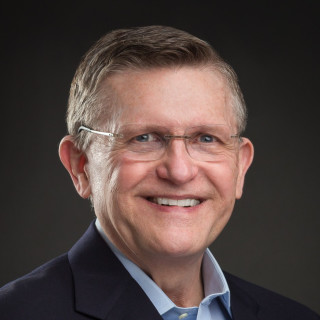
Jordan Frey, MD is a plastic surgeon in Buffalo, NY at Erie County Medical Center and the University of Buffalo. His clinical focus is on breast reconstruction and complex microsurgery. He is also the founder of The Prudent Plastic Surgeon, one of the fastest growing finance blogs. There, he shares his journey to financial well-being with a goal of helping all physicians reach financial freedom, practicing on their own terms.
Collage by Jennifer Bogartz / Shutterstock