
At my children’s school, another mom asked what I did for work. When I said I was a physician, the next question came quickly: How do you manage the kids?
I answered honestly: we rely on a nanny about 50 hours a week. And then I held my breath.
Several mothers laughed — just enough to make the point.
The reaction was small, but the message behind it felt familiar. Women’s professional success is often accepted only as long as the support systems behind it remain invisible. Women physicians often live with a contradiction: society applauds our achievements in our work while disapproving of the support systems that make them possible.
Like many physicians, my work does not fit neatly into school schedules.
I delayed motherhood while training and building my career and then had my children at 42 and 45. That timing means my young children are growing up during some of the most demanding years of my professional life. Medicine does not easily accommodate family life either.
Clinical days run long. Cases extend. Notes follow us home. Call nights and early starts are typical. Even when we are physically present, the cognitive and emotional demands of the job do not switch off when we leave the hospital. And yet, many physicians who are mothers still feel pressure to project that they are managing both medicine and family life seamlessly — and largely on their own.
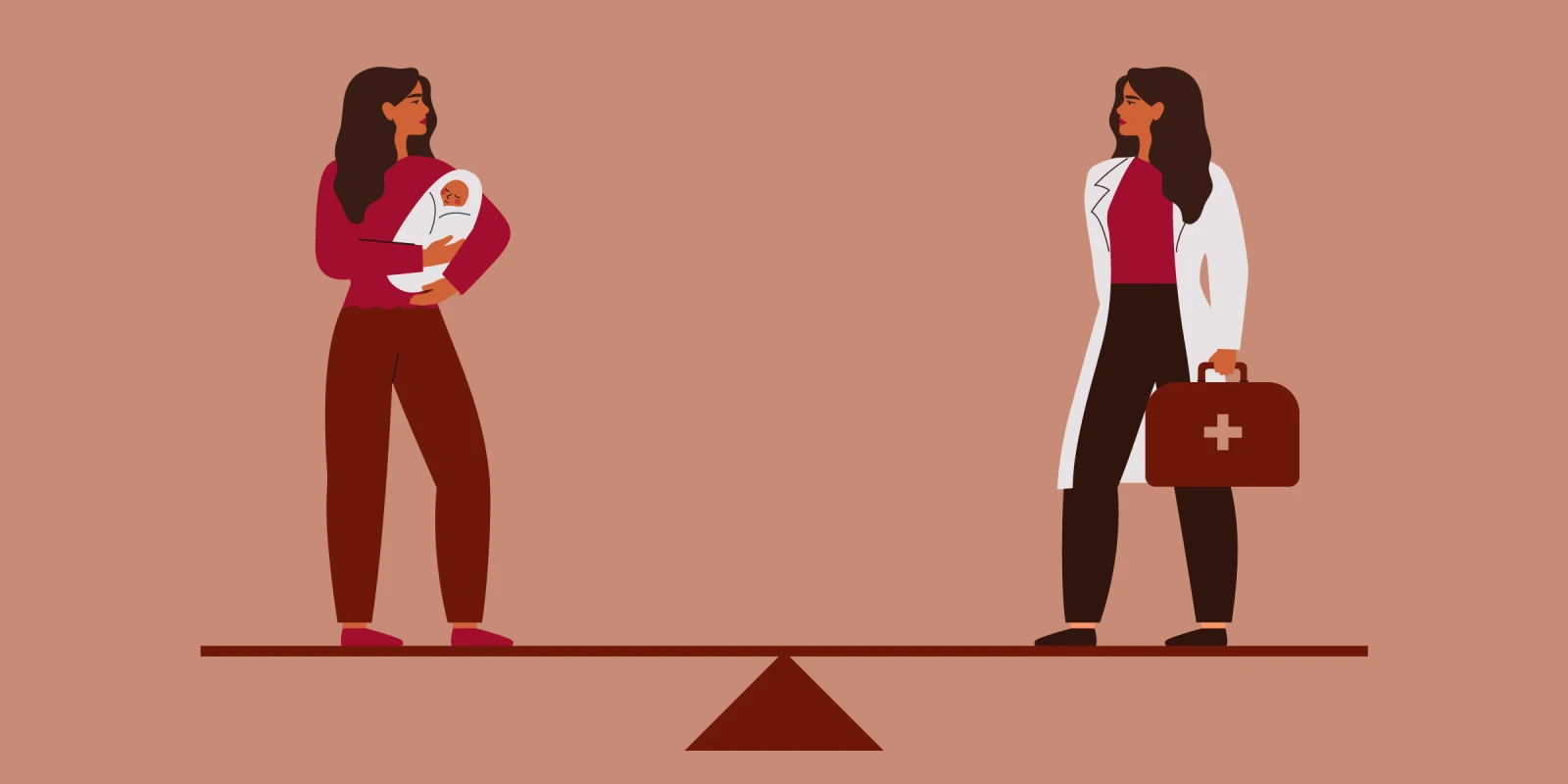
We are expected to be fully committed at work and fully available at home. If we outsource childcare, cleaning, meal prep, or errands, some view it as evidence that we are less present or worse, that someone else is raising the children. But no physician practices alone.
We rely on nurses, medical assistants, pharmacists, technicians, schedulers, and colleagues every day. Modern medicine is inherently team-based because the work is complex, and the stakes are high.
Parenting under similar demands is no different.
For many physicians, childcare is not optional — it’s structural. It’s what allows us to care for patients, maintain clinical responsibilities, and sustain a career over time. The real issue is not that physician mothers have help, but that many of us still feel we must hide it. If medicine expects women to sustain demanding careers while raising families, we must be honest about the support that makes that possible.
Our silence has consequences. When physician mothers feel pressure to downplay or conceal the support they rely on, it distorts what younger trainees and early-career physicians believe is expected of them. Medical students and residents — many already delaying relationships and family-building — watch attendings closely for cues about what a sustainable life in medicine looks like. If what they see is a version of success that appears unsupported and effortless, the message is clear: needing help is a weakness and struggling to manage both roles is a personal failure rather than a structural reality.
That perception shapes decisions. Some delay having children even longer. Some reduce clinical hours. Some leave practice altogether. Others stay, but at the cost of chronic stress and quiet burnout. In that sense, the expectation to “do it all” without visible support is not just unrealistic — it is actively harmful to the future of the physician workforce.
We continue to discuss the loss of women from the physician workforce, particularly during mid-career years, when many reduce clinical hours or leave practice altogether. Structural issues are often cited: inflexible schedules, inadequate parental leave, lack of childcare options.
But culture matters too.
If the unspoken standard is that “good” physician mothers should be able to do it all without help — or at least appear to — then many will conclude that the only way to succeed is to scale back, step away, or leave.
I am fortunate to have trusted childcare. My children are cared for, loved, and secure. I am also able to practice the profession I trained for and find fulfilling. These two facts are not in conflict. If anything, they are dependent on each other.
If medicine is serious about retaining women physicians, we should start normalizing the support systems that enable successful careers. Because the goal is not to prove that we can do everything alone, but to build a profession where doing everything alone is no longer the expectation.
What were some of the ways you ask for help as a physician and a mom? Share in the comments!
Dr. DeAnna Pollock is an anesthesiologist and associate program director at St. Joseph’s Medical Center in Stockton, CA highlighting the struggles of medical training and the importance of trust and communication in medicine.
Image by Mary Long / Shutterstock