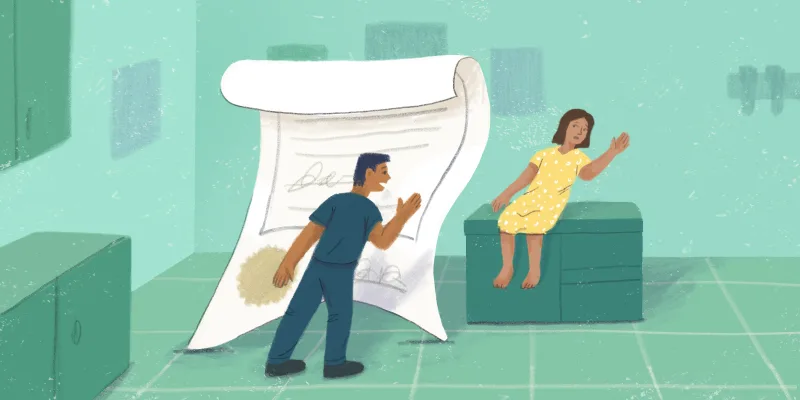
A handwritten poster lay on my desk. Brightly colored bubble letters in neon pink, orange, and green announced: “Congrats, Dr. Hight, on your Top Doctor Award!” Staff messages surrounded the central note: “You’re the best! Way to go!”
I froze. Confused. What were they talking about? A few conversations and an email later, I sat in disbelief. I had been selected as a Top Doctor in pediatrics. Outwardly honored, inwardly surprised, I thought, “I know a lot of phenomenal physicians. Why me?” Before I fully dissected the “Why me?” or the far more uncomfortable “Why not me?” a second accolade arrived, the Parent Choice distinction. Together, they made me pause and ask a question I couldn’t easily shake. What is each of these awards actually measuring? What does it take to earn one, and which matters to me most?
The Top Doctor award is given to the top 7% of physicians as voted on by your peers. Recognition bestowed on you by other physicians and specialists in your community measures something specific. Your colleagues are not directly evaluating your bedside manner or whether your office runs smoothly and your patients are seen on time. They are asking a more subtle, pointed question: Would I send someone I love to this physician? Clinical reliability. Sound judgment. Professionalism under pressure. Your equals are pondering, “Is this someone who collaborates rather than operates in isolation?” These are the components of peer respect. When a colleague refers a patient to you and that patient returns to them well-informed, well-cared-for, and confident in the plan, trust is built. Repeat that enough times, and a reputation forms. It is medicine’s version of word of mouth, among people who know exactly what to look for.
Patient/parent voted awards obtained by magazines through thousands of nomination surveys measure something different, and in many ways, something harder to teach. Families are not evaluating your board scores or your publication record. They are asking whether you truly see them — not just as patients, but as people. Whether you listened long enough to understand not just the chief complaint, but the worry behind it. Strong communication and genuine, palpable empathy. Shared decision-making that makes the parent or patient feel like a partner rather than a bystander. Talking with, not talking to.
Research supports that there is no single way to be an exceptional doctor. Those clinicians rated highest by patients can be exceptional diagnosticians, exceptionally successful with interventions, or exceptionally good at relating to them. “Listening to patients willingly to the end,” was the only consistently highly rated and influential characteristic in a study of what it meant to be a good doctor.
One physician may earn this distinction because families feel genuinely heard in her presence. Another because he repeatedly catches the diagnosis that everyone else missed. A third because patients who were once terrified of the healthcare system trust them completely. What patients remember is not a credential. It is a feeling that someone was truly present for them.
So which award is more prestigious? Here is what I know: it is extraordinarily difficult to sustain peer recognition without first earning the trust of the people sitting across from you in the exam room. The two are more connected than they appear. Physicians who are respected by their colleagues tend to be physicians whose patients arrive at referral appointments prepared, reassured, and clear on why they are there. That does not happen without a clinician who communicates well, follows through, and takes time to explain. Peer reputation is often the downstream effect of patient trust. You cannot reliably build one without the other.
Yet, what neither award captures deserves to be said out loud. Awards are nice, but the vast majority of doctors do these things without winning awards. Surveys and selection committees do not measure the weight of a 20-patient morning that ended with a call from the school about your own child. They do not account for the mounting system constraints that shorten your visit time or the complexity of your panel. They do not see the resident you stopped to teach, the distracted colleague you steadied after a hard outcome, or the notes you finished at midnight. They do not know about the personal health battle you managed behind the scenes, the grief you carried into the office and set aside, because someone needed you present. This is what makes you a Top Doctor, whether you win an award or not. Awards reflect a single moment, a snapshot of a perceived you. They cannot hold the full weight of a career.
Awards are not why most of us entered medicine, but they can remind us what matters. Exceptional physicians are humble, and they listen. A doctor can be good for a deeply personal and varied set of reasons: warmth, diagnostic brilliance, and unshakable trust built over years. But listening is the thread that runs through all of it. By listening and challenging their own assumptions, physicians arrive at more accurate diagnoses, more thoughtful treatments, and more meaningful connections with the people in their care.
This is precisely why adequate time with patients is not a luxury; it is the work itself. In a survey of the general adult public, 86% could recall meeting an exceptionally good doctor and describe that doctor in vivid detail. It means outstanding physicians are not rare. Many of them will never receive a formal award. They will just keep showing up, listening, and changing lives one appointment at a time. While I am honored to be recognized for my work, I know I am not alone: for over 20 years, I have witnessed top doctors all around me.
What traits are most prevalent in the doctors you find to be exceptional? Share in the comments.
Dr. Nicole Hight is a practicing pediatrician in the Atlanta area and a multi-year recipient of the Top Doctor and Parent Magazine parent choice awards. She earned her undergraduate and medical degrees from Emory University and served as chief resident at Levine Children’s Hospital. She believes a listening ear and an encouraging word changes lives. You can reach her at Linkedin, @yourtrustedpediatrician on Instagram, @doctorhight on TikTok. Dr. Hight was a 2024–2025 Doximity Op-Med Fellow and continues as a 2025–2026 Doximity Op-Med Fellow.
Illustration by Diana Connolly