
Medicine is often judged by what it does to the body — labs improved, symptoms reduced, diseases managed. But some of its most meaningful effects are harder to quantify. In addition to healing physical ailments, effective treatment can restore trust in a marriage, repair strained relationships, and reintroduce someone to a version of themselves their family thought was long gone.
Rick was a mid-40s welder who had spent two decades in a familiar cycle: work, drink, argue with his wife, promise to stop, repeat. By the time he entered treatment, the real damage extended far beyond the physical. Trust at home had eroded to the point where even a late arrival was met with suspicion.
Rick was ready to stop drinking. He was looking for a way to show his wife that this time was different. So he committed to sobriety and started taking disulfiram (Antabuse). Disulfiram enjoys a special kind of notoriety in addiction medicine: it’s a medication that causes acute nausea and vomiting if alcohol is consumed.
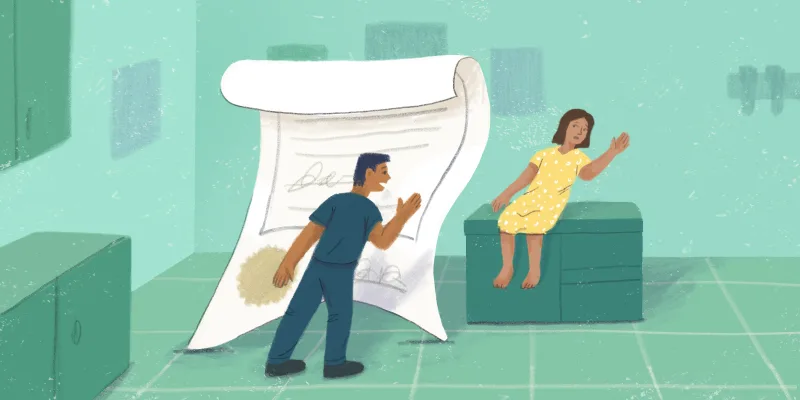
One night, after coming home late from work, he found his wife waiting with a packed bag. Certain he had returned to drinking, she was ready to end their marriage.
Instead of arguing, Rick took his Antabuse in front of her.
“If I drank,” he told her, “I’ll be sick as a dog in 20 minutes.”
Together, they waited. As the minutes ticked by, the tension began to deflate. Nothing happened.
No dramatic reaction — just a subtle shift. The duffel bag was tucked back into a closet. And, for the first time in a very long time, Rick’s wife believed him.
At his follow-up appointment a few weeks later, he held up the little orange pill and simply said, “Doc, this saved my marriage.”
It’s easy to dismiss that statement as hyperbolic or imprecise. But it reflects something we consistently see and, increasingly, something the data supports.
Despite the high prevalence of alcohol use disorder (AUD), pharmacologic treatment remains strikingly underutilized. In the U.S., only a small fraction of individuals with AUD ever receive FDA-approved medications, even though these treatments are associated with reduced recurrence rates and improved long-term outcomes. Disulfiram, while older and less commonly prescribed than naltrexone or acamprosate, remains uniquely powerful when trust has been broken because it externalizes accountability — turning an internal struggle into an observable, immediate consequence.
More broadly, effective treatment of substance use disorders has been associated with meaningful improvements in family and relational functioning. Partners report decreased conflict, increased trust, and improved communication as recovery stabilizes. Children of parents in recovery show better emotional and behavioral outcomes over time. These changes are not incidental — they are central to what long-term recovery actually means in lived experience.
And yet, they are rarely what we measure.
We track abstinence. We track hospitalizations. We track cost. And while all of these measures matter, they fail to capture the full scope of what treatment can do. Because when medicine works, especially in addiction, it doesn’t just change an individual's trajectory. It alters the dynamics of entire families for generations to come.
Rick’s story is not remarkable because of the medication itself. It’s remarkable because of what the medication made possible in a single pivotal moment: a pause in a familiar conflict, a disruption of old assumptions, a recalibration. A chance, however small, to rebuild trust.
That is the immeasurable work of medicine.
Not just reducing suffering, but also restoring connection, fulfillment, and meaning to life. Helping people regain what really matters most. Sometimes, it looks like better sleep or fewer cravings. Other times, it looks like a packed bag being set aside, and two people cautiously finding their way back to each other.
Medicine doesn’t just heal the body. At its best, it helps heal everything that illness has touched.
What have you seen medicine heal that isn't purely anatomical? Share in the comments!
Dr. Lauren Grawert is an addiction psychiatrist in Arlington, Virginia. She enjoys walking, traveling, and spending time with her two young children. Dr. Grawert is a 2025–2026 Doximity Op-Med Fellow.
Illustration by Jennifer Bogartz