All too often, we fall prey to the misconception that the course of one’s life hinges on its biggest moments. In a medical career one might often find themselves imagining with great fervor the day they get their medical school acceptance, the day they match into residency or fellowship, the moment they get the honors they longed for, or when they receive the recognition of their peers. While these are undoubtedly crucial moments in the life cycle of a medical career, rarely are they the moments that end up defining them.
Instead, our careers, and perhaps even our lives themselves, are ultimately the product of a summation of life’s tiniest probabilities. A statement made offhand by an attending one Tuesday afternoon could end up being consequential for years of our lives as it forces us to reconsider a specialty. These instances are not predictable or consequential at the time, but with hindsight, we can come to appreciate that they indeed delineated a moment, a distinction in time from one assumed point of view to the next.
For me, the most recent example of this came in the form of a patient encounter. The patient was admitted with tumefactive multiple sclerosis of her frontal lobe. In a matter of months, her husband said she had gone from a busy mother of multiple children to someone who rarely got out of bed, communicating her refusal with nothing more than a flat affect. We saw her every day for several weeks. She never got out of bed. One day, my resident attempted to drag her out of bed, to little avail. I would preround on her every morning as well, which admittedly started to feel a little pointless after a few days. I wasn’t really sure how much to engage her, especially when the default response was a “no.” After the first few days, I decided to approach her with a level of enthusiasm that might have exceeded what was warranted given the situation. There wasn’t much change. One day, however, she met my request to do a neuro exam with a small smile and a “yes.” That small moment provided me with so much gratification, and it is something that months later, I still find myself reflecting on it. It is a moment that I can say will end up shaping my career because, more than anything else, it communicated to me what I valued most in medicine. It was information that I couldn’t find in a “how to choose a specialty panel” or the AAMC specialty quiz or even the first time I sutured. Instead, it was this tender interaction that took place in the space between the chaos and routine.
Seemingly small interactions like these have ended up shaping the contours of my medical journey far more than I anticipated. And I imagine the same is true for many others. This realization, that the entirety of our lives hinges on these tiny probabilities, should come as a relief. This relieves us from the emotional burden we often put on the big moments and instead should serve as a reminder for us to take solace in the fact that the most defining moments will happen without our permission or asking for them. But that is only if we create the cognitive space to notice them and appreciate them — whether that be in the room with the patient or in a conversation with a colleague or loved one. If we don’t have the capacity to see these moments when they happen because we are hyperfocused on the big presentation or big exam in the month that follows, we risk missing out on some of the most consequential moments in our medical careers.
This selective attention is more important than ever, especially given that we live in a time in which we can voluntarily load ourselves with a constant stream of information at any given moment. It makes the choice to forcibly disconnect and commit our full attention to one thing at one moment in time hold even greater weight. Not every one of these moments will have a consequence that we can predict. Eventually, some of the moments we ascribe incredible importance to may prove themselves to be inconsequential once time builds greater context. However, those small moments that persist through time ultimately have the greatest impact on our lives.
Share a small moment that changed your career in the comments.
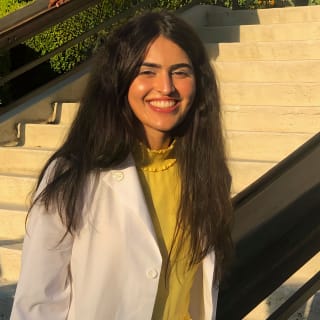
Neha Sahota is a rising MS4 at USC Keck. You can find her here on LinkedIn.
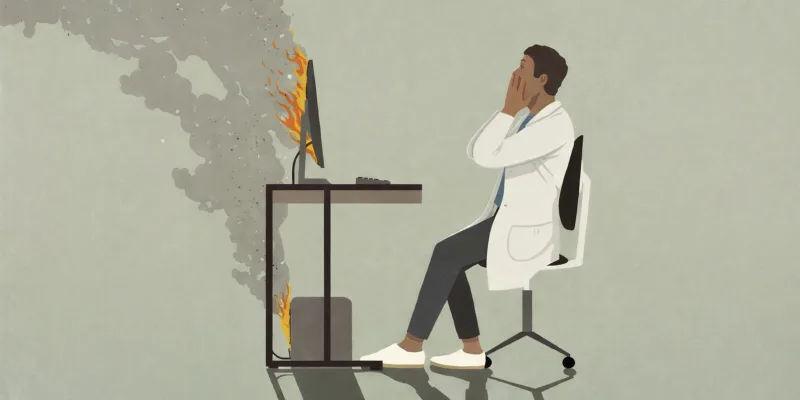
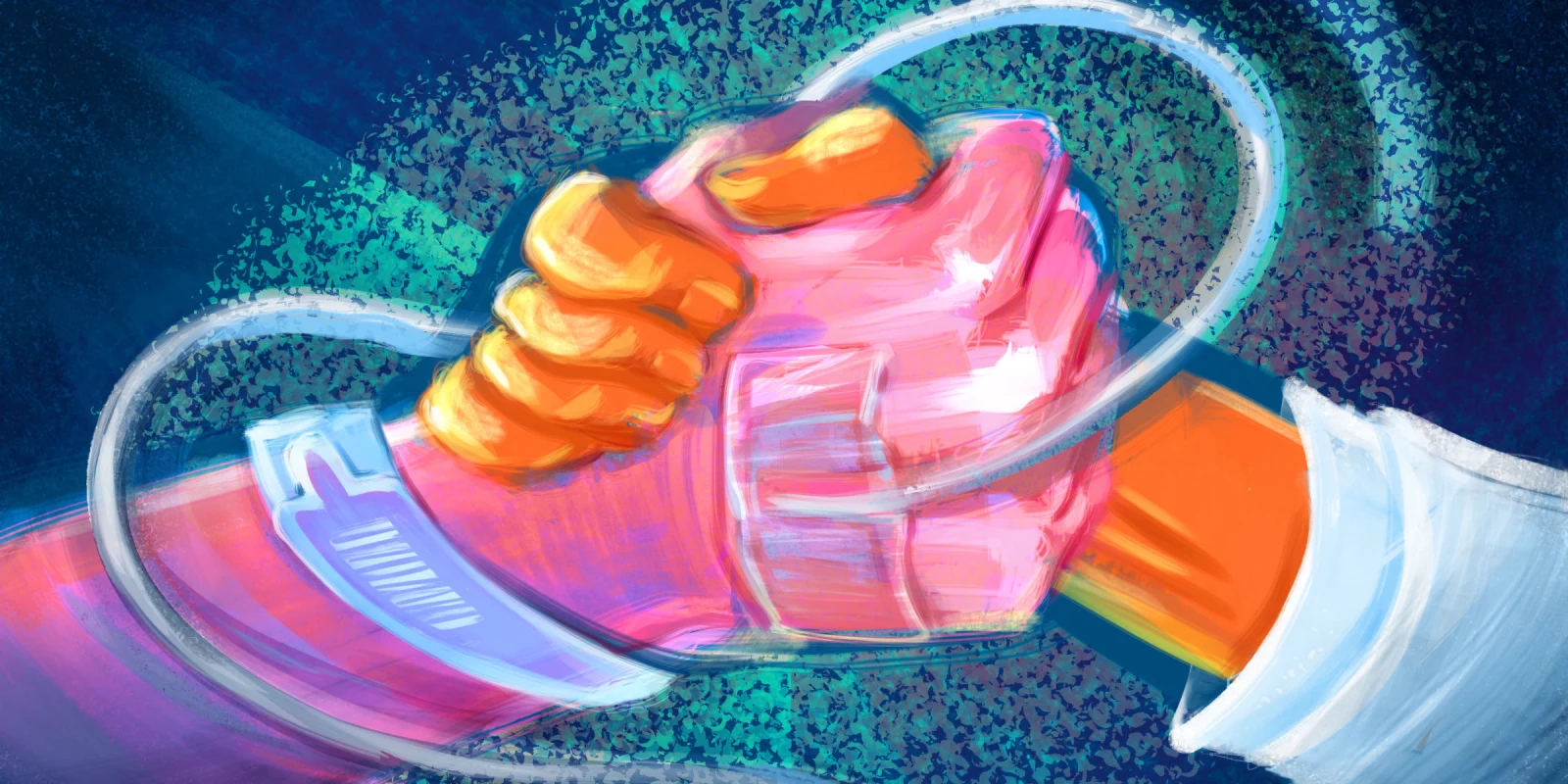
Illustration by April Brust