
“Oh man! I've got cancer?”
By my count, it was the sixth time in the past 40-odd minutes that Mr. Corvette had blurted out the same line. As an oncology fellow, delivering news of a diagnosis and guiding patients through what it means is second nature. But this gentleman’s preceding diagnosis of anterograde amnesia was a curveball that I had not fully appreciated. Until now, I had only read about such cases and assumed that pop culture portrayals in films like "Memento" or "50 First Dates" were exaggerated. Mr. Corvette quickly changed that perception. He was witty, polite, and fully present for about seven to 10 minutes. Then, like clockwork, his memory would reset, and he would forget everything we had just discussed, forcing me to start the conversation again — from scratch.
The initial inpatient consultation was for a gnarly looking esophageal mass with possible metastatic disease. I had reviewed his chart and made note of “Korsakoff’s syndrome, severe dementia, no capacity” casually listed among half a dozen other diagnoses. I prepared myself with relevant facts and figures, recent literature, and a plan, and walked into his room. I introduced myself and was greeted warmly, accompanied by a firm handshake. He was not sure why he was in the hospital but noted that the soda he was sipping on made him cough and that didn’t feel right. I spoke to him about this mass in his esophagus with ominous signs of spread to other organs. I told him that he had undergone a procedure to get a biopsy and it had confirmed this was indeed cancerous. Not unexpectedly, he exclaimed “Oh man! I've got cancer!” However, by the time we got to possible treatment options, he stopped me and said he had no idea what this conversation was all about. I gave our discussion a pause and restarted our conversation. He listened intently and had very clear and coherent questions pertaining to the mass but again went with some iteration of “Oh man! I've got cancer?” Just like the last time, within 10 or so minutes he apologized and asked what we were talking about.
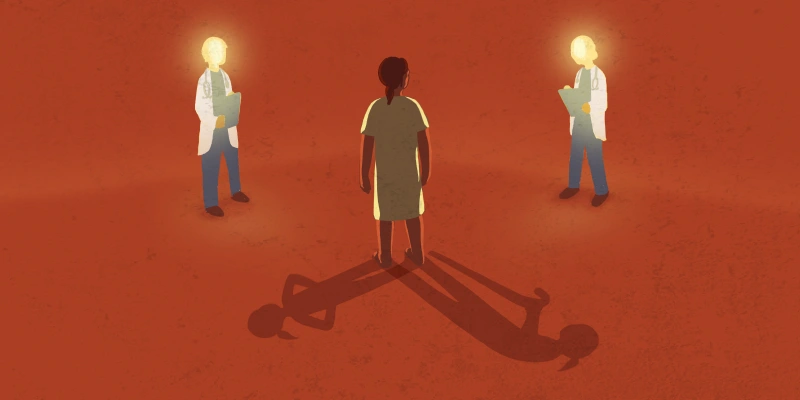
I glanced at his chart, fully appreciating for the first time that “Korsakoff’s syndrome, severe dementia” listed in his medical history meant that he lived his life in 10-minute parcels. He was oblivious to everything outside those 10 minutes except for remote memories. He had no living family and relied on a court appointed guardian for assistance. The guardian was probably in her late 50s with an almost motherly affection toward Mr. Corvette who was in his 80s. Her responsibilities ranged from assisting with mundane tasks like paying grocery bills to medical decision-making. Despite her strength, composure, and wisdom, one could clearly see that this particular conversation was a weighty burden that was not easy on her.
The most difficult part of our conundrum was the fact that society, including the courts, had in their wisdom deemed Mr. Corvette to lack capacity. While we were in complete agreement with this determination, we also could not brush aside the clear, lucid, and thoughtful conversations that Mr. Corvette could participate in, albeit briefly. I believed it to be my duty to inform him of his condition and options despite the constraints imposed by his memory-impairment.
A new cancer diagnosis comes with a lot of nuances: What type is it? How extensive is it? What if we did nothing? What if only surgery? How about chemotherapy? What would you gain from treatment? And at what expense? These nuances were nearly impossible to distill into a 10-minute time frame. But over the next couple of days, I had a few more conversations with him, each under 10 minutes from start to finish. Each time he would exclaim “Oh man! I've got cancer?” and each time I was deliberately faster and learnt a little bit more about his wishes. He suggested that he had lived a full life and in his words was ready to “meet his Lord.” Finally, we were able to arrange for all those who were part of the care team to come together, including the admitting hospitalist, the surgeon, radiation oncologist, social worker, and his bedside nurse. We tried to introduce ourselves one by one. Once again, before we could finish, Mr. Corvette had forgotten what we were there for. It was heart-breaking but we went again and as quickly as we could, laying bare the situation for him to comment on. And this time, very coherently and in a very content tone, he said that he did not want to spend the last of his days in a hospital and would much rather go home to be with his caregivers. He was ready to go in peace and his wishes were honored.
Drew Barrymore and Adam Sandler charmed the world with their movie "50 First Dates," a light-hearted story of a lady with anterograde amnesia whose husband strives to woo her every day because her memory resets every night. I wonder if Mr. Corvette’s last days are, in a strange twist of fate, peaceful — free from the knowledge of a cancer diagnosis. Cancer continues to be as much of a psychologically distressing diagnosis as it is a physical one. Did Mother Nature bless him and take away the mental anguish? How many patients would wish for a situation where they forget that the emperor of maladies is gnawing on them? Or did we do him a disservice? After all, however well-meaning we may have been, at the end of the day we made him re-live the pain of being told that he had cancer umpteen times. Should we have just asked the legal guardian to make the decision? After all, society had declared that he had no capacity anyways.
I struggle for the answers, and I suspect there are no good ones.
Dr. Umar Iqbal is a hematology and oncology fellow at Moffitt Cancer Center in Tampa, Florida. His clinical and research interests focus on acute myeloid leukemia, myelodysplastic syndromes, and hematopoietic stem-cell transplantation. He is also passionate about medical education and narrative medicine, exploring the human side of cancer care through writing.
All names and identifying information have been modified to protect patient privacy.
Illustration by April Brust