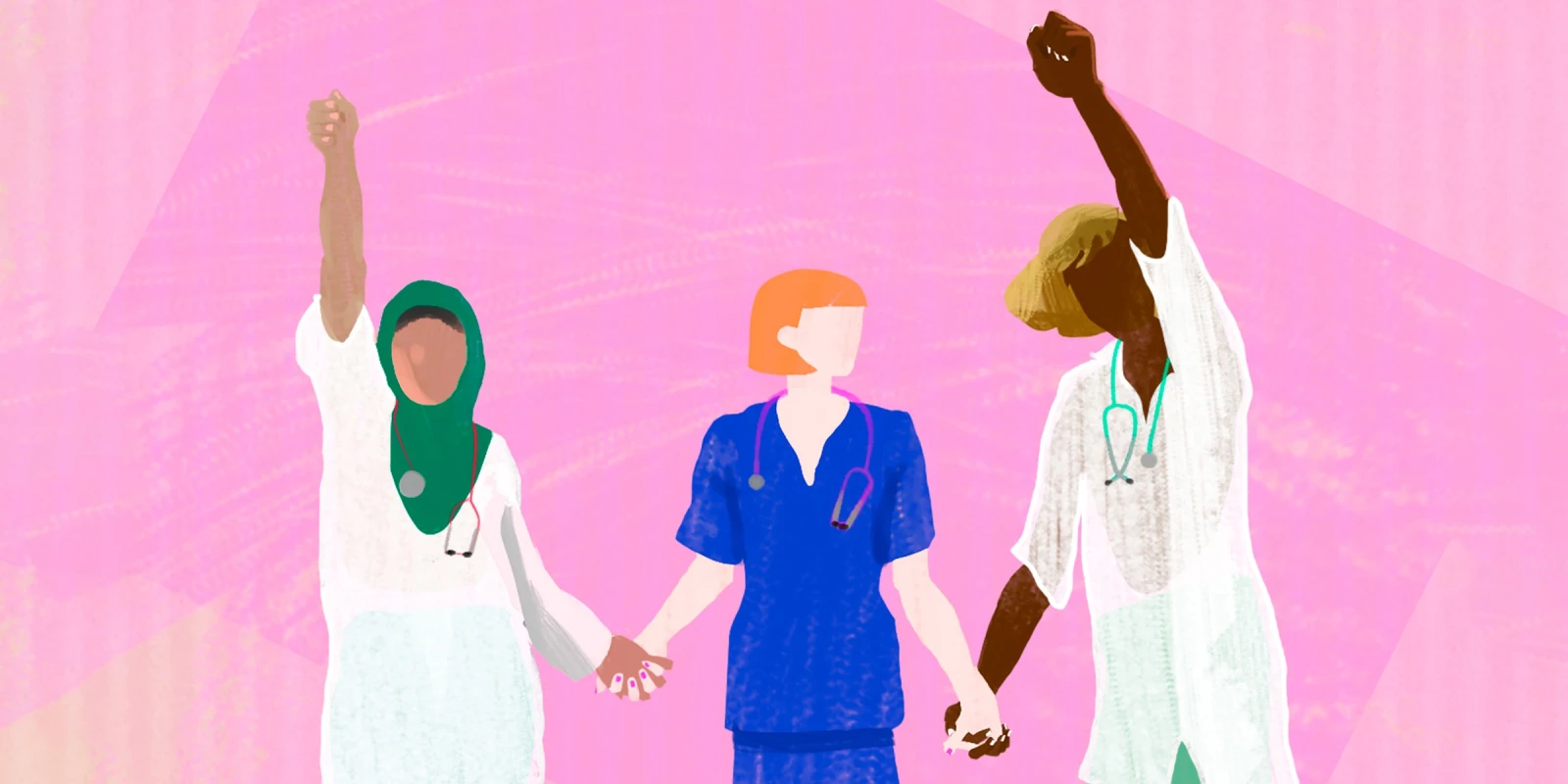

“The only way you can ask for things and have people like you, is by apologizing before and after you ask,” says one woman surgeon in the short documentary “1001 Cuts.”
Watching the film, screened at a recent American Women’s Medical Association’s (AMWA) Annual Women in Medicine Lectureship event, I was struck by how closely it aligns with patterns I have observed throughout my career as a leader in faculty well-being and enrichment, and as a clinical psychiatrist working alongside women physicians at multiple stages of training and practice.
“1001 Cuts” was directed and produced by a physician who left clinical practice and depicts the corrosive impact of the everyday slights experienced by women in medicine on physician engagement and attrition. Like the idiom “death by 1000 cuts,” the film demonstrates that the often disregarded inconveniences, insults, and moments — however small — convey exclusion to practicing women physicians, relentlessly eroding their dignity. I have seen such dynamics play out across medical specialties, with women physicians interrupted in meetings, overlooked for speaking engagements, or held to different interpersonal communication standards. These are subtle signals, but they accumulate to shape how women physicians experience their work and their sense of professional belonging.
Factors such as voice, visibility, appreciation, respect, values alignment, and trust are critical for people to feel seen, heard, and connected to the broader mission of healthcare. Think of the moment when a colleague amplifies your voice in a meeting by clearly referencing your name when building on your thoughts. All of the micro-experiences of belonging buffer against burnout.
In my own experience, these are not isolated concerns but rather reflect systemic patterns that influence engagement, advancement, and retention. Not to mention, this observation is supported by data. A recent study found that women physicians have a 1.4 times greater likelihood of clinical practice attrition at all ages.
The documentary’s power also rests in its use of storytelling to describe how physician engagement and attrition are closely intertwined with patient experience, outcomes, and access to care. Research shows that patients treated by women physicians have significantly lower mortality and readmission rates compared to those treated by physicians who are men. The close relationship between clinician experience and patient outcomes is explicit in the quadruple aim, a framework to improve patient experience, advance population health, reduce cost of care, and achieve well-being for care teams.
To better understand how healthcare systems can respond, I co-led a seminar at the Radcliffe Institute for Advanced Study, which convened international experts to develop a roadmap for retaining women physicians with intersecting identities. Our discussions focused on identifying key organizational drivers of burnout, barriers to implementing effective solutions, and strategies for institutional accountability on bias. The resulting framework that we published emphasized a learning health system approach, leveraging data to achieve shared responsibility for structures that promote organizational well-being. These data also ensure a meaningful impact of equitable promotion processes, transparent compensation plans, mentorship programs, and zero-tolerance policies for sexual harassment with timely investigative practices.
While structure lays the groundwork for belonging, culture brings belonging to life. The call to action that “1001 Cuts” makes is an empowering one, reminding us that small, everyday acts translate concretely to safety, dignity, and belonging for those on the front lines with cultural change embraced at every level, from individual to institutional. We learn how women surgeons lead successful clinical practices where they shape the culture; raise awareness on gender inequity on both traditional and social media, or build a community of women physicians throughout the country with shared experiences. Through the lens of triumph, “1001 Cuts” offers a clear antidote to burnout: agency to shape culture and achieve belonging so that both care teams and their patients can thrive, one conversation, affirmation, and gesture at a time.
What are some positive behaviors that contribute to your sense of belonging at work? Share in the comments!
Ashwini Nadkarni MD is Vice Chair for Faculty Enrichment in the department of psychiatry at Mass General Brigham and assistant professor of psychiatry at Harvard Medical School.
Illustration by Jennifer Bogartz