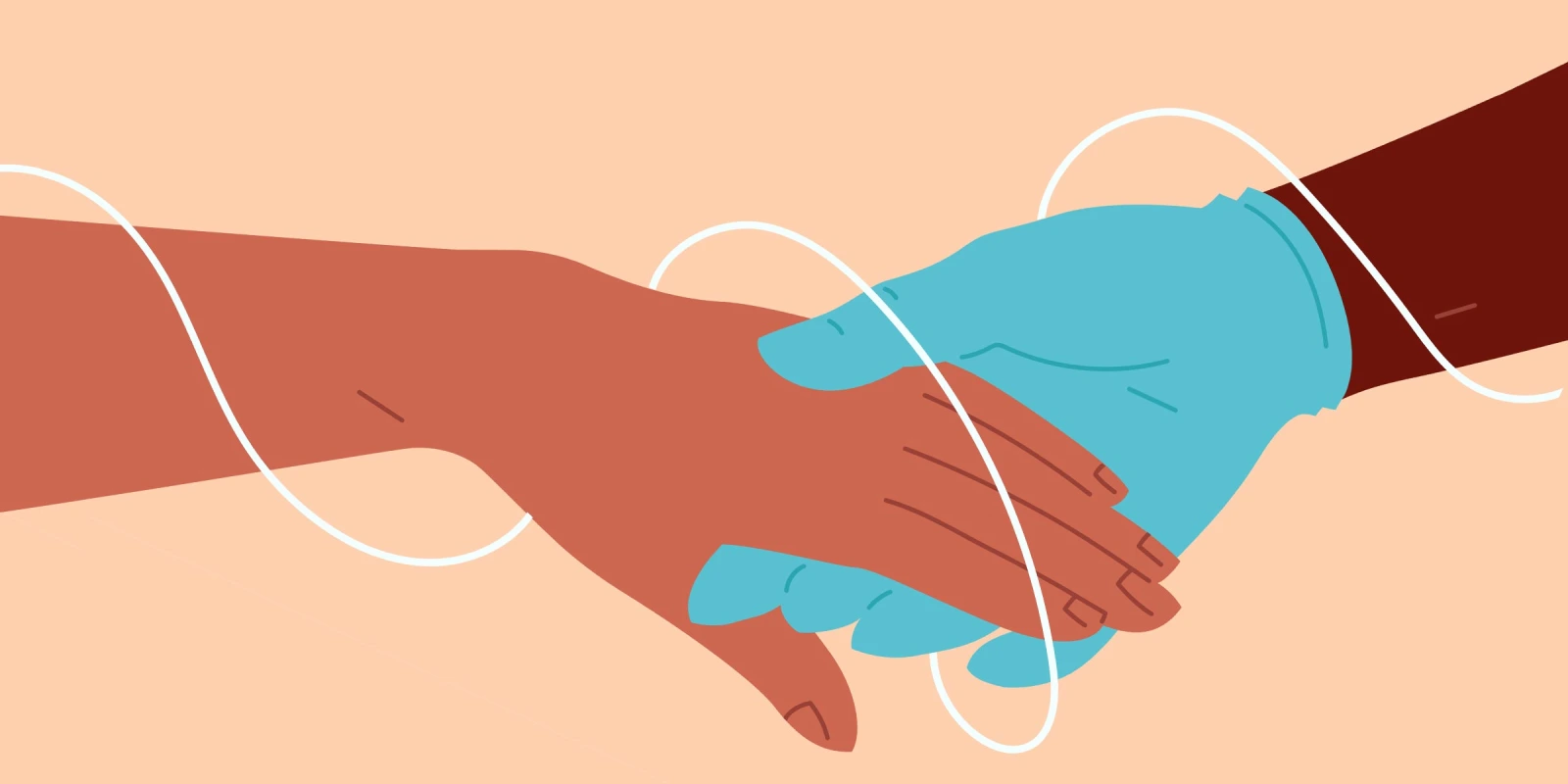

Cancer touches everyone. Some live with it. Some love someone who is living with it. And some walk beside it: as caregivers, as advocates, as witnesses to both suffering and resilience. I put myself in that third category, as a caregiver and patient advocate.
I am a hematologist-oncologist at Saint Louis University Hospital. I care for patients with blood cancers — diseases that often arrive without warning, alter the course of a life overnight, and demand from patients a kind of courage most of us hope we will never have to find.
This work is not simply what I do. It is something that shapes how I see the world.
Every day, I am invited into some of the most vulnerable moments of human life. I convey the diagnoses that change everything. I guide patients and families through complex decisions. I celebrate remission, and sometimes, I sit in silence when medicine reaches its limits. There are days when it feels overwhelming; emotionally, intellectually, even spiritually. And yet, it is also the most humbling work I can imagine. Because in oncology, if you are paying attention, you quickly realize something profound: you are not just treating disease, you are learning what matters.
Over time, my patients have become my teachers. I would like to share three lessons they have taught me. Lessons not only about cancer, but about life, resilience, and what it means to truly care for another human being.
Life Is Fragile and Time Is Limited
In clinic, I often hear a version of the same story. “I was fine just two weeks ago.” “I had plans for next month.” “I didn’t think this could happen to me.”
There is a quiet disbelief that accompanies a cancer diagnosis: a sense that life was supposed to unfold differently, more predictably, more gradually. But illness has a way of interrupting that narrative. It reminds us, sometimes abruptly, that the future we assume is not guaranteed.
We live our lives as though time is abundant. We postpone joy. We delay connection. We wait for the “right moment” to prioritize what matters. But what my patients teach me, again and again, is that the right moment is not some distant point in the future. It is now.
I have had patients who, in the face of serious illness, find remarkable clarity. They reconnect with estranged family members. They express gratitude in ways they never had before. They begin to value ordinary days with extraordinary depth.
And I often find myself wondering, why does it take illness for us to arrive at that understanding? Why do we need to be reminded that time is finite before we begin to live intentionally?
So, the lesson is simple, but not easy: Do not wait.
Take care of your health, not as an obligation, but as an act of respect for your future self. Make time for the people who matter. Say the words you have been holding back. Pursue the things that give your life meaning.
Cancer Is Not Only a Physical Disease
When we talk about cancer, we often focus on the biology: the cells, the mutations, the treatments. And rightly so. Science has made extraordinary progress in this field. Thanks to science we can physically win over cancer.
But what is less visible, but equally important, is the internal experience of the patient.
I think of my patient in her 70s who overcame leukemia: a diagnosis that, years ago, would have been far more daunting. By every clinical measure, she has done remarkably well. She is in remission and has, in many ways, “won.” And yet, each time she comes to clinic, there is a quiet anxiety. A question that lingers beneath the surface: What if it comes back?
I think of another patient, younger, who underwent CAR-T cell therapy for lymphoma: a cutting-edge treatment that re-engineers the immune system to fight cancer. Her scans are clear. Her disease is in complete remission. And still, the anticipation of each follow-up visit brings a wave of fear.
These are not signs of weakness. They are reflections of what cancer does, not just to the body, but to the mind.
Over time, I have come to understand that cancer attempts to assert itself in two ways. The first is physical: by growing, by resisting treatment, by challenging the limits of medicine. But the second is psychological: by introducing doubt, by eroding confidence, by making a person feel defined by their diagnosis. And this second battle is often quieter, less visible, but still deeply impactful.
There is a moment, even for physicians, when we open a scan report or review a bone marrow result, where there is a pause; a brief intersection of hope and uncertainty. We feel it too. We carry that weight with our patients.
But cancer does not win simply because it exists. It wins only if it takes away your sense of self — your identity beyond the disease, your capacity for hope, your belief in the possibility of a future. Because survival is not only about extending life, it is about preserving the essence of who someone is.
Trust Science and Sustain Hope
We are living in an extraordinary time in oncology. The pace of innovation is remarkable. Treatments that were unimaginable just a decade ago are now standard of care. Immunotherapy, targeted therapies, cellular therapies like CAR-T — these are transforming outcomes in ways we could not have predicted.
Science matters. Evidence matters. Research matters. But even as we celebrate scientific progress, we must recognize that healing is not achieved through science alone.
Patients need trust: in their care, in their teams, in the process. They need faith: maybe not necessarily in a religious sense, but in the belief that their life still holds value and possibility. And they need community.
They need people who show up, who listen, who advocate, who are willing to say "You are not alone in this." Because at its core, advocacy is about recognizing that medicine does not happen in isolation. It happens within systems, within communities, within structures that either support or fail the people who need them most. And each of us has a role in shaping those structures.
Because in the end, the true measure of our work is not only in the cures we achieve, but in the compassion we extend, the dignity we preserve, and the lives we touch along the way.
What lessons have you learned from your patients? Share in the comments.
Previously published at Ranjus Book Club