
When I was a second-year ob/gyn resident, I saw a young woman in the ED who I admitted overnight to our oncology service. She came in for back pain. Nothing else, just unrelenting back pain. But the CT scan told a very different story. Two large, complex ovarian masses. The kind that make you stop mid-scroll on the radiology report and just stare for a second.
I’d never seen someone that young with something that suspicious. She was soft-spoken, incredibly polite, and had this calm about her that made you feel scared for her. Her mom was at the bedside, hovering, hopeful, and terrified. She was scheduled for surgery the next morning. That night, I stayed late reading everything I could on germ cell tumors and the differences between borderline and malignant pathology. I wasn’t the one doing the surgery, but I felt deeply responsible for her. You don’t just shut your brain off and leave those patients behind when your shift ends. Not when they’re younger than you.
The next day, after her surgery, I went to see her. She and her mom were sitting together, her mom working but very clearly focused on other things. When I walked in, they looked up at me like I held all the answers they were waiting for. When they asked about the pathology, I said, “I’m so relieved for you. The frozen section looked benign.”
Ten words. That’s all.
Her mom exhaled like she’d been holding her breath all day. I saw her eyes well up with relief. And the patient, she smiled. Not a big smile, but a real one. And in that moment, I believed it too. I believed that maybe things would turn out OK. That maybe the worst was behind her.
A few weeks later, I saw her name again. This time in the ED with severe pain. And I knew before I even opened her chart. Her final pathology had come back. Angiosarcoma. Rare, aggressive, and cruel.
I didn’t know what to expect when I walked into the room. Would she be angry? Would her mom confront me? But neither of them said a word about what I had told them before. And that’s what made it worse. They didn’t have to. The silence said everything. The “why” felt like it hung in the air like fog.
Why did you say it was OK?
Why did you give us that moment of hope, if it wasn’t real?
I didn’t have the language or courage to explain how guilty I felt about it. I just sat with them. Answered their questions. Tried to hold space in a room that felt too small for what they were carrying. That night, I went home and replayed that moment over and over again.
“I’m so relieved for you. The frozen section looked benign.”
I said them with joy. With undeserved confidence. With the full belief that I was delivering good news. And I wasn’t wrong at the time. That’s what makes this so uncomfortable. I didn’t lie. I didn’t mislead. I just believed in a version of the truth that later changed. And I feel like I handed them that version like it was final.
That moment taught me something I had never been taught in school. Sometimes, the most uncomfortable part of this job isn’t the surgery or the suffering or the decisions. It’s the words. The good words you said too soon. The honest words that turned out to be wrong. The helpful words that ended up hurting.
In medicine, we talk so much about compassion and truth-telling. But what I’ve learned is that there’s a space between the two. And that space, the gray zone, is one we have to learn to live in. We want so badly as doctors to give people hope. Especially when they’re young. Especially when they’re kind. Especially when we feel like we owe them good news after everything they’ve been through. But real hope, sustainable hope, has to come with uncertainty. It has to live beside it.
Since then, I’ve become much more careful with how I deliver information. I’ve practiced saying things like, “This is what we know so far,” or “The frozen section is just the first chapter, we still need the full story.”
I’ve learned to sit in silence, even when I want to fill the room with something reassuring. I’ve learned that not knowing is not failing. And most importantly, I’ve learned that presence matters more than perfection.
I still think about her often. I carry her story with me most days: in the clinic, in surgery, and especially in those quiet moments between questions, when families are searching your face for something solid. This job will never get easy. The stakes are too high. The heartbreak is too real. But I do think I’m getting better, not at being perfect, but at being honest and present. I’m learning how to be OK with the discomfort. How to stay in the room even when the hope runs out.
Dr. Priyanka Raju is a chief resident in ob/gyn residency and a compassionate leader who brings clinical dedication, curiosity, and purpose to every aspect of patient care. When she’s not in the hospital, she’s often exploring a new restaurant, planning her next trip, or deep in a heartfelt conversation with the people she loves most.
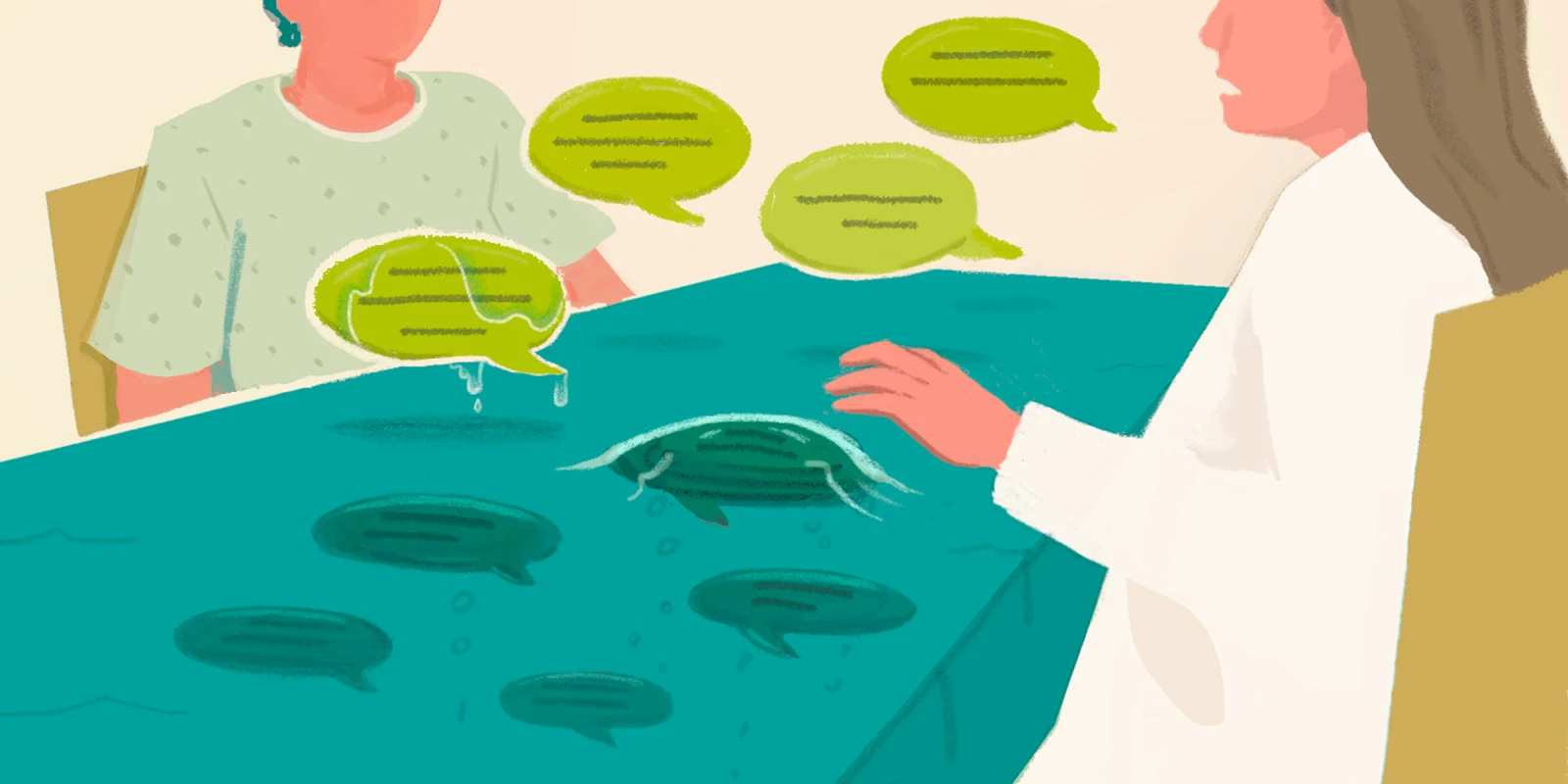
Illustration by Diana Connolly