
Mr. Ramirez was in his mid-fifties when he first walked into Equal Access Clinic. He was the kind of patient who reminded you that life doesn’t always give warning before things get hard. I was a college sophomore then, new to volunteering at the free clinic, still learning how to take vitals and not sound awkward while doing it. Back then, I didn’t know much, but I knew enough to realize that chest pain meant something serious — and that Mr. Ramirez looked tired in a way that went beyond fatigue.
He had come in because he was experiencing chest pain, especially after long walks or heavy yard work. “It’s probably nothing,” he said, waving it off. “But my dad died of a heart attack at my age, so I figured I should get it checked.” I had heard stories like his before, patients waiting until symptoms couldn’t be ignored, not because they didn’t care, but because they couldn’t afford to know what was wrong. Knowing came with a cost. And for Mr. Ramirez, that cost was more than financial; it was emotional and psychological. Every test was a gamble between peace of mind and the fear of a truth he couldn’t afford to face.
The attending asked a few questions, did a quick exam, and told him his symptoms were concerning. She explained that to rule out anything cardiac, we would need to refer him for an EKG and a stress test, since our free clinic didn’t have access to those resources. She added that he might also need a cardiology consult and an echocardiogram, depending on the results. Mr. Ramirez nodded slowly. “And that’s going to cost a lot, right?” he asked with the quiet resignation of someone who had done this math before.
It was the question we heard all too often. We explained that we would try to refer him through a community program that offered discounted testing, that we would advocate for him, and that we would do what we could. Still, we couldn’t promise anything. Not the price, not the timeline, not even whether the referral would be accepted.
And yet, Mr. Ramirez showed up to every follow-up. He filled out the forms, made the calls, and got his EKG and stress test scheduled. Unfortunately, the results of the stress test were abnormal, and ischemia was suspected. He needed further testing and now, definitely, a cardiology consult.
It took another few weeks to arrange that. He missed a work shift for it. He paid out of pocket for transportation. And all of this was just to figure out if something was wrong — not even to treat it yet. It struck me then how different his experience was from the textbook algorithm the medical student volunteer had pulled up on UpToDate. Chest pain? Rule out the heart. Get the labs, an EKG, a stress test. But in real life, it doesn’t feel that clean. For Mr. Ramirez, every “next step” came with a cost. Each recommendation wasn’t just a medical plan; it was a personal dilemma. Could he afford to keep chasing the answer? We eventually helped him get into a specialty clinic for further testing, but only after delays, paperwork, and near-constant advocacy. It was exhausting, and I wasn’t even the patient.
Years later, now in medical school, I think of Mr. Ramirez often. When I see a chest pain consult, or sit through a cardiology lecture, or hear someone mention a “routine workup,” I think about how routine is only routine if you can afford it. I think about the patients who fall through the cracks, not because they didn’t care, but because they were asked to carry too much alone.
In our clinical education, we’re taught to be thorough, efficient, and systematic. But Mr. Ramirez taught me something else: to ask myself whether each step in the algorithm is actually accessible. To remember that behind every recommendation lies a patient who has to live with the cost — financial, emotional, physical — of following through.
He also reminded me that resilience isn’t always loud. Sometimes it looks like quietly showing up, again and again, even when the odds feel stacked against you. It looks like a man who missed a shift, paid for a ride, and waited weeks to hear whether his heart was giving out, just so he could keep going.
I never found out what happened to him. He stopped coming to Equal Access Clinic once he was fully transitioned into specialty care. I like to think he got the help he needed, that his story didn’t end with a missed follow-up or an unaffordable test. But even if it did, his impact on me didn’t.
Mr. Ramirez was never just a clinical encounter. He was a teacher, long before I was in medical school. He taught me that behind every line in a treatment plan is a human being with a story, and that part of being a good physician is learning how to read both.
Kimia Targhi is a fourth-year medical student at Florida State University College of Medicine interested in internal medicine. All names and identifying information have been modified to protect patient privacy.
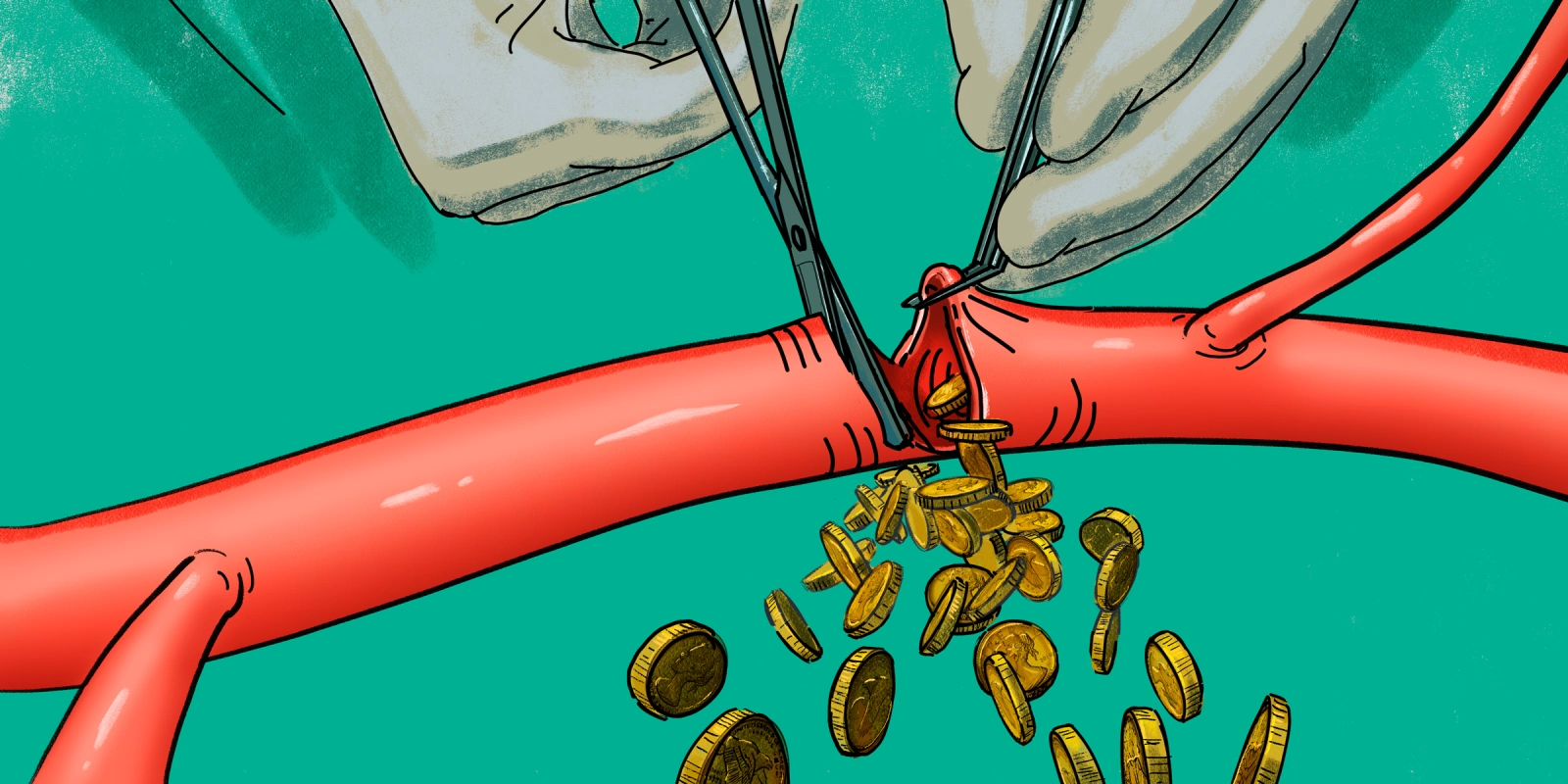
Illustration by Jennifer Bogartz