About 15% of all new U.S. medical students are first-generation, meaning their parents never completed a bachelor's degree. That statistic isn’t abstract to me; it is personal. I grew up in a hardworking, two-parent household with a nurturing mother who was rich in values but not in resources. Financially, life swung between feast and famine. Coming from an environment without financial security, I sought guidance early in my career, often informally.
Advice came from senior physicians over lunch or during evening sessions led by financial advisors. Skeptical by nature, I studied every recommendation before acting. I felt an extra weight to get it right. I had a responsibility to care for my parents, and I knew there was no hefty 401(k) to tap into when they could no longer work. There was no million-dollar inheritance awaiting me. I had to change my family's financial trajectory. This early focus on financial literacy led me to discover a wealth strategy that gives doctors autonomy over their time.
Physicians are in a uniquely powerful position to semi-retire by their 40s, but only if they make a few early decisions that are not always obvious. I am not talking about the traditional FIRE (Financial Independence, Retire Early) movement. FIRE focuses on frugal living and encourages drastically cutting expenses, saving upwards of 50% of your income, and investing to build a large nest egg, allowing you to completely quit traditional work in your 30s to 50s rather than retiring at 65. Instead, I am coining a new term, FREE: Financial Readiness for Elective Employment, or semi-retirement that lets you work when and how you want by your 40s.
Physician income falls in the top 10% of U.S. earners and provides an opportunity to get FREE. The usual advice – save more, invest in index funds, live below your means – is helpful but insufficient given the timing of physician income, which results in early debt, compressed deferred earnings, burnout, and the complexity of income taxes. To get FREE, physicians should optimize for income durability and control, not just net worth. Semi-retirement requires cash flow to sustain reduced clinical work.
Here are three less conventional principles for physicians aiming to achieve optionality by 40-45. Not full FIRE, but FREE, the ability to cut clinical hours by 50%-70% without financial stress.
Physicians who semi-retire in their 40s don’t need to earn the most, but they do need to avoid irreversible commitments early.
Steer clear of silent wealth killers. When I finished residency and settled into private practice, I purchased a brand new Nissan sedan, a non-doctor car by all accounts. I got it with all the “luxury” features: remote start, heated seats, etc, for a modest price. What did I do when my private practice income climbed? I continued to drive it. For over seven years. So long that my children, who were toddlers when I bought it, were now old enough to beg me to get a new car. Could I afford a flashier, fancier car? Yes, but that wasn’t the most important thing. If you want to be FREE, save the doctor car for later. Buy a reliable, comfortable car early and hold onto it.
Two even bigger early silent wealth killers are more controversial. Some physicians see them as necessities, but I would argue they are luxury items. If you want control over when and how you work, delay “forever house” decisions, and pass on private school. Buy modestly early and upgrade your home after the loans are paid off, investment income is established, and semi-retirement is viable.
According to the National Association of Independent Schools, the median private day school tuition for first graders is $26,800. This rises to $30,535 for middle school students. By choosing private, many physicians inadvertently commit to (at a minimum) $325,000 across 13 years per child! Instead, with time on your side, these early savings will compound without requiring extremely lean savings behavior.
Physicians who semi-retire in their 40s don’t need to save the most. But they do need to protect their energy like an asset.
This is counterintuitive and departs from traditional recommendations for clinicians. Extreme savings and a lean lifestyle that lead to debt freedom are undoubtedly one path to early full retirement. For the average physician who has spent the better part of two decades delaying gratification to meet the demands of medical training, this path often becomes too constraining.
Instead, physicians can work when and how they want by saving modestly and considering a front-loaded lifestyle creep. Yes, really. Front-loaded lifestyle creep means spending early on things that reduce burnout, buy back time, and increase earning longevity. This includes deciding early on to live closer to work, even if the housing costs a little more. It means outsourcing the handful of items that create the most friction (cleaning, meal prep, etc.) and minimizing the tasks that significantly drain your time or energy.
Why do this? Because the burnout rate among doctors hovers around 50%. Burned-out physicians quit early or stay trapped longer than planned. Early lifestyle creep, in an effort to reduce the chance of early burnout, can be a part of a well-thought-out financial plan. Rather than overspending to relieve emotional exhaustion, protect your energy like the earning potential asset it is. Healthy longevity matters more than extreme frugality when the goal is FREE.
Physicians who semi-retire in their 40s don’t invest the most aggressively. But they do build cash flow that survives reduced clinical hours.
In 2009, I stumbled into becoming a landlord. I finished my chief year and accepted a position in private practice. My home was on the north side of the city, and my job was on the south side. I needed to move closer to manage my then one-year-old and full-time work. Unfortunately, the housing bubble had just burst, and the market was in a significant downturn. The home we bought three years prior would sell at a loss if listed. Not willing to do so and having watched way too much HGTV, we decided to rent it. It was my first rental through which I learned the powerful tax advantages of depreciation. This led me to read, study, and learn more about leveraging real estate. One well-structured property could replace 25k to 50k in after-tax income.
To become FREE, cash flow is king. Real estate is one way to generate it while reducing your tax burden. Physicians should not chase real estate volume; instead, they should use real estate selectively for depreciation and cash flow, not for appreciation. REITs/real estate syndications are even more passive ways of doing this than rental properties. Real estate worked for me, but it is not the only way to build cash flow that survives reduced clinical hours. Consider consulting/advisory work, online courses/medical education, silent partner business ownership, or writing, speaking, or content monetization.
FREE is not about quitting medicine or counting the days until you’re done. It is about control. It is about refusing to let early decisions like a forever house, an oversized car payment, or automatic private school inflation quietly lock you into full-time work until 65. Net worth looks great on a spreadsheet, but it doesn’t pay the bills when you cut clinical hours. Cash flow does. Optionality beats zero debt with zero flexibility every time.
When you delay irreversible decisions, spend strategically rather than reflexively, and build income that withstands fewer RVUs, semi-retirement stops being a fantasy and becomes a very real, very early possibility. And the best part? FREE gives you the space to choose what’s next: volunteering at your church, writing that book, starting a nonprofit, teaching, mentoring, or caring for underserved communities here or abroad. You worked too hard to have only one version of your career if you desire others. The question isn’t can you get FREE? It's what do you want to be FREE to do?
What financial decisions have you made to achieve optionality in your career? Share in the comments!
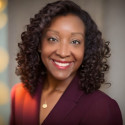
Dr. Nicole Hight is a practicing pediatrician in the Atlanta area and a multi-year recipient of the Top Doctor and Parent Magazine parent choice awards. She earned her undergraduate and medical degrees from Emory University and served as chief resident at Levine Children’s Hospital. She believes a listening ear and an encouraging word changes lives. You can reach her at Linkedin, @yourtrustedpediatrician on Instagram, @doctorhight on TikTok. Dr. Hight was a 2024–2025 Doximity Op-Med Fellow and continues as a 2025–2026 Doximity Op-Med Fellow.
Illustration by April Brust