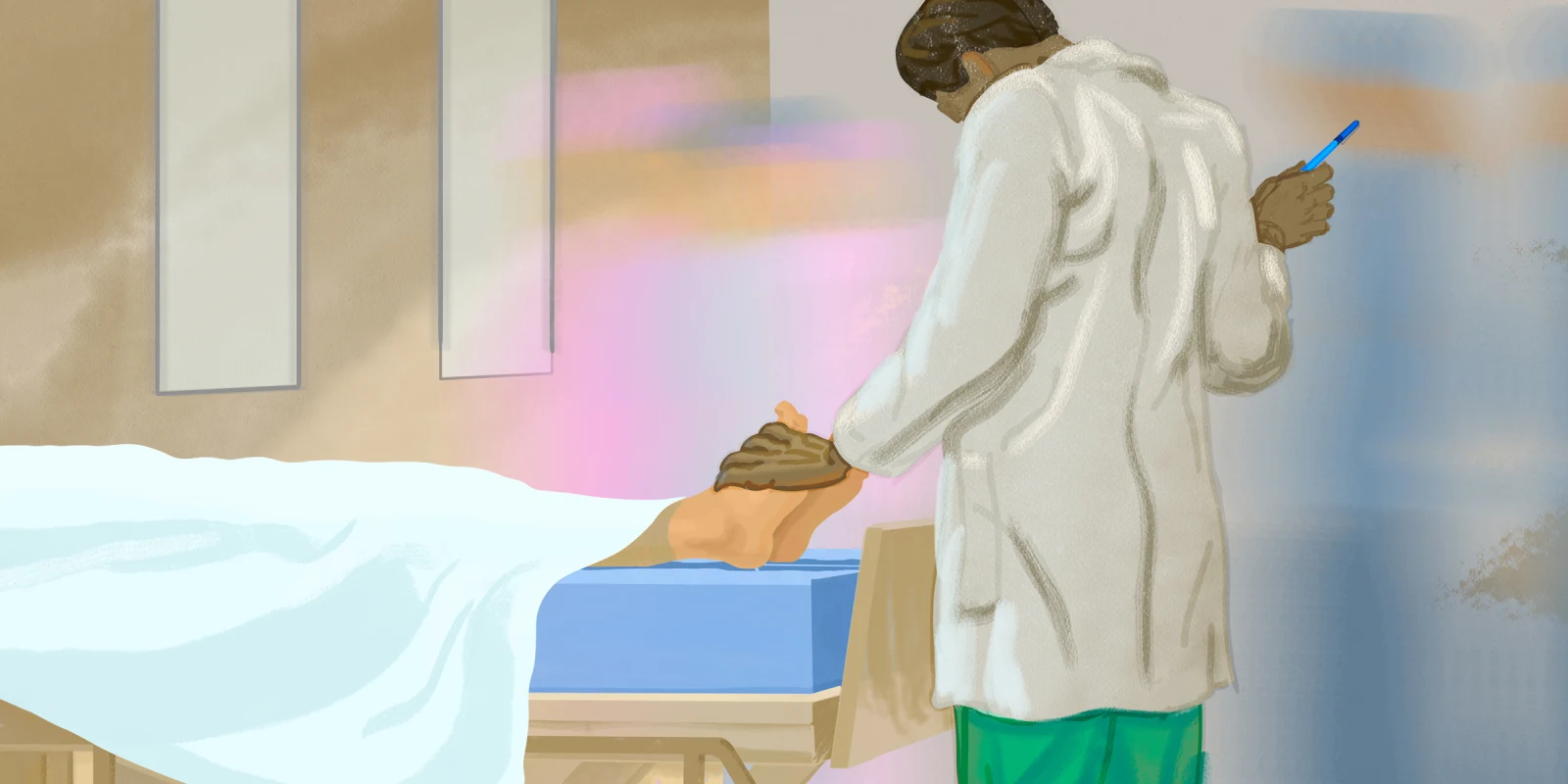

Every once in a while, I think about that night.
The pager went off alerting a level 1 trauma en route. Multi-casualty motor vehicle accident. Female teenager intubated and hemodynamically unstable.
I was a fourth-year general surgery resident taking chief resident call during a five-week stretch of night shifts. The attending on was the chair of surgery — a big name in the American College of Surgeons, one of those people whose presence alone commands attention.
When we arrived in the ED with the third-year resident and a couple of interns, we got the initial details. A drunk driver had hit a car carrying three passengers. A family. One person dead on scene.
The teenager was wheeled in from the ambulance bay. EMTs were performing CPR. My attending immediately asked, “How long ago did you start compressions?”
“About two minutes ago,” they answered.
We transferred her to the gurney and connected the monitor. On pulse check, there was a rhythm — a sign of life. The attending looked at me and said, “Eldor, let’s go. Open her chest.”
This was my first ED thoracotomy.
I grabbed a 10 blade and made the incision along the left chest. I placed the Finochietto between the ribs and cranked the lever. The ribs spread with a few cracks. We mobilized the lung and opened the pericardium — no tamponade. I placed a clamp on the aorta. The third-year resident placed a right-sided chest tube with no output. The ED resident placed a right subclavian line. I slid my hand beneath her heart and began internal compressions. We gave blood and epinephrine. After several rounds, we regained a pulse.
While this was happening, the next patient from the crash was wheeled in — intubated, hypotensive, but with a pulse. It was the teenager’s grandmother. That was when we learned the person dead on scene was the teenager’s mother and the daughter-in-law of the woman now in the trauma bay next door.
Once we regained a pulse, I yelled for the attending to let him know we were heading to the OR. Moments later, we lost the pulse again, restarting the cycle of internal CPR.
I remember looking at this young girl as I held her heart in my hand. I remember thinking she was pretty. Her heart was strong and muscular—she was probably an athlete. Every once in a while, it would start beating on its own. Each time, hope surged that it might last long enough to get her upstairs.
After about 45 minutes, the attending, who had been mostly next door with the grandmother, walked back in. He looked at me. Looked at the patient. Checked her pupils. Fixed and blown.
“Eldor,” he said quietly, “enough. We’re taking the lady next door to the OR.”
I looked at the respiratory therapist bagging the patient. “Stop bagging and take the tube out,” I said, mechanically. I stopped compressions but didn’t let go of her heart. She took a few agonal breaths, then stopped. I held her heart for another moment before running to the OR with the grandmother.
In the OR room, we found a segment of perforated small bowel with active mesenteric bleeding. We performed a bowel resection and temporary abdominal closure. As we wheeled her to the ICU, another level 1 trauma was paged — a motorcycle crash requiring an emergent laparotomy and bowel resection.
During that case, the third-year resident came in with updates. The drunk driver had sustained minor injuries: rib fractures and transverse process fractures. Nothing life-threatening. He also told us the father/husband/son had arrived in the ED and been given the news.
The grandmother died in the ICU a few days later.
That morning, I signed out, went to exercise, and went to sleep. I had another night shift that evening. When I returned to the hospital, it seemed the world had moved on. The night before was discussed briefly, but there was nothing formal.
My perspective on that night has changed over the years.
At first, I felt anger — at how easily it was brushed aside, at how quickly everyone moved on. It felt like something more should have happened, some acknowledgment of the weight of it all. With time, I came to understand something that may sit uncomfortably with modern sensibilities. The truth is that the world is a harsh place. Every living being must contend with its mortality and impermanence. Humans are no exception. In many parts of the world, we have built societies so safe that death, danger, and suffering feel like aberrations when they occur. They are not. That sense of surprise is an illusion.
Working in trauma surgery — and more broadly, in acute care medicine — strips that illusion away. You are confronted with reality repeatedly and without warning. To function, you must learn how to move forward. Dwelling endlessly on the past does not save the next patient.
Trauma surgery may represent the most extreme version of this truth, but it is not unique. Medicine as a whole demands a tolerance for uncertainty, suffering, and loss that few professions require. Some can endure it for a time. Fewer can do so over the span of a career.
The work is hard. It requires a kind of grit that cannot be manufactured, only accepted. Accepting that hardship, rather than resenting it, is what makes longevity possible. This acceptance does not mean indifference or lack of compassion. It means understanding the nature of the work and the world it exists in.
That understanding has helped me not only as a trauma surgeon, but as a physician, and as a human being. It has shaped how I face suffering, responsibility, and life itself. The job may be unforgiving, but the clarity it brings is a privilege. It allows a life of service that few can tolerate, but that many depend on.
And every once in a while, I still think about that night.
What nights do you think about? Share in the comments.
Dr. Jonathan Eldor is a husband and father, a trauma surgeon at Portsmouth Regional Hospital in New Hampshire, and host of "The Emergency Surgeon Podcast." He is also the author of the book “A Brief Guide for the Surgical Intern."
Illustration by Jennifer Bogartz