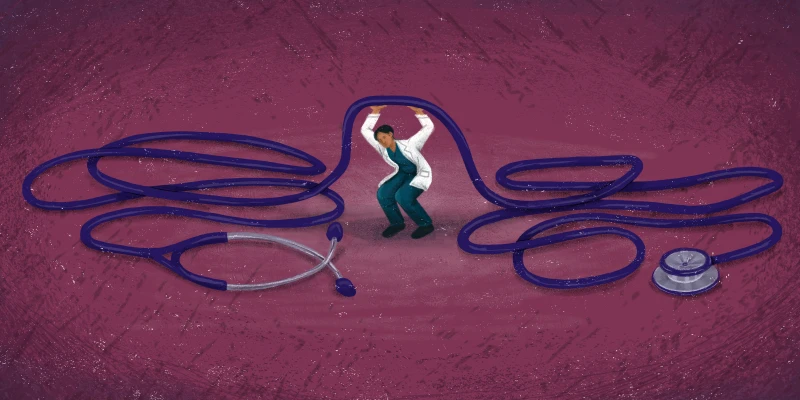

It was one of those inpatient shifts where every irritation seemed designed to compound the others. Every interpersonal interaction felt frustrating, and every task felt burdensome. I encountered miscommunications with patients and specialists. These experiences were not novel for me, and certainly none were the kind of crises to cause emotional unraveling. But for reasons I couldn’t identify, each minor inconvenience felt like fuel for my growing rage that day. I felt myself reacting before thinking, and bristling before processing.
An attending I deeply respect pulled me aside. She said gently, “You don’t have to get angry about things that won’t change.” I felt myself recoil. My anger felt righteous, and I didn’t want to be told to just tolerate dysfunction. A part of me wanted to yell, I’m not an angry person. This would make anyone mad! Maybe these things could change; they don’t have to be this way! Even her feedback had bothered me.
In my experience, although anger burns quickly and is soon replaced by emotions with more depth, it’s nonetheless a sign that a problem is present — one that matters. Getting angry, then, means that I have not entirely resigned myself to the status quo; that my sense of right and wrong and desire for progress is still intact. This feeling is the opposite of the apathy that goes hand in hand with burnout — a gradual blunting of strong emotions, a slow quieting of internal alarms. When my anger flares, a part of me is relieved: If I still have the energy to feel this way, maybe I’m not burned out.
As the shift unfolded that day, I realized my attending was naming a truth less about anger and more about emotional economy: my frustration was costing me more than it was buying. I was sucked into each problem so deeply that I was becoming less present and compassionate, and my irritation was so significant that it was preventing me from problem-solving. Anger, like any other limited asset, loses value when applied broadly. As people say, you’ve got to pick your battles, and I was choosing the wrong ones.
When the day ended, I resolved to take a deeper look at my anger. Upon auditing my life circumstances, it was easy to recognize the patterns of my amplified emotional reactions. Certain frustrations, such as EMR malfunctions or scheduling conflicts, were predictable and difficult to eliminate. Spending significant energy on these yielded very little return. In contrast, the other category of frustrations consisted of signals worth heeding. These ranged from inadequate medication reconciliations to a missed diagnostic workup to personal microaggressions. This category of frustrations highlights systemic gaps, workflow inefficiencies, and unsafe practices — all things that should not be tolerated.
Once I identified what was worth being upset about, I developed a set of strategies for coping with anger and creating actionable change. Putting these strategies into place in the clinic has helped me remain calm in the face of daily struggles, and has shown me the value in tapping into my anger strategically.
The first strategy I’ve implemented is to immediately triage: when something repeatedly provokes frustration or prevents you from moving forward, it deserves immediate examination and correction. For instance, when I’ve received electronic messages in the hospital that make me feel exasperated or confused about how to proceed, I call and ask for clarification. Sometimes, it takes decentering my emotions and assuming positive intent to get through the experience, and while I don’t ignore my annoyance, I shift my priorities to focus on my goal of providing the best patient care.
Another approach is to convert acute irritation into a delayed response. Instead of reacting in the moment, I often revisit the day’s events while driving home. I feel all of my emotions during that time, but attempt to stratify which issues are actually amenable to change and which require acceptance. To avoid marinating in my frustration, I also make it a point to identify one thing that went well that day, and before I go to sleep, I meditate and contemplate what I am grateful for. This ritual has helped me conserve emotional energy while still providing a release valve for my feelings.
A third technique is to communalize, rather than internalize. Many of our qualms in medicine are shared, and discussing them with colleagues, either informally or in structured settings such as quality improvement meetings, helps distinguish transient annoyances from systemic dysfunction. I have frequently found solace and reprieve in venting to a fellow resident. Most importantly, you must become mindful of your personal thresholds: If a certain dynamic or environment consistently drains more energy than it should, it may be a sign that your emotional reserve is running low, and that it is time to restructure your budget so that you’re still able to care for your patients.
If you’re one of those people who doesn’t experience anger in your job, I’m happy for you, as long as it hasn’t morphed into cynicism and resignation. But to me, anger has a place in medicine. Anger is a reminder of what I value, and is often a catalyst for my growth. The goal is not to extinguish it entirely, but to budget it in ways that preserve my compassion and sharpen my ability to identify problems that warrant moral discomfort. In doing so, I am preserving the part of me that cares enough to be bothered, while preventing it from eroding my well-being.
How do you budget your anger? Share in the comments!
Dr. Brinda Sarathy is a family medicine resident at the University of Colorado in Denver, CO. She is passionate about social justice, medical education, and storytelling. In her free time, you can find her hiking, paddleboarding, or exploring a local bookstore. Dr. Sarathy was a 2024–2025 Doximity Op-Med Fellow, and continues as a 2025–2026 Doximity Op-Med Fellow.
Image by woocat / Getty