
Every so often, an article or editorial comes out about the enduring value of the physical examination in patient care in addition to lamentations about how the physical examination is a dying art in modern medicine. Despite our practicing medicine in an era where patient care is dominated by technological diagnostics, the term H&P (history and physical) is still very much in our medical vocabulary. Along with the patient history, the physical examination continues to be a central pillar of clinical medicine, whether we consistently perform it or not.
The purpose of the physical examination is to obtain objective information to inform our diagnosis and management. Physical signs can guide our differential diagnosis, help select the right diagnostic test, and sometimes clinch a diagnosis without any further testing. A diagnosis of valvular disease or heart failure can be supported by jugular venous pressure, the presence of a murmur, or peripheral edema. Wheezes, crackles, or the presence of respiratory distress can point to pneumonia, asthma, and heart failure.
The deficit in physical examinations skills in physicians has been well documented. Increased dependence on technology has contributed to the decline in performance of and reliance on the physical examination. Suboptimal performance of the physical examination in patient care has led to medical errors, inappropriate referrals, and clinical mismanagement. In this day and age of utilization management and cost containment, you would think that there would be a greater interest in refining physical examination skills. Time and again, case reports have demonstrated that super utilization of technology (imaging, laboratory studies) does not guarantee quality patient care.
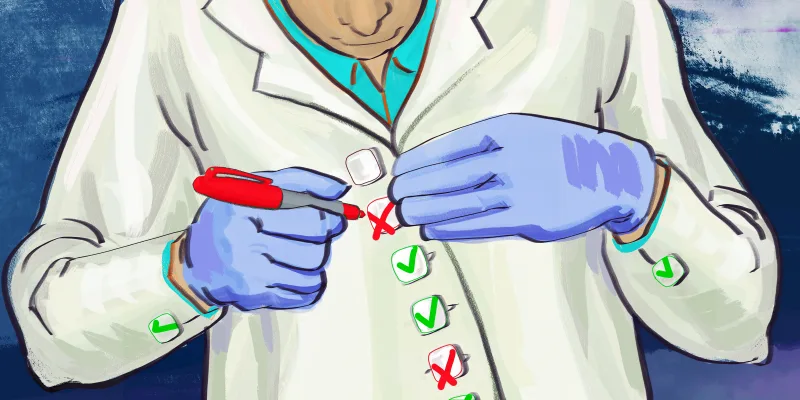
Dr. Abraham Verghese, whom I had the honor of meeting as a radiation oncology resident when he was faculty at the UT Health San Antonio School of Medicine, is a recognized expert clinician who noticed that bedside skills were declining. After he arrived at Stanford in 2007 (the year I moved to Eureka, California, six hours north of Stanford), he developed the Stanford Medicine 25 out of concern that physicians were increasingly focused on the digital version of the patient in the computer rather than the real human in the clinic. The number 25 was chosen symbolically as a start, after Dr. Verghese and his team identified 25 technique-dependent physical exam skills that every physician should master.
But before the reader takes the time to study the 25 physical exam techniques, there is a sequence of examination that all of us can start doing right now. The most basic elements of inspection (looking) and palpation (touching/feeling) date back to ancient Egypt. Even before the stethoscope, Hippocrates taught direct auscultation by placing an ear directly on the chest. The act of percussion (tapping) is credited to Leopold Auenbrugger, an Austrian physician who noticed his innkeeper father tapping on wine barrels to determine how full they were. So now we can determine via percussion if a patient has a pleural effusion. William Osler, often called the father of "modern" medical education formalized the IPPA sequence: inspection, palpation, percussion, and auscultation.
So the first thing to do is to look at (inspect) the patient. And inspect the anatomic site of interest before doing anything else in a targeted physical examination. Two of my personal cases underscore the importance of this first maneuver.
More than a decade ago, I treated a middle-aged woman with locally advanced breast cancer. She had undergone neoadjuvant chemotherapy, followed by surgery, and then adjuvant radiation therapy. She had done well through treatment, and I saw her a couple times afterward for follow-up. About nine months later, she called my office complaining of shortness of breath and a mild cough. She asked if I could call in an antibiotic and going against every recommendation regarding antibiotic prescribing, I prescribed a five-day course of azithromycin. A week later, her symptoms slightly worsened. I ordered a chest X-ray. It showed no acute cardiopulmonary disease. When I called to tell her the results, she told me she was still very short of breath. At that point, I asked her to come in for a visit.
I happened to step into the waiting room while she was waiting to get roomed, and immediately I could see why she was short of breath. Upon inspection of her face, she was white as a sheet. Without even touching her, seeing her face told me she was severely anemic — the underlying cause of her shortness of breath. I escorted her to the ED to get a complete blood count, and sure enough, her hemoglobin was 6.0. This led to further tests which unfortunately revealed extensive bone metastases resulting in depressed bone marrow function.
About five years ago, during the COVID pandemic, an elderly patient presented to the ED with right-sided weakness, headache, and shortness of breath. MRI showed a large left parietal brain mass and chest CT revealed a large left hilar mass. She was discharged home and instructed to follow up with her PCP. Her PCP appropriately ordered a CT guided biopsy of the lung mass and a PET/CT scan. Her case was presented at tumor board, and everyone agreed that we needed a tissue diagnosis. The interventional radiologist felt the lung mass was too central to safely biopsy, and advised getting a PET/CT to see if there was a more accessible metastatic lesion. The PET never got done because the patient ate breakfast the day it was scheduled and when it was rescheduled, she was found to be hyperglycemic. Nearly two weeks passed and we still did not have a tissue diagnosis.
The nurse navigator called me in desperation to get some traction on the patient's workup so she could be treated. Although I was lacking a tissue diagnosis, I was certain that her two left-sided brain tumors were metastatic lesions from her primary lung cancer. So I agreed to see her and at least get treatment planning started for stereotactic radiation to her brain metastases while expediting her workup.
When I laid eyes on her, I immediately noticed her neck was asymmetric (inspection). This led me to feel her neck (palpation), where I felt a firm 3 cm supraclavicular lymph node. Bingo. This was the site that could be biopsied safely. The CT chest she had done in the ED made no mention of a supraclavicular node. When I backtracked and looked at the images, the lymph node was not very obvious, so I don't blame the interpreting radiologist for not mentioning it. But if anyone who physically evaluated her before I did had inspected and palpated, she would have gotten her tissue diagnosis much sooner, rather than waiting on the PET scan to identify an alternative site to biopsy.
I didn't go through the entire Stanford 25 to evaluate the above patients. But before mastering 25 exam maneuvers, there is a simpler place to start. It requires no special equipment, no order in the EHR, and no prior authorization.
It begins with walking into the room and looking at the patient — visual inspection, which led to the second step of palpation in my second patient. Prescribing medications over the phone, discussing the case in multidisciplinary tumor board, and ordering radiographic studies did not add up to the value of the simple task of just looking at the patient.
When it comes to documenting the physical examination, you do not need to use fancy medical terms. I always say: describe what you see, feel, and hear. But to do this, you need to first look, feel, and listen — not just to the physiologic sounds, but also to the patient as they tell you the history.
In this era of EHRs, advanced imaging, and genomics, the most important diagnostic tool for the physician is your eyes and hands. No artificial intelligence platform, radiographic image, or genetic sequencing panel can substitute for the information you gain from looking at, feeling, and listening to a patient. Not only does this sharpen diagnostic assessment, the ritual of the physical examination reinforces the human connection that physicians have with their patients.
Over a century ago, William Osler advised, "The whole art of medicine is in observation." In this age overflowing with diagnostic technology but short on time and attention, that advice is more relevant than ever. Before ordering the next scan, laboratory panel, or specialty consultation, we should remember the oldest diagnostic maneuver in medicine.
Look at the patient first.
Dr. Join Y. Luh is a radiation oncologist practicing in the Pacific Northwest town of Eureka, CA. He enjoys mountain biking, surfing (on a paddle board), playing in a cover band (StereotactiX), reading his daughter’s essays, and cheering his sons at basketball. Dr. Luh is a 2025-2026 Doximity Op-Med Fellow. All names and identifying information have been modified to protect patient privacy.
Illustration by April Brust