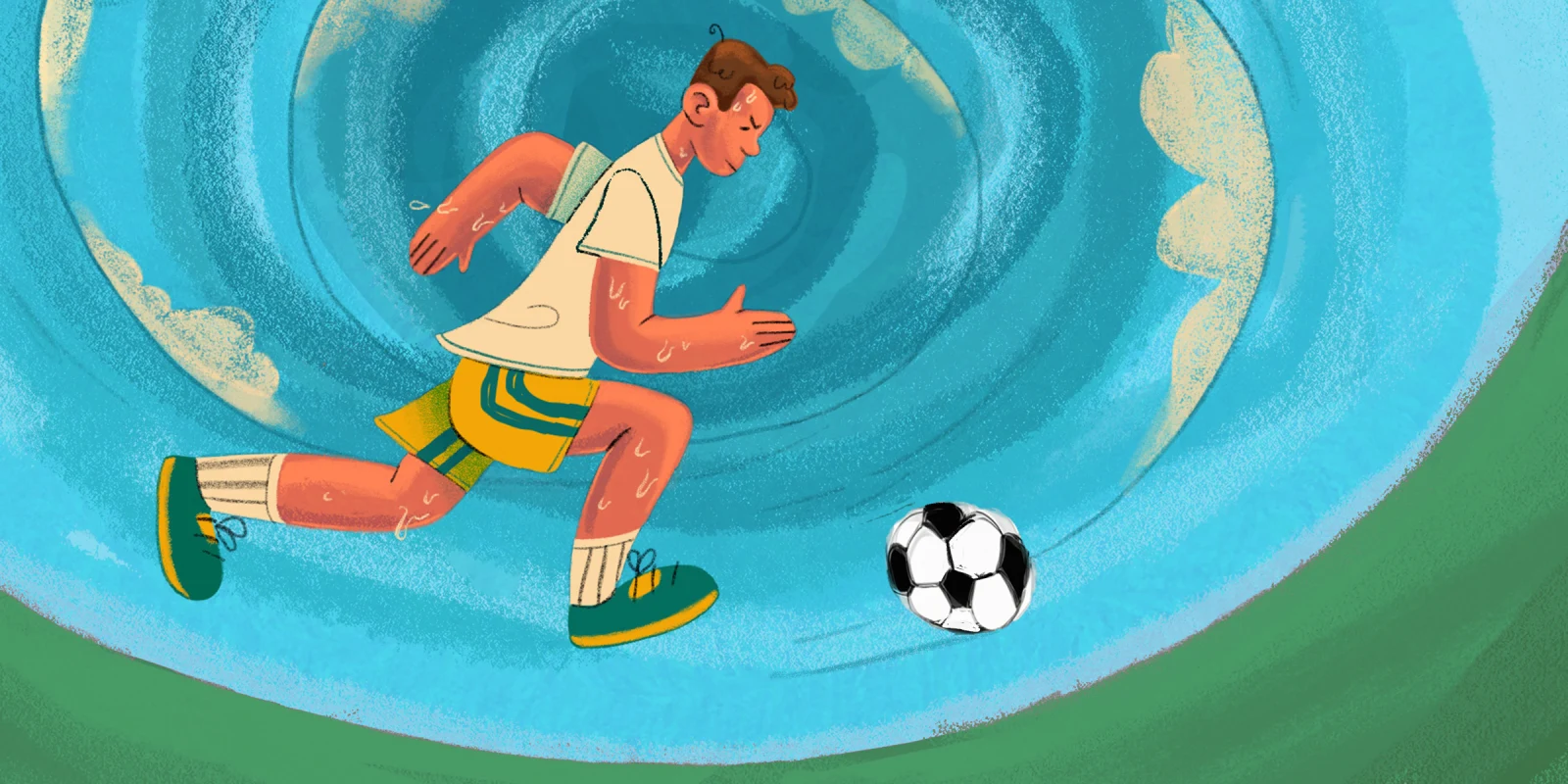

There is a crisis in youth sports. What’s our role?
One of my favorite questions to ask children – "What do you like to do for fun?" – often reveals more about their well-being than a full review of systems. Not long ago, I asked this to an 8-year-old with no history of trauma, presenting with elbow pain. After sharing a few of my own hobbies, I waited for his reply.
“Play video games,” he said.
“That's cool,” I responded, “I’m not very good at video games, but my kids keep trying to teach me anyhow.” I smiled. “Which one is your favorite?”
Before he could answer, his father jumped in. “Tell her about baseball. That’s what you’re really good at.”
The boy nodded and said, “I play baseball too. I’m the starting pitcher for the all-star minor league travel team.”
“Oh,” I said. “Is that fun?”
He shrugged. “Sometimes.”
“Oh, he loves it,” his father chimed in. “He’s been playing since he was 4. His trainer is one of the best.”
Further history and exam findings led me to order imaging. Anteroposterior elbow films showed a wide medial epicondylar physis, an overuse injury to his growth plate. I explained that this was a serious finding, the result of repetitive stress, and that he needed physical therapy and rest from throwing for a minimum of 4-6 weeks, pending medical clearance.
I had barely finished speaking when his father asked, “So he has a really important playoff game tomorrow, if he’s feeling better in the morning with the ice and Motrin, he can still pitch, right?”
We know the problem: Only 20%-28% of children in the U.S. get the recommended 60 minutes of daily physical activity. And this has not improved in the last decade. Our overall youth physical activity score in the U.S. is a concerning D-. In our modern world, it is uncommon to see kids riding bicycles through the neighborhood or gathering to play a spontaneous, unsupervised game of pick-up basketball. Gone are the days when random kids show up outside for free play. Organized youth sports are the predominant way that American children get physical activity. And it has become a multibillion-dollar industry.
Yet even the kids who do engage in sports activities are struggling to stay there. An astounding 70% of youth athletes quit participating in organized sports by age 13. Why? Injury and burnout are the two primary causes why kids abandon the activity they once loved. They are dual threats to youth athletes. Overuse injuries, such as the one my patient experienced, can result in accumulated musculoskeletal damage from repetitive stress. These types of injuries have increased dramatically since free play was replaced with the for-profit professionalization of youth sports over the past 20 years. Injury is the physical manifestation of excessive play.
Burnout, defined as “a state of emotional, physical, and mental exhaustion caused by excessive and prolonged stress," leads to “negative self-evaluation of one’s performance, detachment, or an apathetic attitude and a diminished sense of accomplishment.” It can affect anyone experiencing chronic stress, including children. When we are pushed to do too much over too long a period of time, and it leads to disengagement, burnout has entered the room. And it represents the psychological effect of overly intense training.
With 35% of kids experiencing overtraining and 50% of athletic injuries related to overuse, we must be proactive in identifying risk and protecting our patients. What can we as clinicians do?
Three simple questions can guide our assessment.
- What motivates the child to participate in this sport? Confirm that motivation is intrinsic, not driven by external pressure.
- How much and how often are they playing? Ask about hours per week, months per year, and whether they participate in multiple sports.
- Are there signs of burnout? Look for red flags like fatigue, loss of motivation, and vague or recurrent musculoskeletal complaints.
Together, these can demonstrate a problem and indicate a child athlete who needs our help. If concerns arise, we should advocate for evidence-based practices that indicate that the primary focus of sports for young athletes should be to have fun and learn lifelong physical activity skills. Participating in multiple sports, at least until puberty, reduces the risk of injuries, stress, and burnout among young athletes. Broad-based movement experiences improve fundamental motor skills, coordination, balance, and long-term athleticism. They should take at least three months off from their sport of interest, in increments of one month, throughout the year. Additionally, allowing at least one to two days off a week will enable athletes to recover both physically and psychologically.
What should we be teaching parents? Former athlete and 20-year National Collegiate Athletic Association women's basketball coach Charisse Mapp has seen which athletes make it to the high level of Division I play. She says, “Youth sport participation should center around the physical, psychological, and emotional growth of the child. During their early years, developing a solid foundation and grasp of the sport should be prioritized over intense competition and winning. In this way, the athlete tends to be more successful, feel more competent in competition, and playing stays fun. We, the adults, create the environment for this joy to grow or to die – by what we say, when and how we say it, and what we demonstrate as most important.”
- Model better adult behavior. Ask any kid what they dislike most about sports, and they will often say, the adults. Sideline criticism, poor emotional control, and over-analysis can drain the joy from the game.
- Avoid excessive pressure. Whether from a coach or a well-meaning parent, pressure to win or to “play perfectly” can make sports feel like a job, not a joy.
- Stop the post-game critique. Criticism, especially immediately after a game, is not only unhelpful, it is often harmful. Kids need emotional space to process, not performance reviews.
- Lead with love and support. Simple affirmative statements like “I love to watch you play” or “I love you, and I am proud of you no matter what” go much further than feedback. Say less. Let them lead post-game conversations.
- Invest wisely. Spend your money on experiences that support your child’s growth as both an athlete and a human being. Choose coaches and teams with a similar mindset, and don’t be afraid to move on when needed.
In the case of my 8-year-old patient, continued throwing without rest carried a high risk of worsening his injury. To support understanding and adherence, I reviewed his images with his father and clearly identified the area of concern. I emphasized that rest wasn’t just about short-term recovery, but critical for protecting his development and athletic goals, including future opportunities at higher levels of play. His father engaged in the discussion and demonstrated understanding of both the rationale and the importance of the management plan.
Sports have the power to create healthy, confident, and resilient kids, but only if we protect what makes them magical. When we prioritize joy over pressure, play over performance, and balance over burnout, we give children the chance to thrive. Even when children genuinely love their sport, they still need adults to be the voice of reason, protecting time for rest, free play, academics, and simply being a kid. As clinicians and parents, we have the opportunity, and the responsibility, to preserve not just our children’s physical health, but also their long-term love of movement and sport.
How have you helped patients reclaim joy in activities they love after an injury? Share in the comments.
Dr. Nicole Hight is a practicing pediatrician in the Atlanta area and a multi-year recipient of the Top Doctor and Parent Magazine parent choice awards. She earned her undergraduate and medical degrees from Emory University and served as chief resident at Levine Children’s Hospital. She believes a listening ear and an encouraging word changes lives. You can reach her at LinkedIn, @yourtrustedpediatrician on Instagram, @doctorhight on TikTok. Dr. Hight was a 2024–2025 Doximity Op-Med Fellow and continues as a 2025–2026 Doximity Op-Med Fellow.