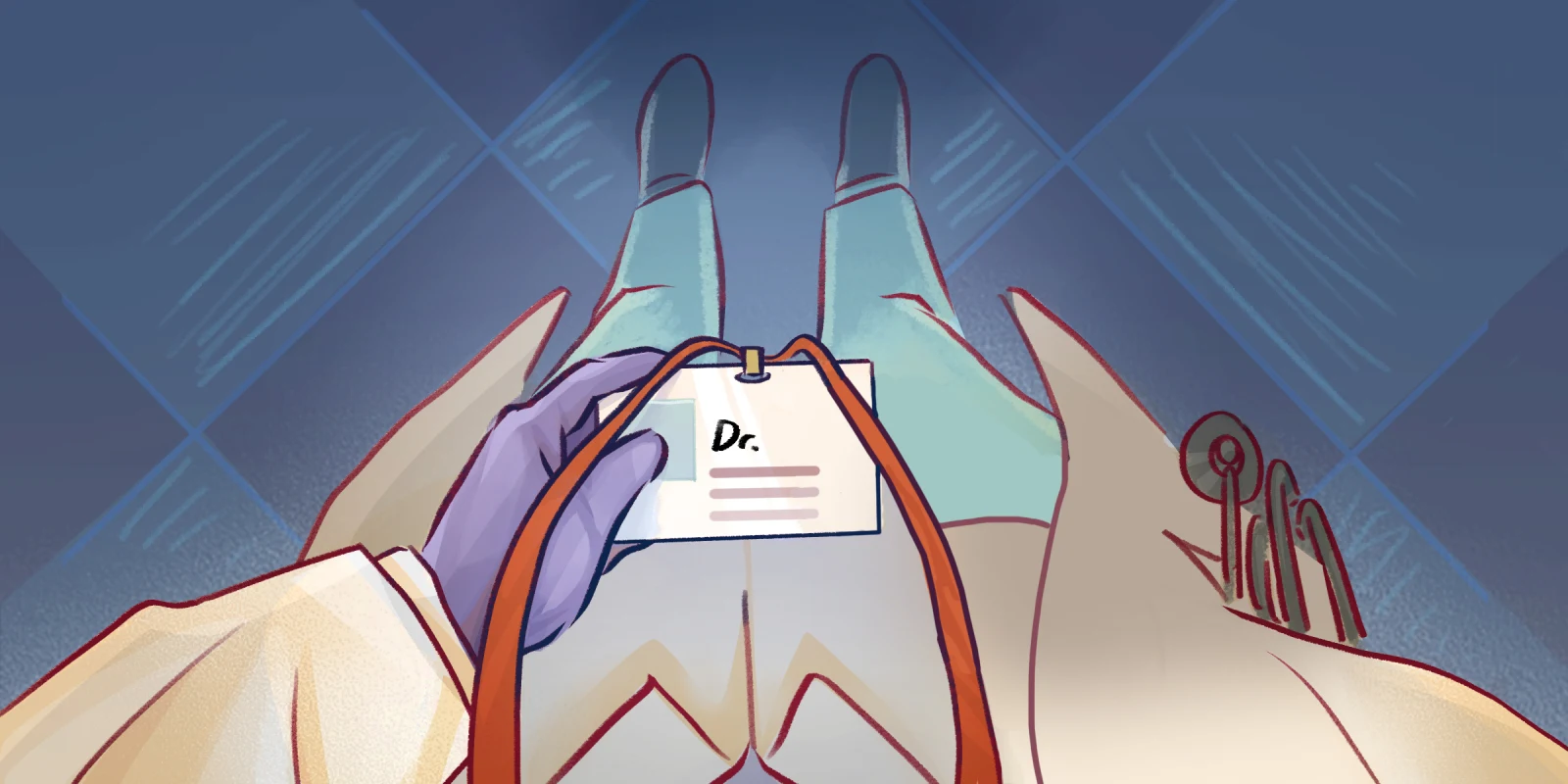

My wife and I have had one point of contention about our approach when seeking medical services. Should we tell our doctors that we’re doctors or keep that to ourselves? This discussion has brought up potentially difficult questions about how patients are treated in the medical field.
My wife is of the opinion that our doctors shouldn’t know we have medical expertise. Her reason is logical and straightforward. If they know we have MDs, they might provide less thorough and complete explanations with the assumption that we should know the majority of the concepts in play regarding the diagnosis, or the concern that they could come across as condescending if providing too much of an explanation.
I, however, have a different perspective. As a Hispanic man, I have unfortunately often been treated by some doctors as though I might be ignorant.
I first experienced this treatment when I began attending pediatricians’ visits with my children. The first time I took my kids to see their doctor, it was clear that I had to be educated on the value and reasons for vaccination protocols. The explanations for the value of vaccination were unnecessarily slow, using simple words, as though he expected me to object to the procedure due to my lack of understanding. In the modern age of vaccine hesitancy, I might understand that attitude more. But this was 30 years ago, and I speak English with a Spanish accent. As such, my suspicions about this approach and its reasoning were quite different.
After several of those types of interactions, I made it a habit to introduce myself as “Dr. Torres” at medical appointments. I’d be sure to dress professionally, sometimes even wearing scrubs if my appointment was after a shift. The difference in treatment was evident. When I dressed casually, being a Hispanic man, I was often treated like an afterthought or as though doctors expected me to be a problem patient. It was frustrating to feel that I had to prove my knowledge and status to receive a respectable level of care. When I was “Dr. Torres,” I had department heads calling me personally to give me my test results and discuss treatment options.
It’s disheartening to realize that this effect was still in full force in 2025, just as it was in 2000, and painfully so. The fact that these issues persist underscores the urgent need to address these health care disparities.
After my prostate cancer diagnosis, I was left feeling uneasy about my conversations with my urologist. He presented several different treatment options for me to choose from, with insufficient discussion of the benefits and risks associated with each. Only after talking to an oncologist, who was a friend, did I get a complete picture of the various options I could opt for. There were several alternatives with vastly different risk/benefit ratios.
If I hadn’t personally known an oncologist, my decision on course of action and outcome may have been vastly different. I cannot predict what would have happened, but certainly, the information on which I defined a treatment protocol would have been limited.
This is clearly troubling. As doctors, we are supposed to strive to provide the best possible care to all patients. I have written extensively about my own efforts to do this in my book “Beyond Diagnosis.” Its central topic is the need to show respect and consideration to patients and to help them make the most informed decisions possible.
And here I am, feeling that if people don’t know there’s an “MD” behind my name, I might not get the best care.
Are doctors getting better medical care across the board than nondoctor patients? Does this especially apply to people of color, or is it all nondoctors who need to be worried that their doctors will neglect to give them essential information about their treatment options? These are questions that need to be pondered upon.
I want to be able to offer specific advice, but it is challenging. It is so because so much has already been written and said about meeting patients where they are, providing them with complete and accurate information, and collaborating with them to achieve their treatment goals. In another of my essays, I highlighted the importance of ensuring that patients understand the risks and benefits of their treatment options, as well as which options align with their treatment goals.
And yet, patients are still leaving appointments with dangerously incomplete information about their options. It’s disappointing to realize that I may leave an appointment without being informed of all the risks, benefits, and options, even when I don’t specify that I’m a doctor. This lack of transparency and thoroughness in patient care clearly indicates that we need to improve our approach.
So, what can we, as doctors, do to improve this situation? Some indicators may point us in the right direction.
Data show that, unfortunately, patients of color have frequently worse treatment outcomes across the U.S. Some of this may be due to institutional access issues, but how much might be because doctors are assuming that patients of color or different ethnic backgrounds won’t understand or agree to the best treatment options for them?
One recent, disturbing poll found that most Black, Hispanic, and Native patients in the U.S. health care system feel the need to “be very careful” about their appearance to receive fair treatment at medical visits. As doctors, we can be on our guard when we’re in the clinic to ensure that we communicate wholly and effectively with our patients who are not white.
Another indicator comes from the realm of gender. It’s no secret that women often have their medical complaints dismissed as being minor or psychological in origin, to the point that serious diagnoses are frequently missed.
However, there is another interesting statistic we can learn from: Doctors who are women generally achieve better patient outcomes on average. Why might this be? Early research suggests a simple reason. Women physicians, on average, tend to spend more time with each patient. In one study, this resulted in noticeably lower rates of hospital readmission.
Is this due to a difference in socialization? Who knows. However, if we recognize that a positive difference exists, we can attempt to replicate it in our own practices. We can ensure we spend more time on each patient, despite the administrative and financial pressures that too often tell us to do the opposite.
In the meantime, I feel obligated to ensure that my doctors don’t alter their approach to providing me with information based on an assumption of my capacity to understand or manage this information. For now, I will continue to introduce myself as “Dr. Torres” and dress up for my medical appointments.
Have you ever noticed a difference in how you’re treated once colleagues learn you’re a doctor? Share in the comments.
Dr. Francisco M. Torres is an interventional physiatrist who specializes in pain medicine. He is also an avid writer, enjoys playing the violin, and has a deep affection for his seven grandchildren. Dr. Torres was a 2024–2025 Doximity Op-Med Fellow and continues as a 2025–2026 Doximity Op-Med Fellow. He can be reached on Instagram at Dr.tdropthefat.
Illustration by April Brust