
She watched the video three times before she came to see me.
A YouTube reel from a clinic with smooth production, calming music, a surgeon promoting a “muscle-sparing” knee replacement that would let her skip out of the hospital and be back in her garden in days. She’d written down a specific (pseudo-descriptive) term from the video in her Notes app. She showed up ready to ask for it by name.
I know this consultation. I have it every week.
Patients arrive with specific language they didn’t learn from their referring physician. “Subvastus.” “Quad-sparing.” “Rapid recovery.” And sometimes unique, legally protected terms. They’ve done real homework in a media environment that moves faster than our specialty can contextualize. I don’t treat that as a problem to manage. I treat it as an invitation.
So here is what I actually tell them.
The subvastus approach is a real technique with real advantages … in the right patient. Rather than cutting through the quadriceps mechanism, as the standard medial parapatellar approach does, the subvastus approach passes below the inferior edge of the vastus medialis. The extensor mechanism stays intact. In appropriately selected patients, this can mean less postoperative muscle pain, earlier ability to perform a straight-leg raise, and a smoother first few weeks of physical therapy.
I use it. Regularly. But I also tell them this: the evidence shows those early advantages narrow meaningfully by six weeks. After three to six months, well-designed comparative studies show equivalent results in most patients. Important to note, the subvastus approach is considered more technically difficult by some. It is more visually restricted (particularly in the lateral compartment), and patellar mobility can be challenging. In patients with significant deformity, prior knee surgery, limited preoperative motion, or certain body builds, I may decide intraoperatively to convert from subvastus to a standard approach. That is not a complication. That is judgment.
Here is where the conversation gets more complicated. And more important.
“Muscle-sparing” and “outpatient surgery” have been conflated in consumer media into a single product. They are not. Outpatient or same-day total knee replacement is a care delivery model: defined by patient selection, perioperative protocol, anesthesia planning, and the infrastructure of the facility where you operate. It does not require any specific incision. A patient can be an ideal outpatient candidate and a poor subvastus candidate simultaneously. The opposite is also true.
Our specialty has been an active participant in this confusion. Trademarked technique names. Branded recovery protocols. Consumer-facing campaigns that position proprietary approaches as categorically superior operations. I am not standing outside that ecosystem throwing stones. I use robotic assistance in my practice because precision in implant positioning matters. I have seen that firsthand in my nearly 20 years of practice. But I also know the marketing machine can move faster than the clinical literature, and it is our patients who are left navigating the gap.
What I try to give them instead is calibration.
When I ask myself honestly why my patients recover better today than they did 10 years ago, the answer is not a specific incision. It is regional anesthesia, multimodal pain management, coordinated care, and (most critically) what my patients walk into the operating room with. Quadriceps strength. Realistic expectations. A plan for the work that follows surgery. Patients who prepare before the operation are almost always the ones who recover fastest afterward. No technique replaces that investment.
So when that patient showed me the video and asked whether she could have the muscle-sparing approach and go home the same day, I told her the honest version:
Maybe. And it depends on what we find in your anatomy, how your health profile looks, what your home situation allows, and whether you are willing to do the work that no surgical approach can do for you.
She appreciated that. Most of them do.
Our patients are not wrong to research surgical approaches. They are doing what informed patients should do. Our job is to meet them there. Not be defensive or dismissive. We should translate the evidence into something they can actually use, including the parts the promotional videos leave out.
The subvastus approach is legitimate and valuable in the right clinical context. So is the conversation around it. Helping patients understand the difference is a service to them. And honestly, a service to our specialty that could stand to be more straightforward about what we are selling and what we are not.
Cory Calendine, MD is an orthopaedic surgeon specializing in hip and knee replacement, outpatient joint replacement, and recovery optimization, practicing at the Bone and Joint Institute of Tennessee in Franklin, Tennessee. Learn more at corycalendinemd.com.
This article is part of the Medical Insights vertical on Op-Med, which features study breakdowns, resources, and insights from Doximity members on popular topics in medicine. Want to submit to Medical Insights? See our submission guidelines here; note that we are especially interested in articles covering oncology, dermatology, or rheumatology.
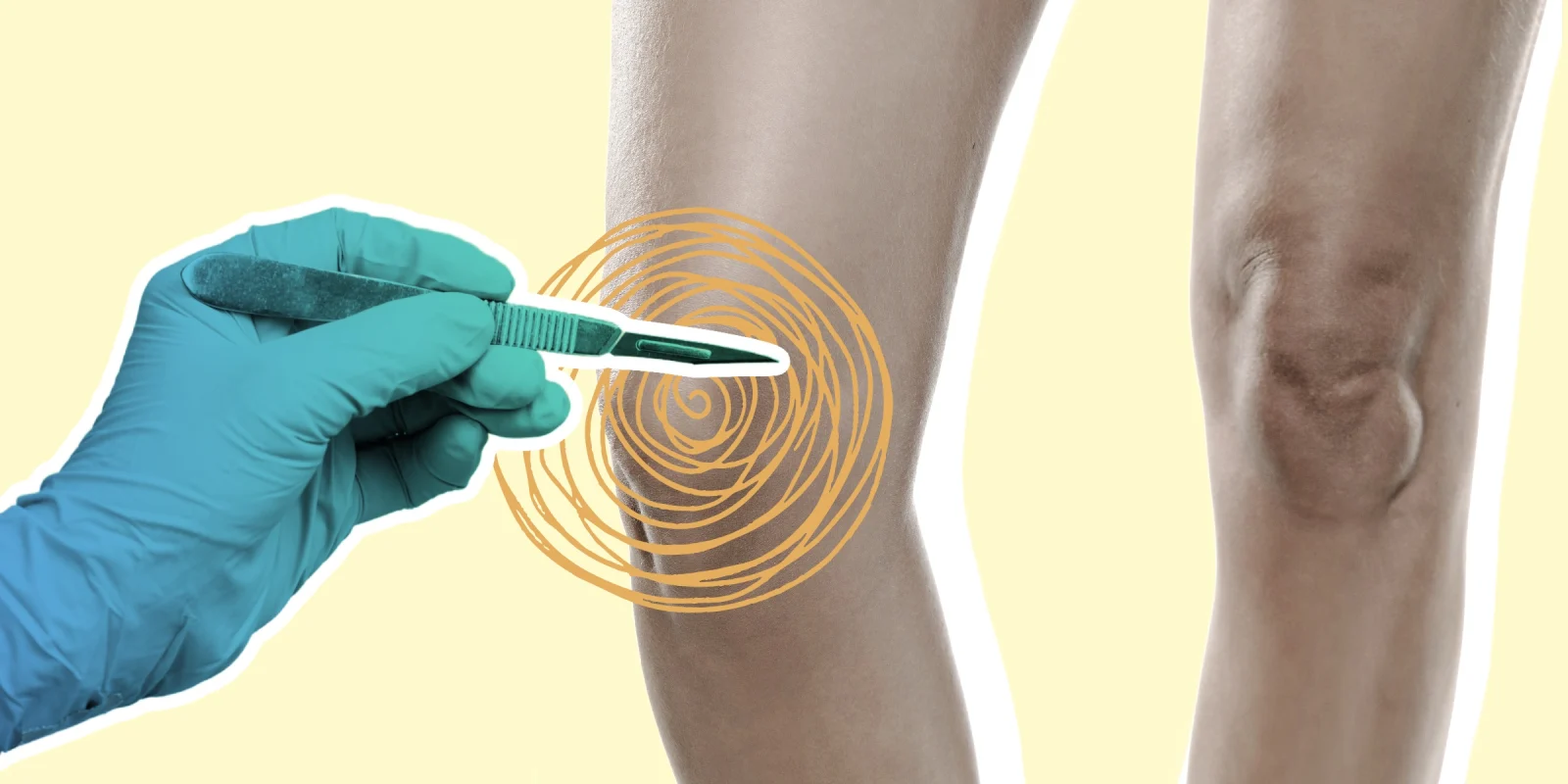
Collage by Jennifer Bogartz / Shutterstock