I was in the cardiac ICU, coming in and out of lucidity. I had been intubated for five days after having both my aortic and mitral valves replaced. I had experienced this before — this was my second open-heart surgery. But this time was different. I was older, and hopefully wiser. Through what seemed like endless sleepless nights, my mind raced from thought to thought, but one kept returning: The medical community needs to hear about and understand the sequence of events that put me here.
That story began over 30 years earlier. I was diagnosed with Hodgkin lymphoma at age 16 in 1989. I was obsessed with sports, especially football. I grew up on a wheat farm in rural eastern Washington state, far from any major academic medical center. Yet my dad, a farmer, and my mother, a teacher, were able to get me to the best possible location to treat my cancer. The doctors told me they could treat it, that I would live — I just had to make it through my treatments. That turned out to be no small thing.
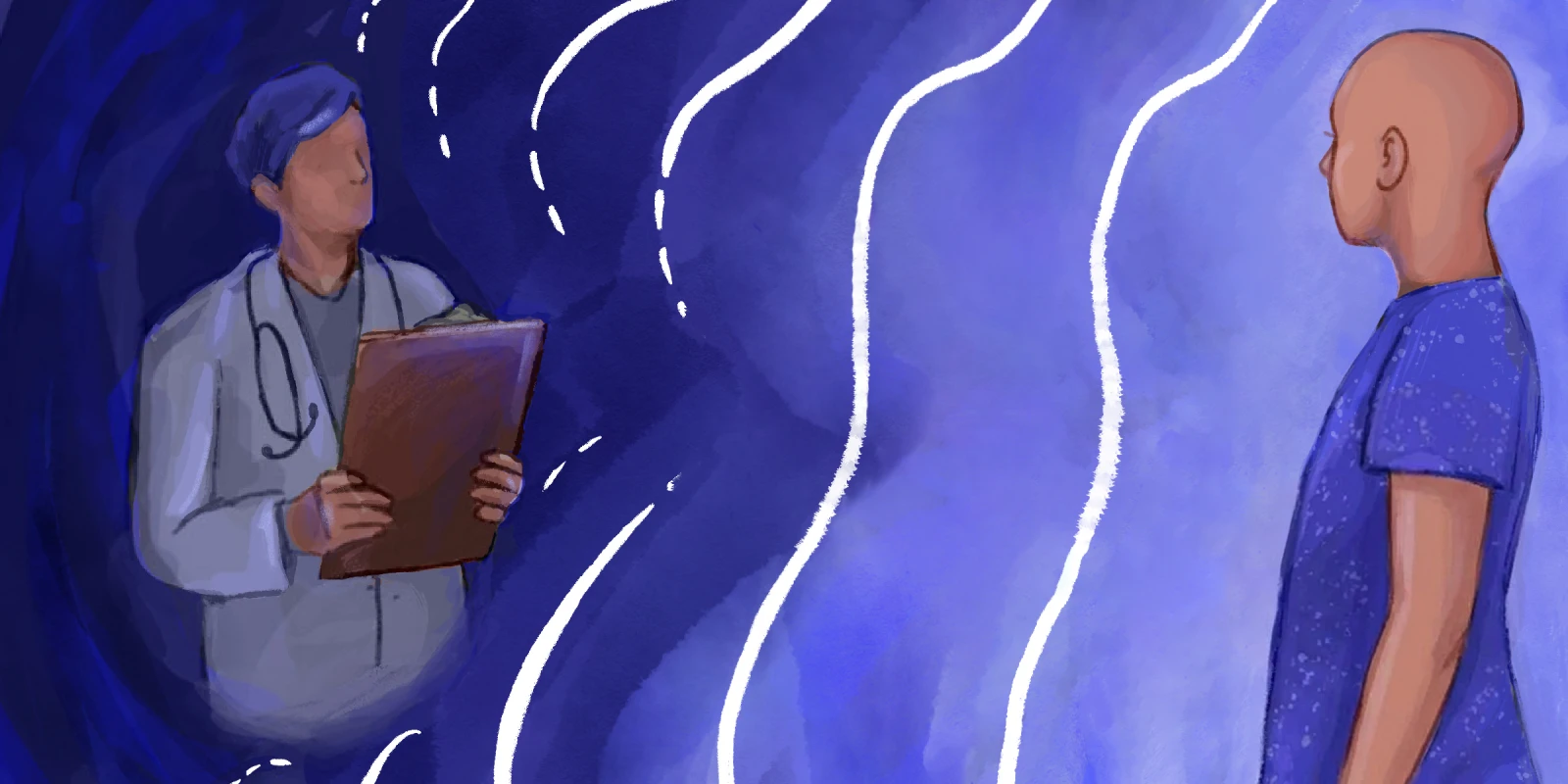
Over the next 14 months, I went through 10 weeks of radiation and eight cycles of adriamycin, bleomycin, vinblastine, dacarbazine/mechlorethamine, vincristine, procarbazine, and prednisone chemotherapy. I took that year off from high school. I lost my hair. At one point, I couldn’t eat and had to receive all my nutrition intravenously. I lost close to 70 pounds — I stopped weighing myself because it was too depressing. But I did make it. My treatments ended on February 11, 1991. I walked out of the clinic ready to get my life back to normal. At the time, I did not know that would never be possible.
My experience instilled in me the desire to become a physician and give back to a system that had saved my life. I pursued that goal with persistence through college, MD/PhD training, pediatrics residency, and hematology oncology fellowship. But during those years, I also learned about the devastating long-term health effects that “curative” treatment produced — both through my own education and, more importantly, as a survivor myself. Starting in medical school, I began developing numerous late effects: hypothyroidism, infertility mitigated only by the fact that my mother had pushed for pretreatment sperm banking, skin cancers, pulmonary fibrosis. And then, in the fall of 2008 — early in my first year of fellowship — severe and life-threatening heart disease. I underwent emergent open-heart surgery to replace my aortic valve and bypass three blocked coronary arteries. I made it through that too. I lived.
But life after that continued to exist in the context of constant late effects. It seemed like every time I learned of something new — at a meeting or through my reading — I would then develop that condition too. Because of my valve, I was anticoagulated, but I still had strokes, likely the product of abnormal vasculature in my neck. During a hospital admission for one of them, I was told I had diabetes — particularly frustrating because for the previous eight weeks I had been exercising regularly and had managed to lose some weight. I continued to have heart problems and developed a calcified mitral valve. After following that with my cardiologists for about five years, with worsening congestive heart failure, the decision was made to replace the valve. That is how I found myself in the cardiac ICU, wondering what the future held for me and my family. I thought about my professional future too. There in that bed, I made the same decision I had made as a teenager: If I survived, I would try to educate other physicians about my life trajectory as a survivor.
The recovery was long, but I have gradually gotten my strength back over two years. I write today not because I want you to feel sorry for me. Save that for the majority of survivors who are not fortunate enough to have my medical knowledge and the resources to travel anywhere in the country for surgical care. My goal is simple: to spread the word, far and wide, in the medical community that a survivor of cancer is a special and distinct patient who carries the potential for severe complications.
Not from their cancer, from the treatments that prolonged their life.
When you see a previous diagnosis of cancer on a patient’s history — in preop, in an outpatient primary care clinic, in a specialty clinic — the thought that should immediately come to mind is: This patient is not like a typical individual of the same age.
My goal is not a small request. Changing the practice of medicine is hard, and as we all know as physicians, it takes time. Survivorship care needs to be incorporated at all levels of the medical training continuum. Until then, I hope those of you who read this will see cancer survivors differently.
Their life may depend on it.
How is your care for cancer survivors different from other patients' care? Share in the comments.