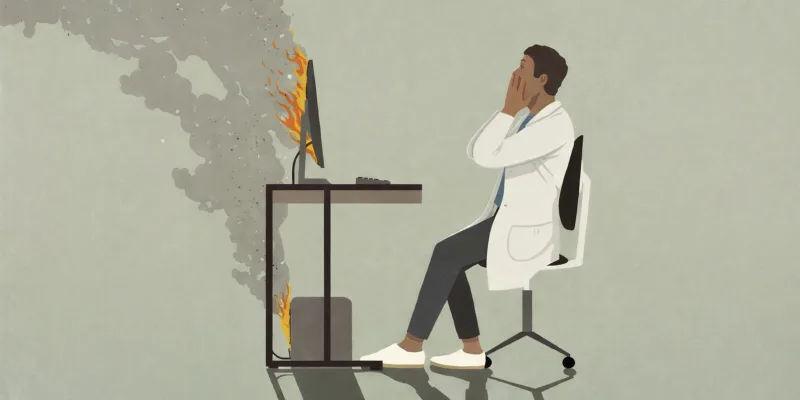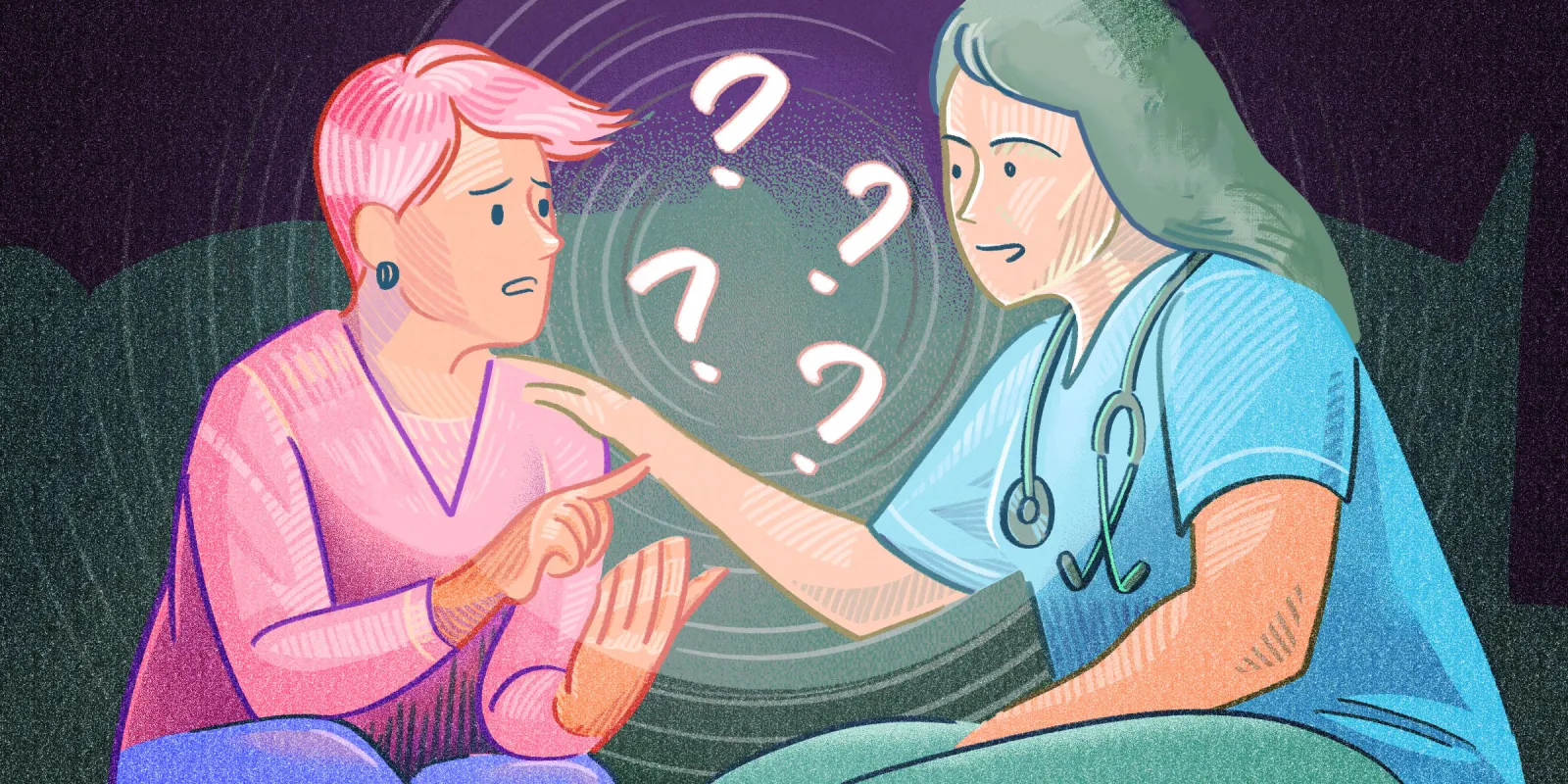

Medicine is a confusing, often contradictory profession. We enter training because we want to care for people — but along the way, we find ourselves pulled in competing directions as we strive for diagnostic accuracy, efficiency, curiosity, and quality care. With the recent conclusion of my clerkship year, I have found myself reflecting on some of the tensions in medicine I encountered as a medical student. Below, I discuss three salient tensions, and how I’ve been working to reconcile them.
Empathy in Medicine is Not Guaranteed, but Worked for
Like many who join this profession, I applied to medical school out of a sense of empathy with patients and a desire to help them. However, before my classes began, I encountered an article chronicling the decline in empathy among students within the first two years of training. And not long after, I stumbled upon the striking statistic that physicians spend approximately 11 seconds listening to patients before interjecting. These observations were unsettling. They suggested that empathy in medicine is neither permanent nor guaranteed, but something that can erode with training.
How do we counter this? One way is by centering the concept of “muscular empathy” coined by Ta-Nehisi Coates. Coates writes that empathy is not about mere “soft, flattering hand-holding” but is rather “muscular” and “rooted in curiosity.” This suggests that empathy is not something one inherently possesses and loses, but something we continue to practice, especially in the face of challenges and the repetition of medicine.
As a student, I came face-to-face with the concept of muscular empathy when interacting with an older gentleman, Mr. M, during a goals-of-care conversation with his palliative care clinician and close friends. Mr. M had been admitted for cholestatic liver injury and had recently undergone multiple procedures, including an ERCP, exploratory laparotomy, and a newly created ileostomy. Further surgery was recommended. However, he shared that “getting better” did not align with the life he envisioned, particularly after an ostomy and the residual deficits from his prior stroke. Above all, he feared becoming a burden. In the end, he chose to forgo all life-prolonging medical care and passed away several weeks later.
When I sat in on this conversation, I was deeply unsettled. I did not fully grasp every detail of Mr. M’s medical course, but I understood that intervention would have extended his life. At the same time, I knew that he possessed the capacity to refuse further care. Remaining empathetic in that moment meant resisting the instinct to measure his decision-making against what I might have chosen for myself. It required the ability to sit with my unease as I strived to honor a patient’s values even when they conflicted with my own. In that moment, I began to appreciate that empathy is an active, deliberate process that requires bearing discomfort as we work to understand another person’s lived reality.
The Divide Between the Subjective and Objective
Another tension in medical training arises in how patient presentations are structured and delivered within the standard SOAP format. Subjective data is separated from objective data, neatly dividing the lived experiences of our patients from their exam findings, lab values, and imaging. As students, we are taught to preserve this distinction and to avoid editorializing objective information. While clinical assessments offer the opportunity to synthesize these discrete components, the reality is that there is pressure to commit and “put your money down” on a diagnosis, which can sometimes lead to weighing objective data above the patient’s perspective.
Medicine sometimes has easy answers, but most of the time it does not. I often found myself juggling numerical data with my conversations with patients, reinterpreting these seemingly disparate pieces of information to build a cohesive narrative. In those moments, the truth sometimes felt fleeting, and textbook disease presentations rarely aligned cleanly with the patients I encountered. Lab values and imaging results seemed to provide a definitive answer that I could rely upon to guide my understanding of the patient and their assessment. However, I came to realize that even objective data is mediated by human judgment. Physical exam findings are in part shaped by the examiner: how firmly one pushes to elicit rebound tenderness, how attuned one is to listening for a murmur.
Over the past year, the distinction between the subjective and objective became more malleable. I realized that I was not a neutral interpreter of data. Rather, my understanding was often shaped by patient narratives, my own expectations, and the diagnostic frameworks I’ve learned along the way. With this exposure, I realized that learning medicine is an interactive process that uses both narrative and numbers to inform the clinical schema we create over the course of medical training and practice. By resisting the urge to mold complexity into a neat diagnosis, I learned to become more comfortable with uncertainty and attentive to the patients behind each clinical presentation.
Not All Patients Are Treated as Educationally Valuable
My time on the inpatient medicine service revealed a further tension. Across multiple services, I saw several patients whose care centered around disposition planning, including those refusing medically recommended treatment and others nearing the end of life. Because these patients often did not require further diagnostic workup, they were sometimes framed as holding less educational value for medical students. There existed an implicit bias against these patients, and therefore, at times, I was shielded from caring for them.
However, some of my most formative encounters came from when I deliberately chose to sit in on conversations and family meetings with these patients and collaborated with social work on disposition planning. During my psychiatry rotation, I had the opportunity to care for a patient with postoperative delirium, in which my primary role was to serve as a liaison between his family and his surgical team. While I did learn about the medical management of delirium, this situation opened my eyes to how competing preferences between families and clinical teams can emerge in moments of uncertainty and vulnerability. As a liaison, I was challenged to hone my skills in listening, patience, and empathy while learning to sit with these ethical tensions in an effort to create an environment where conversation and understanding could take place. This situation in particular encouraged me to reexamine my own values and question how medical training can privilege the clinical over the emotional and ethical aspects of patient care.
Clerkship year has opened my eyes to some of the many tensions found in medicine. Before this year, the diagnostic labels I learned in lectures primarily served as conceptual frameworks. However, my patients have breathed life into them. They have shown me the value of remaining present when listening feels difficult and challenged me to embrace the discomfort that often accompanies learning. Alongside these moments of uncertainty, I have also discovered an enduring awe for the trust that patients place in us. With this trust comes a remarkable responsibility, one that I am just beginning to learn how to shoulder. Medicine may be a field full of contradictions, but perhaps the goal is not to resolve these tensions, but to learn how to remain present with them.
What tensions have you observed in medicine? Share in the comments!
Bonnie is a third-year medical student at the Perelman School of Medicine at the University of Pennsylvania. She enjoys painting outside the lines, cultivating her ever-growing plant collection, and tossing together hearty salads. She is a 2025–2026 Doximity Op-Med Fellow.
Patient identifying details have been changed.
Illustration by April Brust