
The author dedicates this essay to her sister, who passed in spring 2026.
I’ve spent my career in healthcare. I know how to read lab trends before a team walks into the room. I recognize the shift in a doctor’s tone when a scan does not say what everyone hoped it would. I understand anatomy, probabilities, and limitations.
I never expected this knowledge of healthcare to make it harder to sit beside my sister in a hospital bed. Over the past several months, I’ve spent countless nights in hospital rooms as she navigates recurrent cancer. I assumed my training would make me steady and helpful. Instead, it introduced a tension I was not prepared for: I wanted to assess and intervene as a clinician, not just support as a sister.
For years, my sister trusted the same surgeon. Since 2012, he had walked with her through procedures, setbacks, and recoveries. There had always been a next step.
After her most recent surgery, the pathology report came back with positive margins. This time, the news came over the phone. He told her there was nothing more he could operate on without risking critical structures. Chemotherapy, he said, was not an option for this cancer type. Radiation was not possible because she had already received it in that area. There was no in-person visit, no discussion of referral, no suggestion to explore another center.
Just wait in uncertainty while she recovered. She was devastated. In the past, there had always been a plan.
I was angry in a way I had not allowed myself to be before, not because medicine has limits, as I understand it does. But when you hear “nothing more we can do,” a quiet question forms. Nothing more here, or nothing more anywhere?
I wrestled with when to step back and when to speak. Respecting her autonomy meant honoring her trust in the physician who had cared for her for more than a decade. She valued continuity. Earlier suggestions of a second opinion had been met with gentle resistance.
But now, being told to wait, silence no longer felt neutral, no longer felt the best way for me to support her.
“I found two nationally recognized cancer centers that specialize in complex and recurrent disease,” I said. “Would you consider going just once? Just to hear what they have to say?” She paused, then quietly agreed.
The next day she admitted something I had not fully understood before: calling new medical offices made her anxious, retelling her history felt overwhelming.
“Would you mind calling and finding out the basics?” she asked. And just like that, the role shifted. I was not overriding her autonomy. I was supporting it.
So I called. Once I had her permission, I shifted into action mode, doing what I do best: connecting people with resources and navigating complex systems. I gathered intake requirements, requested record transfers, coordinated imaging, and clarified what pathology materials were needed. It was structured and methodical.
For the first time in days, I felt useful in a way that did not compete with being her sister.
We traveled more than eight hours to the specialty center, knowing we might hear the same conclusion again. The night before her oncology consultation, she spiked a fever and was admitted to the very center we had traveled to see for an infection related to her prior surgeries.
Over the next week, while infectious disease managed IV antibiotics and surgeons monitored wound healing, the oncology team reviewed her case. They treated the infection while developing a broader cancer plan. When the oncology team met with us in person, the tone was thoughtful and deliberate. First, they explained she needed to regain enough strength to tolerate chemotherapy. They did not minimize the complexity, but they also did not close the door. Though treatment has not yet begun because she is still healing, now we have a plan. And for the first time in a while, our family feels hopeful again.
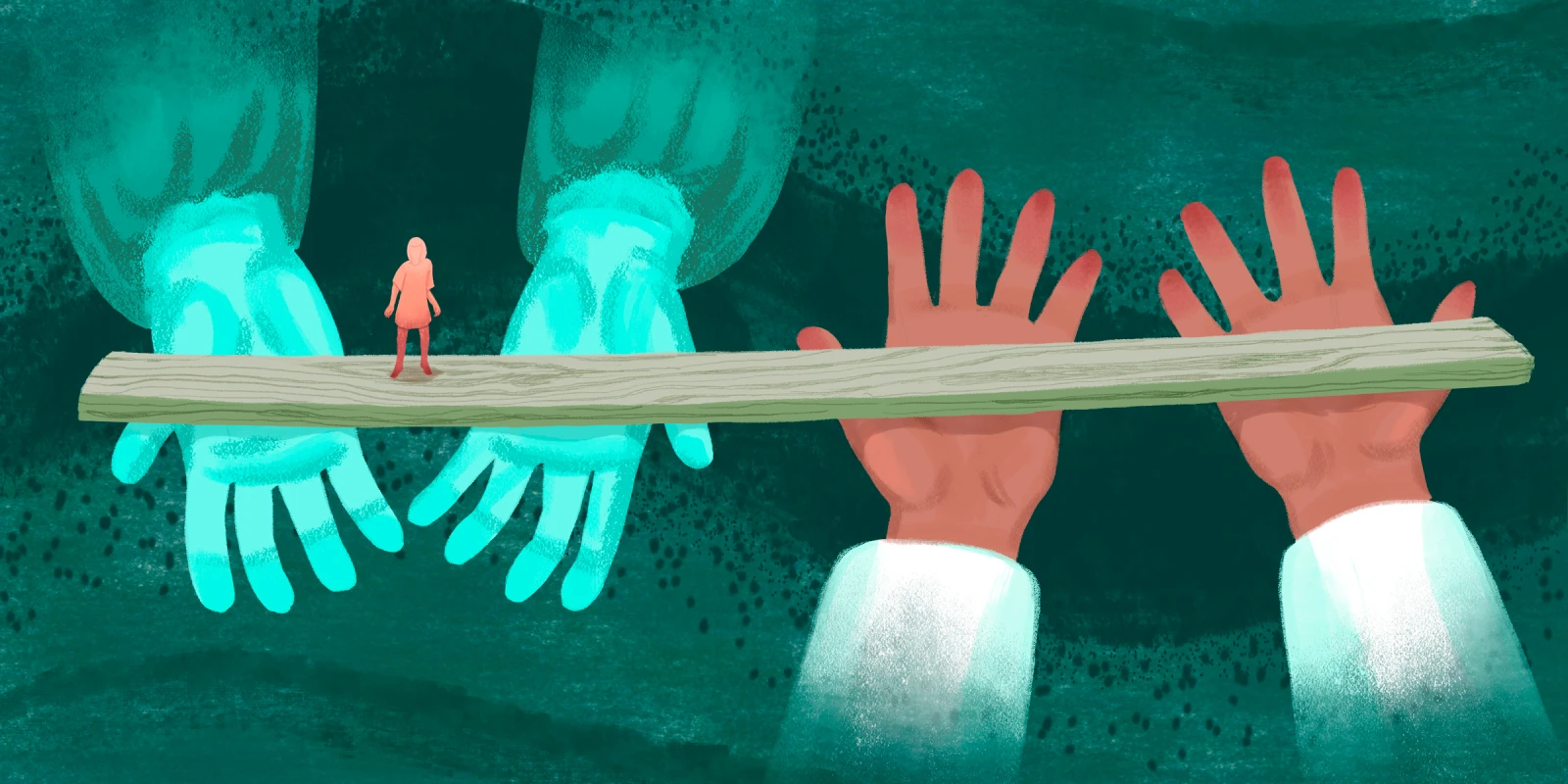
Being a clinician in your own family is not simply a matter of knowledge. It is a recalibration of our role. We are trained to intervene, but sometimes love requires waiting. When knowing too much makes it harder to be family, the answer is not to know less.
In my professional life, I do not believe second opinions are necessary in every case. If a patient is already seeing a subspecialist with appropriate expertise, repeating the same tests is not always helpful. But when complexity stretches the limits of what can be offered locally, consultation becomes part of thorough care. This experience did not change that belief, but it deepened my understanding of how patients experience those moments. As a clinician, I see second opinions as one option among many in thoughtful care. As a sister, it felt more urgent. I did not want to live with the question of whether another physician, in another setting, might have seen a possibility we had not.
I still believe trust in a familiar physician and continuity of care matter deeply. I also believe that when we hear “nothing more we can do,” it is reasonable to ask whether that reflects a boundary of medicine or a boundary of geography. I still believe in the vital balance between restraint and advocacy. I still believe I made the right decision in not overriding her choices — and am grateful I found the courage required to ask one more time.
Dr. April Miller is a public health pharmacist and program manager in Jackson, MS. She is passionate about educating healthcare professionals on substance use prevention and domestic violence awareness. In her free time, she enjoys cheering on the Ole Miss Rebels with her son and attending high school band events to support her daughter. She is a 2025-2026 Doximity Op-Med Fellow.
Illustration by Jennifer Bogartz