
Recently, I was sitting in an inherited retinal disorders lecture where we were reviewing all the techniques used to measure patients' vision including visual field tests, electroretinography, dark adaptation, color vision evaluation, among others. It struck me: in ophthalmology, we spend a great deal trying to understand how our patients see.
In theory, it's a simple concept. Vision is a such a fundamental part of our everyday life, shouldn’t it be simple to understand how someone else is seeing? When our patients have visual complaints, shouldn’t it be easy to understand? After all, compared to other organs such as the liver, heart, or brain, vision is an “obvious trait” and the organ is literally right in front of us. The reality is that even understanding our patients’ visual challenges is exceptionally nuanced. And even more so, aligning our surgical techniques and outcomes with their challenges is very complex.
It is humbling that despite our best efforts as doctors, we will never fully understand what our patients are experiencing. Medicine is, after all, the science and art of trying to understand our patients’ challenges and aligning our interventions to address those challenges. It is what physicians spend years of training and decades attempting to achieve.
I have found myself trying to better understand the experience of patients that I take care of every day. I hold up my hands in closed fists to my eyes to try to understand what it must be like to have tunnel vision, such as patients with retinitis pigmentosa or glaucoma. I cover one eye to see what it must be like to be monocular, resulting in loss of depth perception and balance issues. I squint my eyes to purposely haze my vision to see what it’s like to have 20/60 (or worse) vision or how deeply disconcerting it is to live with double vision.
What I cannot practice is the social experience of having reduced vision, not being able to maintain eye contact, or having abnormalities of the face or visual system apparent to the outside world, another component of our patients’ everyday life. Nor can I replicate the socioeconomic impact of vision loss on the ability to work and live.
As I continue down the path of training, I hope that I never lose sight of trying to understand the patient experience. People are not just numbers, and a mere reading of a visual acuity or visual field could never tell the full story of a patient’s daily challenges. These objective measures do not evaluate how a patient wakes up in the morning, whether they are able to work, drive, see their children and grandchildren, watch the sunrise, or enjoy their hobbies. How has a reduction in vision affected their quality of life?
In the same way, evaluating a radiologic imaging of a patient’s cancer or an elevated hemoglobin A1c in a patient with diabetes can never fully reflect the true nature and complexity of living with a disease.
Despite being an ophthalmology resident, I can honestly say I take my vision for granted every day. It is just an inherent component of how I live. In the same way that many of us take our health or the health of our loved ones for granted until we are faced with the challenge of managing it.
Our field has made great strides over the past few decades to assist in restoring and preserving vision, such as the advent of advanced imaging modalities, modern microsurgical techniques, and gene therapy, to name a few. However, there is still a gap between what we do daily as doctors and aligning those treatments with improving our patients’ quality of life. I hope that as we continue to make advances in treatment, we will also find novel means of understanding and objectively measuring what our patients experience, not just in ophthalmology but all of medicine.
As doctors, and human beings, we can never fully comprehend what the person sitting in front of us is going through. I hope I can commit myself to never take for granted what a privilege it is to try to understand and help patients with their vision, or any medical problem.
As a clinician, how do you bridge the gap between a patient’s objective test results and the subjective reality of their daily life? Share in the comments.
Grace graduated with honors from Harvard Medical School and is currently a PGY3 resident training in ophthalmology at the Harvard Ophthalmology Massachusetts Eye and Ear program. Her research interests in including retinal imaging, visual function, and device development. Outside of medicine she enjoys fly fishing, skiing, and exercise.
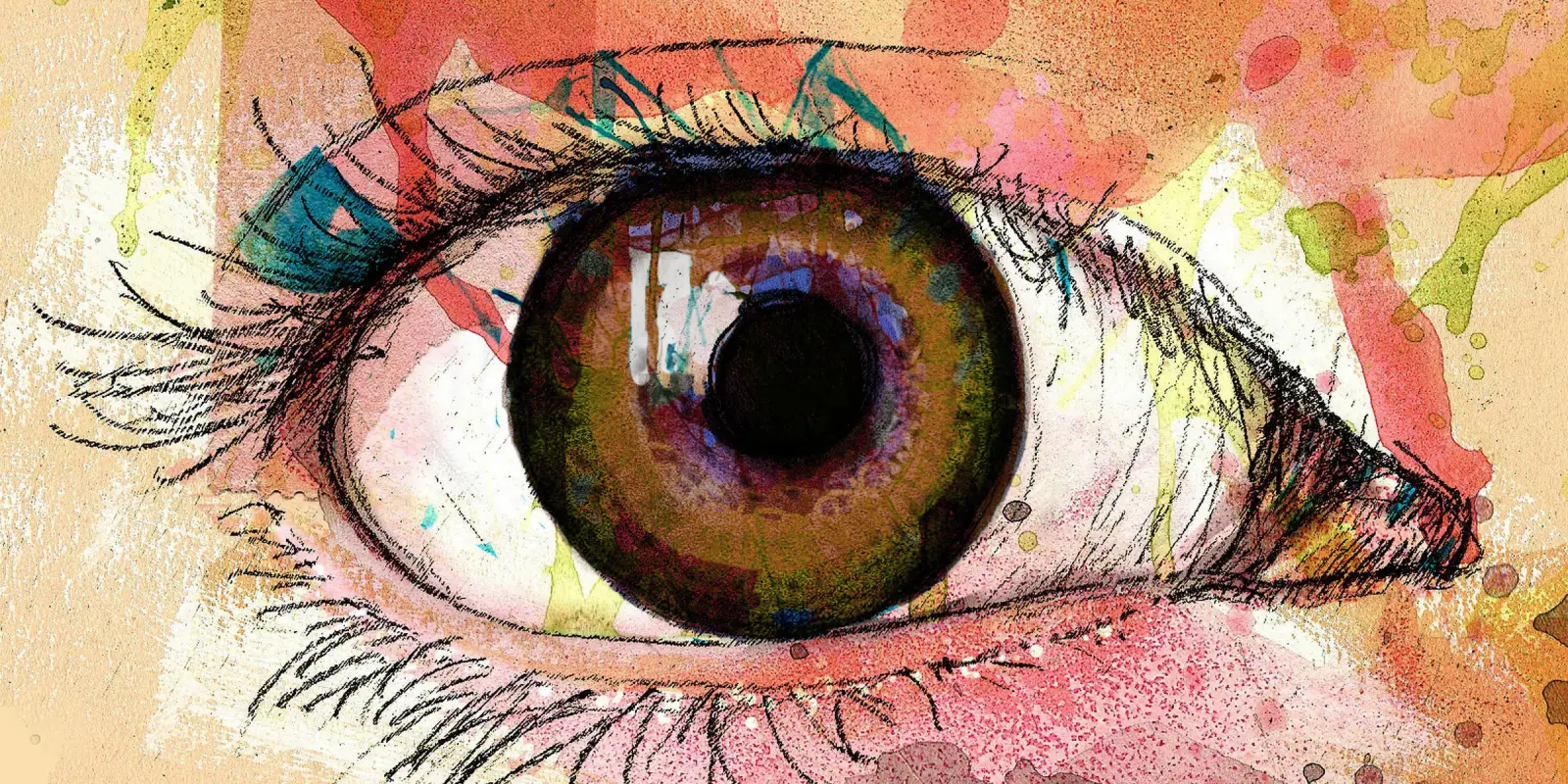
Image by illu / GettyImages