
I recently binged the second season of “The Pitt,” the award-winning medical drama airing on HBO Max. “The Pitt” has been praised for its accurate portrayal of American healthcare in the 21st century: insurance lapses, overcrowded ERs, and a heavy reliance on the EMR all play significant roles in the new season.
The show has also been cited for its eerily realistic medical situations. The various medical scenarios all seem so real, the prosthetics department deserves a special Emmy. (In order to avoid spoilers, I won’t go into details, but trust me, they’re especially gruesome.) This season, though, it wasn’t the blood and gore that stuck with me. Instead, one scene keeps haunting me, replaying in my mind on an endless loop.
In the final scene of the 12th episode, Joy, a petite Asian American medical student with a septum piercing and a delicious amount of snark, promptly leaves at the end of her shift, despite protests from a senior resident. “We put in the extra time if we’re needed,” he insists. Joy cites burnout rates of 62% in the ER and says, “So, maybe all you lunatics need to learn how to set some boundaries, like me.” She then proceeds to stick with her plan and head home, calling over her shoulder, “Well, see you tomorrow, Doc,” before disappearing.
As an elder millennial, my jaw dropped. I was raised in olden times, by doctors who knew that the terms “housestaff” and “residents” meant that you never went home, and instead worked 120-hour weeks. In fact, I’ll never forget the advice I received from the urology chairman at my medical school, who didn’t operate anymore and would soon retire to Florida. I had scheduled a meeting with him to discuss my away sub-internships, which would act as audition rotations and support my application for urology residency. He sat at his massive mahogany desk and leaned back in his leather chair, his fingers interlaced. “It’s simple,” he said, a small smile on his thin lips. “Show up early, leave late, and work like a dog.”
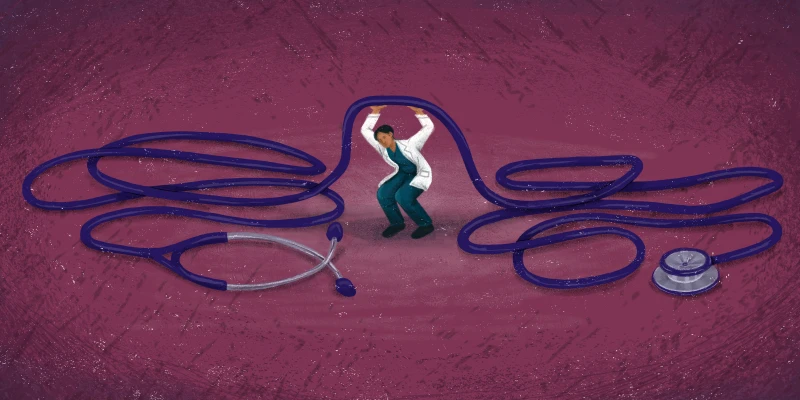
But with the corporatization of medicine, doctors are feeling more and more like employees. Clock in, see your patients, write your notes, go home. The paycheck comes regularly, no matter what you did that week: how many clinics you ran, how many cases you did in the OR, how many office procedures you completed. Not to mention the amount of unpaid labor we perform, between result review, phone calls, and insurance-related paperwork. Add in any academic-related tasks such as committee participation or research, and we’ve got a lot on our plate. Sure, we want to do what’s right for the patients, but we also deserve to set our own boundaries, and protect ourselves against burnout.
The future generation of medicine does not seek the intensity of the past. The discussion surrounding wellness and mental health has grown into an uproar, and in a timely manner: doctors are depressed, anxious, burned out, and even suicidal. Today’s doctors understand the value of protecting their peace. One might ask, though: What of the devotion of doctors of the past? Is drawing a line representative of lack of empathy, of not caring about our patients? I would argue the opposite: that safeguarding our peace of mind will benefit our patients more. We need to put on our own oxygen mask before we can help others.
We don’t need more mandatory modules or meditation apps to improve our mental health; instead, we need boundaries. We need to be able to say no to that extra patient when we’re already running behind. We need to be able to walk away at the end of the shift, rather than overextending ourselves when we’re already exhausted. We need to be comfortable with honoring our late policies. We need to remember that while medicine might be a calling, it’s not our entire lives. We shouldn’t have to break our backs in order to support our fractured healthcare system.
So kudos to “The Pitt,” for not only reflecting America back to us, but also exposing the changing medical landscape. I can tolerate gut-twisting injuries and codes all day, but show me someone who protects their boundaries, and I’m shocked.
If you have watched "The Pitt," what were you surprised to see on screen? Share in the comments.
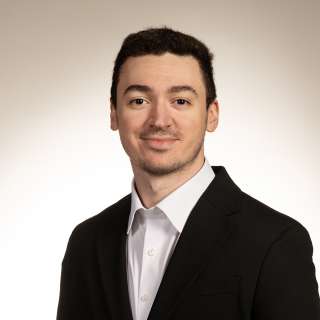
Fara Bellows is a general urologist in White Plains, New York. She can be found on TikTok @FaraBellowsMD.
Illustration by Jennifer Bogartz