
Walking away from the bedside meant redefining how I make a difference. The day I moved into the classroom was the day my impact multiplied; I stopped treating one patient at a time and started shaping the physicians who ultimately treat thousands of patients.
Transitioning from hospital-based care to a career in the classroom felt like a departure from medicine. After years of medical school, residency training, and countless overnight shifts in the hospital setting, moving away from the bedside seemed at first glance like a nontraditional exit when compared to how and where a physician "should" be practicing medicine. The departure from fully engrossing myself in clinical care felt so strange that after a year of full-time work in medical education, I felt guilty and moved fully back to the bedside — only to find myself missing all that I gained as a medical educator.
After a year of moving back into clinical medicine, I missed my students. I missed the classroom. I missed the multiplicative effect of raising the next generation of physicians rather than the individual patient impact. I went back to treating one patient at a time but sorely missed shaping the multiple aspects of student success. I had taken for granted the precious time spent building their clinical reasoning skills, harnessing their professionalism and identity within our field, and perpetuating through modeling and imprinting the compassion of hundreds of future physicians. This amplified impact served as a key source of meaning, mirroring what draws many physicians like me to medicine in the first place. I then spent the next three years working my way back into my role as a physician educator.
At the bedside, our success can feel immediate, such as stabilizing critically ill patients or making life-altering diagnoses. These intense and meaningful instances are often accompanied by high levels of stress, academic burden, and administrative burnout. These brief and infrequent interactions have unfortunately led to physician dissatisfaction and mental health strain. As empathy reduces over time and burnout increases, physicians begin to look for outlets, seeking alternative career paths that are both fulfilling and sustain their identity as healers. Medical education provides this path. Emerging research and personal lived experiences also suggest that markers of traditional physician success — such as financial stability and professional prestige — can easily transcend into an equally profound and sometimes deeper sense of purpose, professional satisfaction, and fulfillment.
A 2024 study on young physicians transitioning from clinical practice to a career in medical education highlighted being drawn by an interest in leadership, self-development, and scholarship; however, this same cohort of junior attendings acknowledged an initial "honeymoon" phase shortly after moving out of the clinical setting due to a welcome reduction in stress and clinical workload. The fear that this was merely a temporary phase viewed through rose-colored glasses resonated deeply with me. Moving into working daytime low-stress hours as a physician educator, I felt relief and peace having been removed from my former 24-hour shifts caring for ill hospitalized children. I could now do drop-off and pick-up for my young children. I could even break for lunch to sit and share a meal with a friend. But would that feeling of relief fade? Would I miss the interprofessional team interactions and hustle and bustle of hospital medicine? Would I eventually yearn for the respect accorded to a doctor who could return a sick child to their healthy baseline? Would I eventually lose the pieces of myself that drew me to hospital medicine and to our field in the first place? I thought I did miss those things. But it turns out, after several years of reflection and movement into and out of nursery hospital medicine, then into and out of concierge direct primary care, I realized I was truly meant to be a medical educator all along.
Equally important to the traditional measures of success in clinical medicine are what can be found with a career in education: a sense of community and peer support in a collegial environment. Studies on physicians with careers in medical education also support the perception of renewed purpose as our role in teaching allows us to cultivate new skills while intellectually engaging with the future of medicine. Mentorship, curriculum design, and teaching clinical skills alongside increased flexibility and autonomy allow more control over schedules and a more reflective pace of work in comparison to a fast-paced hospital or clinical setting. Personally, the joy came from fostering meaningful relationships with learners and creating lifelong connections with peers and students, which don’t often present themselves in the fast-paced environment of the hospital. Helping students grow to competence can in some ways even surpass the episodic rewards of clinical practice.
But of course, there are challenges. Some physician educators might feel the struggle of professional identity, with less recognition compared to clinically based peers. Those challenges, however, coexist with a strong internal sense of success and purpose, forcing the individual physician to look inward rather than to external validation such as procedural volume or RVUs. The internal reward becomes more about long-term influence on learners and a legacy placed on cultivating future physicians. As hospital systems and insurance structures become increasingly complex and burdensome, physicians are relying on their core values of meaningful work and personal values for a sense of success, and for many physicians, that means moving into medical education. For physicians like me transitioning into education, success has been redefined but not diminished, and my purpose expanded, not lost. My purpose is now found in the quiet moments of a student understanding complex pathophysiology, representing lessons learned in their clinical rotations, and finally matching at a top choice for residency with me by their side. Ultimately, I realized that I didn’t fully walk away from the bedside — I expanded what it meant to truly care for patients by taking my talents to the blackboard.
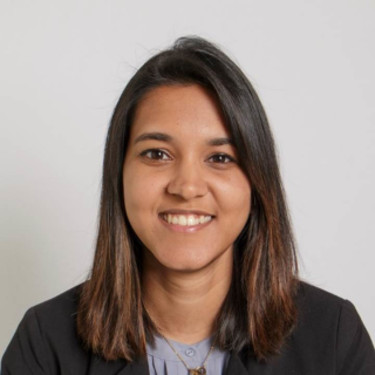
Based in South Florida, Dr. Gabriella Dauer, MD is a pediatric hospitalist who currently serves as assistant professor of medical education at the Kiran C. Patel College of Allopathic Medicine at NSU and as a newborn hospitalist. She is passionate about providing individualized and evidence based care, loving and caring for her patients as she does her own children.
Illustration by Diana Connolly