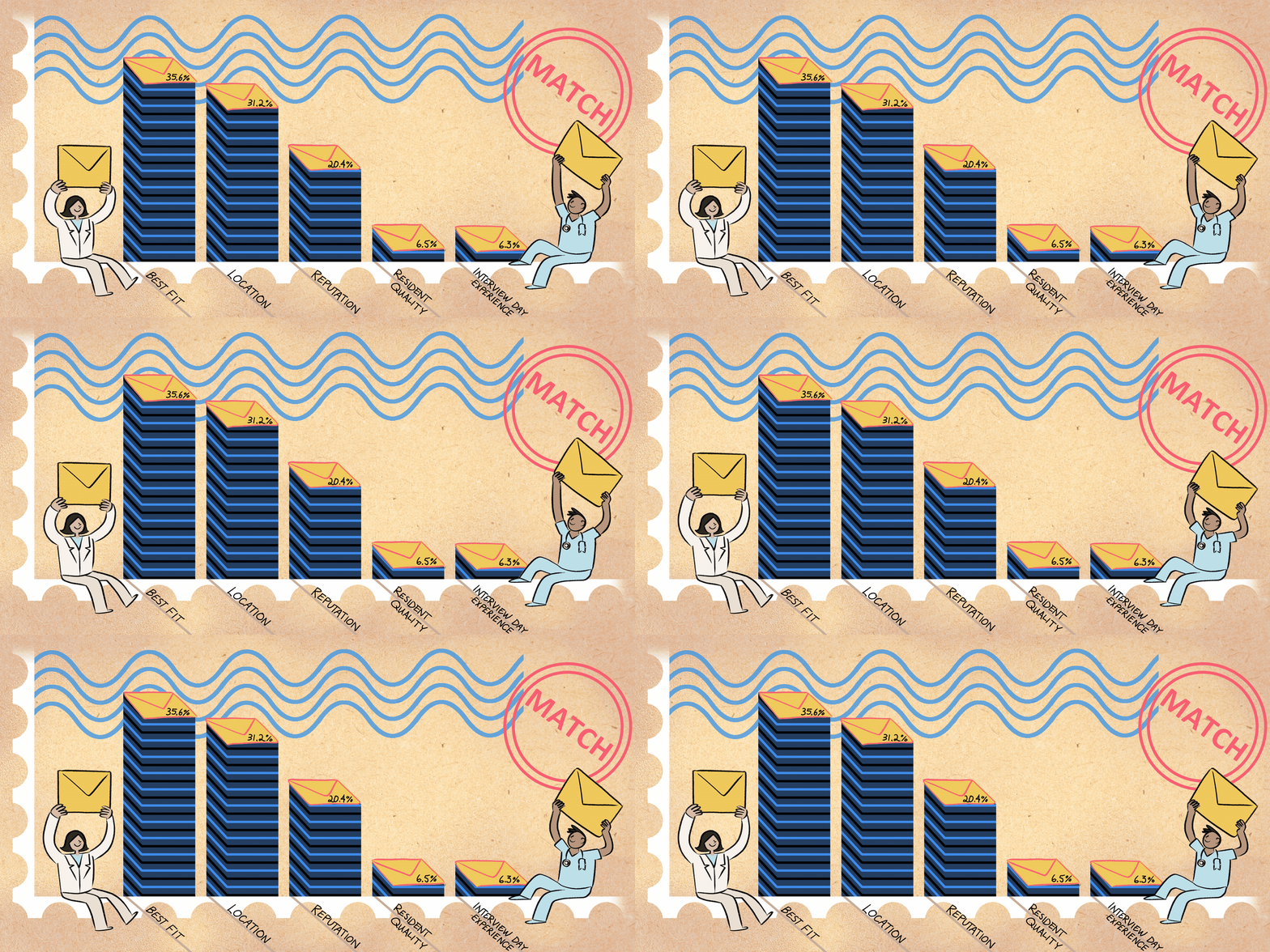

A new poll from Doximity asked clinicians what factor most influenced their residency rank order. Responses from more than 800 physicians indicate that modern physicians no longer put pedigree above all.
When asked which factor most influenced their residency ranking, physicians over the age of 50 were nearly three times as likely to single out the program's reputation (31%) as most important, compared to those under age 35 (11%).
This 20-point gap signals the end of an era. For the older generation, an institutional name was an enduring currency that guaranteed professional standing. Conversely, the newest cohort of doctors has largely abandoned the pursuit of prestige in favor of "Overall Best Fit,” which 42% of clinicians under 35 said was their top consideration in ranking, while 30% of physicians over 50 said this was their top consideration.
Today’s medical students and residents are navigating a health care landscape where the map has become the new status symbol, and a local support system is often more valuable than the institution’s name on their resume. These young clinicians are prioritizing geography, culture, and personal sustainability over the program with the renowned name.
Younger clinicians are no longer willing to sacrifice their mental health or proximity to home for a brand-name institution. Success, for the new generation, is increasingly defined not by where they trained, but by how well they lived while they were there.
This shift away from household-name programs and toward fit and location is likely driven largely by financial pressure. According to the AAMC’s 2025 Survey of Resident and Fellow Stipends, the average PGY1 earns $68,166. While the Doximity Compensation Report shows that nominal salaries have risen slightly, a recent analysis by the American Medical Association found that when adjusted for the consumer price index, resident pay actually dropped by 0.48% over the last year.
Combine inflation-eroded wages with the fact that the median medical school debt for recent graduates hovers around $215,000, and the shift in priorities makes sense. Prestige does not pay the rent.
While "fit" is the ideal for many, the data reveal a second compelling factor: the necessity of location in America’s most expensive regions. When considering responses from high-cost-of-living coastal areas, including the Northeast and the West Coast, 37% of clinicians of all ages cited "Desired Geographic Location" as their absolute top priority.
Here, we see doctors willing to compromise on their priorities. Coastal clinicians are significantly more likely to abandon their search for "Overall Best Fit," with only 26% ranking that as their top influential factor. Conversely, nearly half (48%) of clinicians under 35 in these coastal regions chose "Desired Geographic Location" as their top factor.
When doctors factor in housing costs, their partner’s career, and family support for childcare, many are willing to tolerate a program that isn't a perfect cultural match if it keeps them in their desired ZIP code.
Recent peer-reviewed research on resident compensation confirms this dilemma, noting that while nominal salaries in the Northeast or West might appear slightly higher on paper, the cost of living largely offsets those differences, leaving residents heavily dependent on pre-existing local support systems.
By contrast, the South and Midwest are just the opposite. In regions where the cost of living is more manageable, physicians appear to have the luxury of leaning into their best-fit program.
Physicians in the middle of the country are nearly twice as likely to prioritize "Overall Best Fit" (~42%) as physicians on the coasts (26%). In the Midwest and South, the "vibe" of the program reigns supreme.
It’s worth noting that, regardless of geography, young doctors are actively working to make their residency programs the right fit for them. Across the country, we have seen unionization efforts increase over the past few years. From West Coast resident unionization to East Coast organizing efforts to a first contract at a Midwestern institution, these union drives reflect the same trend seen in the Match data: clinicians are focusing on their well-being and boundaries, refusing to let institutional esteem preclude sustainable working conditions.
The change of Match Day priorities represents more than just a change in preference; it is a generational shift in how clinicians view their jobs. Our findings mirror recent studies, which show that post-COVID residency applicants are matching closer to home and moving far away only for highly competitive specialties. As the “old guard” retires, so too may the era of institutional loyalty, while the new generation is redefining the physician career path.
These results suggest a profession in transition. It is the story of a generation that has realized that a diploma from a distinguished school cannot attend a child’s birthday party, provide childcare, or mitigate the isolation of a cross-country move. By trading in a more reputable name for a more desired ZIP code, today’s clinicians are redefining what it means to "match" successfully.
Match Day comes with a great deal of stress and pressure. It can be a daunting decision. And while clinicians of various specialties and generations may value the institution's name over the location, at the end of the day, most agree that it will all work out. As Michael Byers, DO, put it when asked what advice he would give his younger self on match day: “You are going where you are supposed to be. Trust your inclinations and go all in to follow what you love.”
What are the most important things you considered when making your rank order list for Match Day? Share below!
Illustration by April Brust