
Advanced practice clinicians (APCs), like nurse practitioners (NPs) and physician assistants (PAs), start their career with the knowledge that they are required by law to have a ‘collaborating’ or ‘supervising’ physician. As a licensed PA, I often hear these terms used interchangeably in contemporary medical practices, but the language we choose when describing the association between physicians and APCs shapes how the relationship plays out. The term ‘supervision’ implies a hierarchy, while the term ‘collaboration’ suggests a partnership. In North Carolina, where I practice, this formal regulatory documentation is defined by the Collaborative Practice Agreement. Other states use different terminology, such as Supervisory Agreement or Standard Care Arrangement, but the purpose is similar. These documents define the clinician’s scope of practice and outline the balance of oversight versus independence in clinical practice.
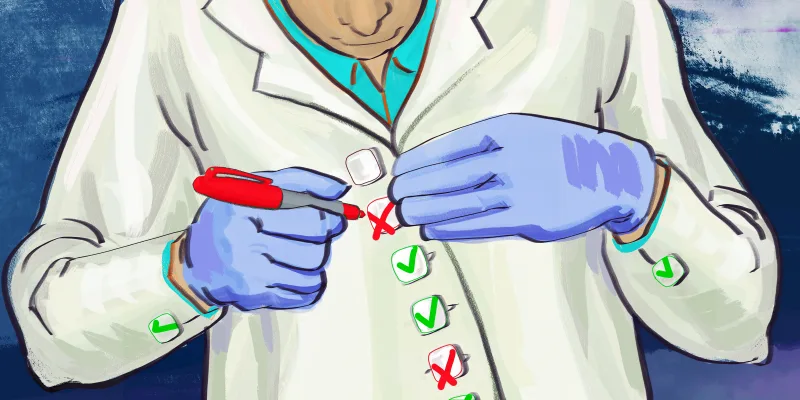
Legally, collaborative practice between physicians and APCs does include elements of supervision. However, relying only on the term supervision promotes the false idea that the purpose of this relationship is solely for oversight. This image fails to capture the highly functional team-based partnership that can emerge from this legal arrangement. At its best, a functional partnership integrates the physician’s expertise with the APC’s strengths, allowing them to build reciprocal trust and respect and to form a common commitment to patient care. However, when approached incorrectly, misaligned expectations can result in tension, inefficiency, and patient risk.
Unfortunately, in many real world scenarios, this legal pairing of a physician with an APC presents like an arranged marriage, in which supervision of a PA or NP is forced upon a physician with little support for these individuals to learn how to build a cohesive collaborative practice. This then becomes a relationship managed by email, with the occasional chart audit or legally mandated professional review, in which neither party really benefits from the unilateral authority. Because my medical license is forever tethered to another, it is advantageous for me to have the most personally beneficial alliance. For a physician, this is an optional relationship, so it is my goal to outline how we can make this partnership the most mutually beneficial alliance.
In an ideal world, a strong collaborative practice would naturally manifest as one of mutual trust and respect, clear role definition, good communication, a shared clinical philosophy, appropriate use of autonomy, and a culture of feedback flowing in both directions. But, that isn’t always the case. A functional collaboration is an intentional endeavor and it is the shared responsibility of the physician and APC to align their clinical goals for patient care and build a cohesive, collaborative practice. This, then, is a physician’s guide to working with PAs and NPs from the PA perspective.
Respect Our Role, Respect Us
Before entering into a collaborative practice, it is paramount that you understand what our degrees actually mean. We are not medical assistants, scribes, or residents. We are highly qualified clinicians who understand how to evaluate, diagnose, and treat many of the same conditions that you do. We often have years of clinical experience (sometimes more than you) and do not need your permission with every decision that is made. What we do often need is perspective and mentorship.
Part of role definition is agreeing upon scope of practice and how we will work together to help patients. This is where you can reinforce the concept of a care team, rather than hierarchy, and begin building trust in your partnership. Nothing will lose your respect with an APC faster than introducing them as your “midlevel.” We are not half a level of anything, we are fully trained PAs and NPs and it would serve you to have your patients know that you respect that. When you introduce us to patients, you set the tone for how they will perceive our role in their care. My collaborating physician gets this right every time: “This is [Name], one of our advanced practice clinicians. We work closely together to manage your care.” That simple choice of language instantly breeds trust and reinforces the concept of a collaborative care team. If you want to make sure that we aren’t sending you extra patient messages asking you to agree with a care plan because the patient needs to “hear it from the Doctor,” introduce us appropriately and establish that identity correctly in the first place. When patients trust both of us, their outcomes improve.
Discussions, Not Judgments
Yes, there will be paperwork and legal requirements, but partnering with a PA or NP isn’t about checking off to-do lists and auditing our work. These are opportunities for APCs to show you how they think. When you review charts, make sure your feedback is focused on clinical reasoning as a conversation, not a critique. Ask questions like, “How did you decide to start [medication]?” or “Did you consider any other causes for their [diagnosis]?” This helps us think critically and sharpens our skills without leaving us feeling judged, and allows you to understand and shape our clinical reasoning. Because of time spent in meaningful clinical discussions, my collaborating physician doesn’t need to review every note to know that I’m thorough, nor do they doubt that I’ll reach out if something is amiss.
Presence over Proximity
The ideal collaborating physician is one who is invisible, but present. Just the reassurance that you will respond to a call or text when something feels off is all we need. In an effective collaboration, time should be set aside for routine check-ins, and these in-the-moment communications reserved for urgent matters so as not to interrupt workflow. When the partnership works, the physician should have the confidence that things are being managed well when it is quiet, and not worry that silence means important questions are not being asked. Remember that if we ask to discuss a patient, it’s because we care about getting it right. If the timing of the questions is a problem, let us know so we can agree upon a time and format to ask these non-urgent questions. My collaborating physician and I make use of the EMR staff message feature so that I can link a question to a patient and in the subject line I write “not urgent.” If they have a particularly interesting clinical case that they feel would build my skills and align our practice more, they will send a similar message to me. Simple questions or anecdotes are generally handled by messaging and about once per week we will discuss these cases in person. This sense of support is the backbone to safe patient care.
Teach When You Can, Learn When You Should
Expertise isn’t a one-way street. One of the joys of being a PA is receiving generalist training and having fluidity in our role. You might be surprised how much you can learn from us. Documentation and billing workarounds, new devices, updates on guidelines, we are here for it all too. We’ll probably never turn down a quick clinical teaching moment from you, but remember, collaboration also means acknowledging that expertise runs both ways. My collaborating physician has taught me more about clinical nuance, pattern recognition, and diagnostics than I could ever learn from a textbook, but they’ve also been open to learning from me. Because my role in the clinic is designed in large part to offload some of the high volume diabetes management away from the physicians, I see more diabetes technology downloads in a week than some of our physicians see in a month or more. My collaborating physician welcomes my review and input on insulin pump downloads and novel ways to optimize settings. Additionally, they respect that I am best poised to give ideas on clinic flow when it comes to managing these device downloads during clinic visits and I appreciate being involved in developing clinic workflow protocols that will impact me.
Collaboration Isn’t a Given
Unfortunately, some physician-APC partnerships take more work than others. The hallmark of most poor collaborations is infrequent communication and misaligned expectations. If the physician expects experience and knowledge that the APC doesn’t have yet, or the APC desires a level of autonomy that the physician isn’t comfortable granting, there is a mismatch in the expectations for the role. Direct and upfront communication may have prevented this and allowed the team to build a clear set of expectations and a timeline toward achieving them. It is important that both parties have opportunities to negotiate on role delegations and confidence that their mutually agreed upon outcome will be fulfilled.
Other times there is a mismatch in responsibility. If the physician offloads too much responsibility without appropriate support, or conversely, refuses to delegate, frustration and inefficiencies build. If the physician second-guesses every decision that the APC makes, this breeds tension. If the APC hides uncertainty instead of asking for help, this increases patient risk. Regular meeting times can help resolve these issues and build the trust necessary to correct that dynamic.
The System Needs Us
At its heart, collaboration is about teamwork. APCs are not trying to replace doctors; our collaboration is designed to amplify your role. The partnership that works is not built on hierarchy or paperwork; it’s built on shared values like curiosity, respect, and the desire to do right by patients.
So, to the physicians who truly collaborate, listen, teach, and trust: thank you. You make us better clinicians. And to those still figuring it out, I hope you will sit down for a targeted discussion with your collaborating APC and consider mutual goals to strengthen your bond and your practice. If you are the physician who second-guesses every decision or the APC who hides uncertainly instead of asking for help for fear of retaliation, better is out there. Ultimately, this is a shared responsibility and it takes both parties to make it work.
Carrie Keyes, PA-C, is a physician assistant in endocrinology based in Winston-Salem, NC, where she champions tech-forward diabetes care. She is passionate about advancing clinician education and shaping the future of diabetes management through research and advocacy. She is also involved in PA education and a strong voice for clinician well-being and safe, effective patient care. She is a 2025–2026 Doximity Op-Med Fellow.
Animation by Diana Connolly