
Take the case of a third-year medical student who excitedly shares a fascinating radiology case on their public social media platform. This X-ray image contains a foot with screws that the patient had unknowingly stepped on. The student educates on the complex consequences of living with diabetic neuropathy while also being unsheltered. Unfortunately, this student unintentionally includes the date the X-ray was taken.
A medical student peer reports the social media post to the school’s administration, leading the student to be reprimanded by Honor Code Council for professionalism. This instance of social media usage raises concerns, not on whether medical students should be on social media, but how one can ethically and responsibly be present.
In 2019, a national study from the Health Information National Trends Survey found that 86% of internet users engage with social media to look up and share health information. Individuals not holding medical degrees or credentials are increasingly providing advice to the public — from selling supplements to cure chronic illness and fad all-meat diets to the discrediting of evidence-based medical guidelines. The COVID pandemic is a recent example of how the community turned toward the internet and social media to receive information on health care and medicine — from receiving information on the science of the new vaccine to how to make homemade masks to prevent infection.
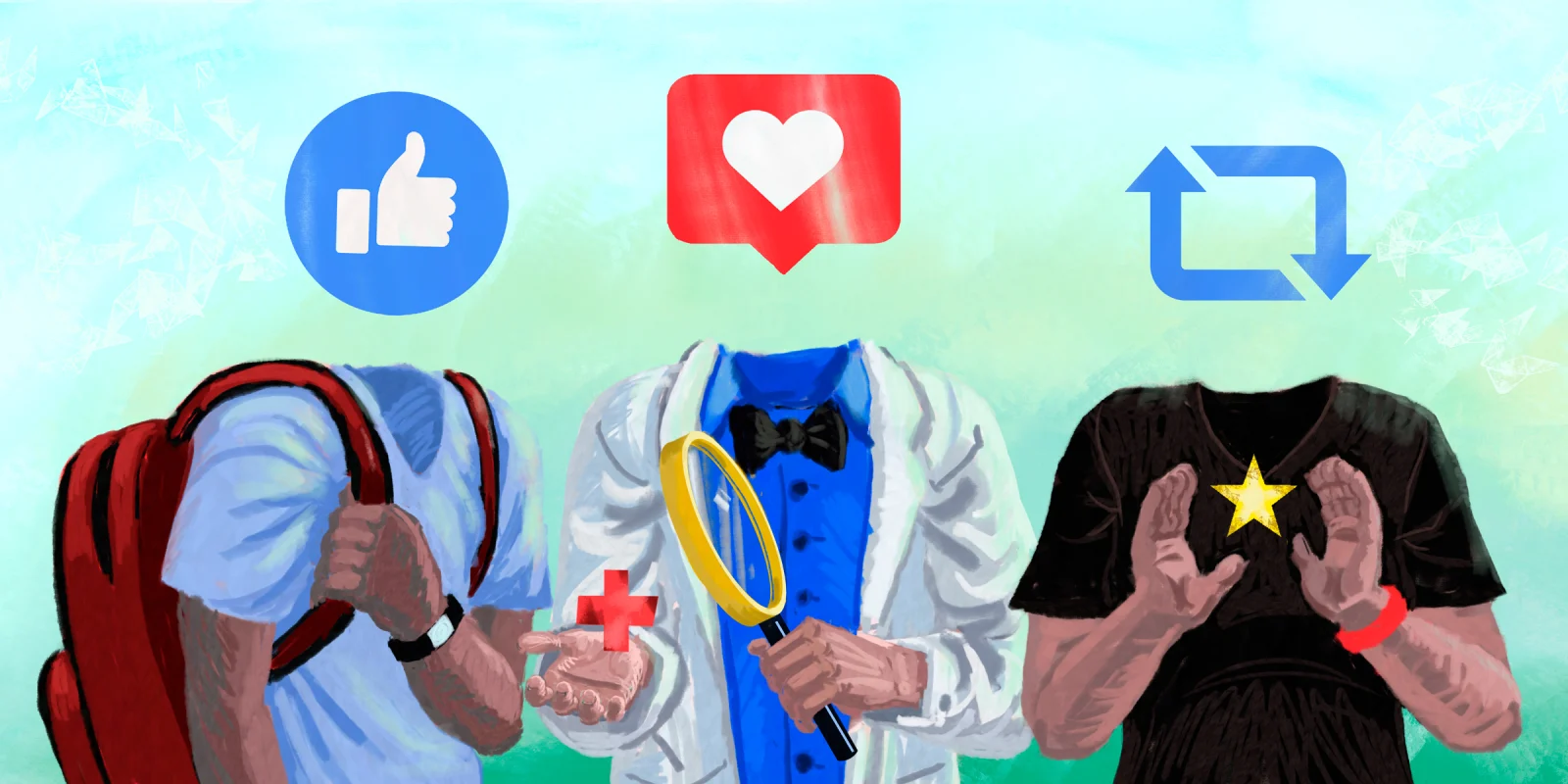
There is an increasing need for health care professionals to learn how to properly use social media in the medical field. Here are eight tips on how to effectively and ethically interact on social media without violating the privacy of patients.
1) Remove All Patient Identifiers: Avoid sharing ANY patient information, including images, that could potentially identify the patient. This goes beyond the standard HIPAA and PHI guidelines. De-identifying patients includes removal of any patient details that could be linked back to the patient, such as hospital names, faces, and unique circumstances leading to the medical event. One can think about posting on social media as if they are submitting to a conference or journal. Just as one wouldn’t include patient identifiers in a study or poster, one should not include it online.
2) Remove All Dates: The concern for the date, using the above medical student’s example, is that someone could look through all the X-rays of that date and link the post back to that specific patient. Therefore, in order to prevent patient harm, make sure there is no mention of dates.
3) Obtain a Signed Consent Form: If one cannot be general to the health condition and can only speak on a single patient case, some organizations recommend receiving a signed media written consent from a patient. This article provides advice on additional considerations on how to receive ethical consent from a patient.
4) Focus on Educational Content: Limit public social media posts to general educational content that is relevant to medical practice and medical education. One way to do this is by answering common questions one receives from their patients.
5) Remember Your Audience: Is it the general public, individuals of a specific age range, future doctors, or individuals of a similar medical specialty? Even medical students turn to social media for advice. Think about what you would have wanted to know when you were in their shoes. This could include advice on navigating finances, studying for board exams, applying to residency, or effectively communicating with patients.
6) Include a Liability Statement: It is important to state on your page that your content does not constitute individual medical advice, establish a patient-doctor relationship, nor represent your institution. Additionally, the health information provided does not substitute for professional medical advice, diagnosis, or treatment.
7) Consider Timing: Social media platforms highlight information in bite-sized ways. If the platform is mostly text, like Threads or X, then two to three sentences is the way to go. If the platform highlights pictures, like Instagram or Lemon8, then one can make short sentences on images so individuals can swipe through the content. For short videos, preferably 10 seconds to one minute, use Reels on Instagram, TikTok, or Shorts on YouTube. Any video longer than a couple minutes is better suited for YouTube, where one can present something similar to a lecture.
8) Know Your Institution’s Policies: Follow your own institution’s social media and research policy, as each one is different. For example, some residency programs have requested that their residents not include the institution on their public social media.
To conclude, in order to create a positive online presence, ensure that shared information contributes positively to medical knowledge. Instead of being driven away by the fear of being written up for “professionalism,” one should turn toward successful medical influencers, like ophthalmologist Dr. Glaucomflecken, psychiatrist Dr. Judith Joseph, and urologist Rachel Rubin, to learn how to ethically combat both mis- and disinformation.
How do you balance education, ethics, and professionalism in your online presence? Share in the comments.
Stephanie Moss, MD, a psychiatry resident, is dedicated to addressing mental health disparities and advocating for individuals with marginalized identities. She hosts the podcast "Life as a Patient-Doctor," which emphasizes the humanity in medicine. Dr. Moss was a 2024–2025 Doximity Op-Med Fellow. Connect with her @medpsycmoss on social media.
Illustration by Jennifer Bogartz